Choosing the Right Size Wall Art for Your Space
Choosing the Right Size Wall Art for Your Space
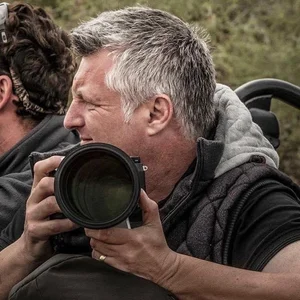
"Choosing the right size print is one of the most common questions I hear, and getting it right transforms a room.
Get it wrong, and even the most powerful image can feel lost or overwhelming. Here's how I think about it."
— Peter Delaney
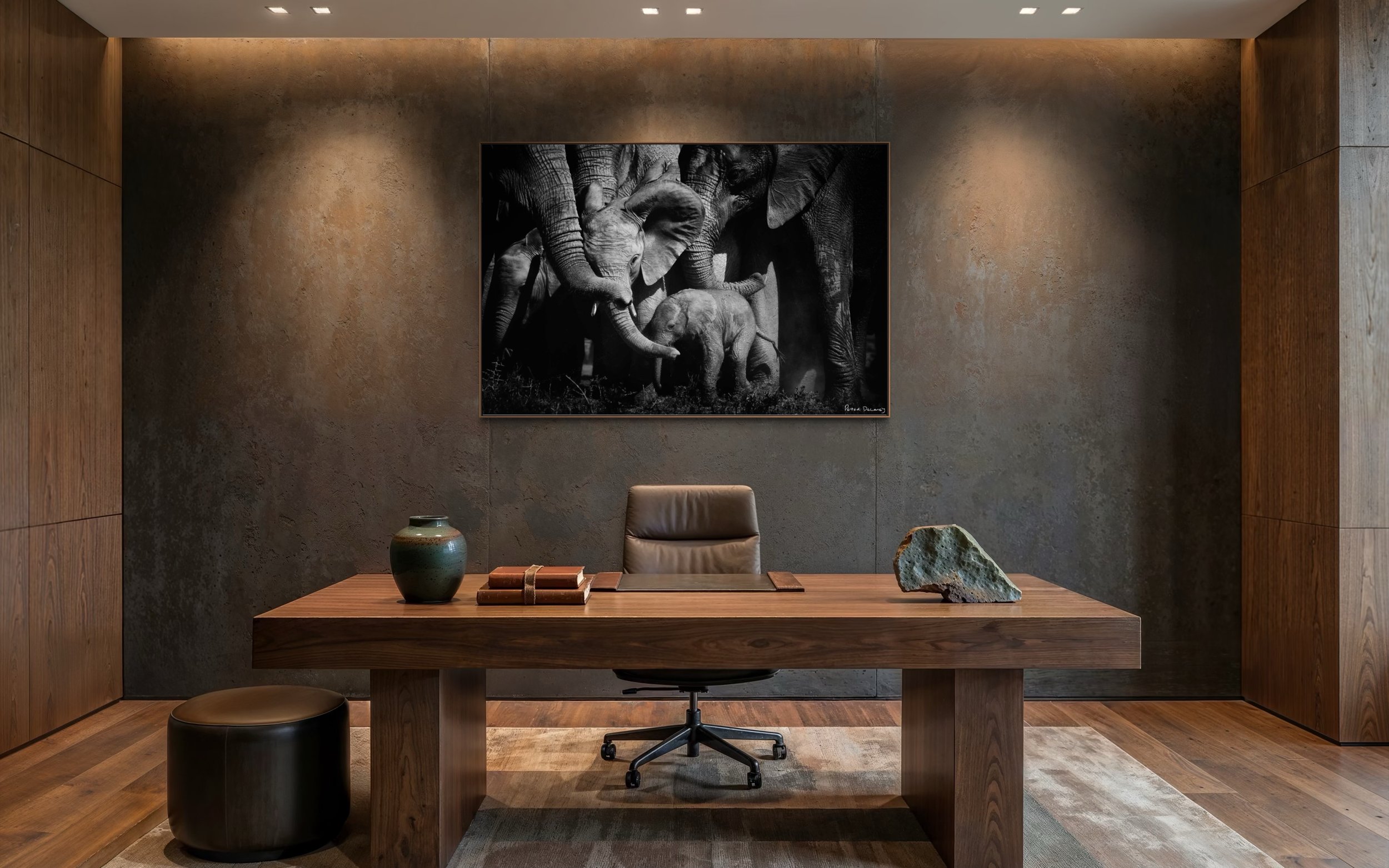
Bonds of Love | Addo National Park, South Africa
One of the most collected elephant prints in the studio
Start with the wall, not the print
Before you fall in love with a print, measure your wall. A good rule of thumb from interior designers is that artwork should occupy around 60–75% of the available wall space. A print that is too small on a large wall can feel lost, while the right scale gives the artwork room to breathe and allows it to become a natural focal point.
In my experience, people often choose artwork that is smaller than they really need. Going larger can make a room feel calmer, more considered and more immersive. Rather than simply filling a space, a well-scaled photograph becomes part of the room and draws you into the world within the image.
Elephant Ridge, Bonds of Love and Ubuntu are among the most collected elephant prints in my studio, and each demonstrates how scale can transform the presence of an image.
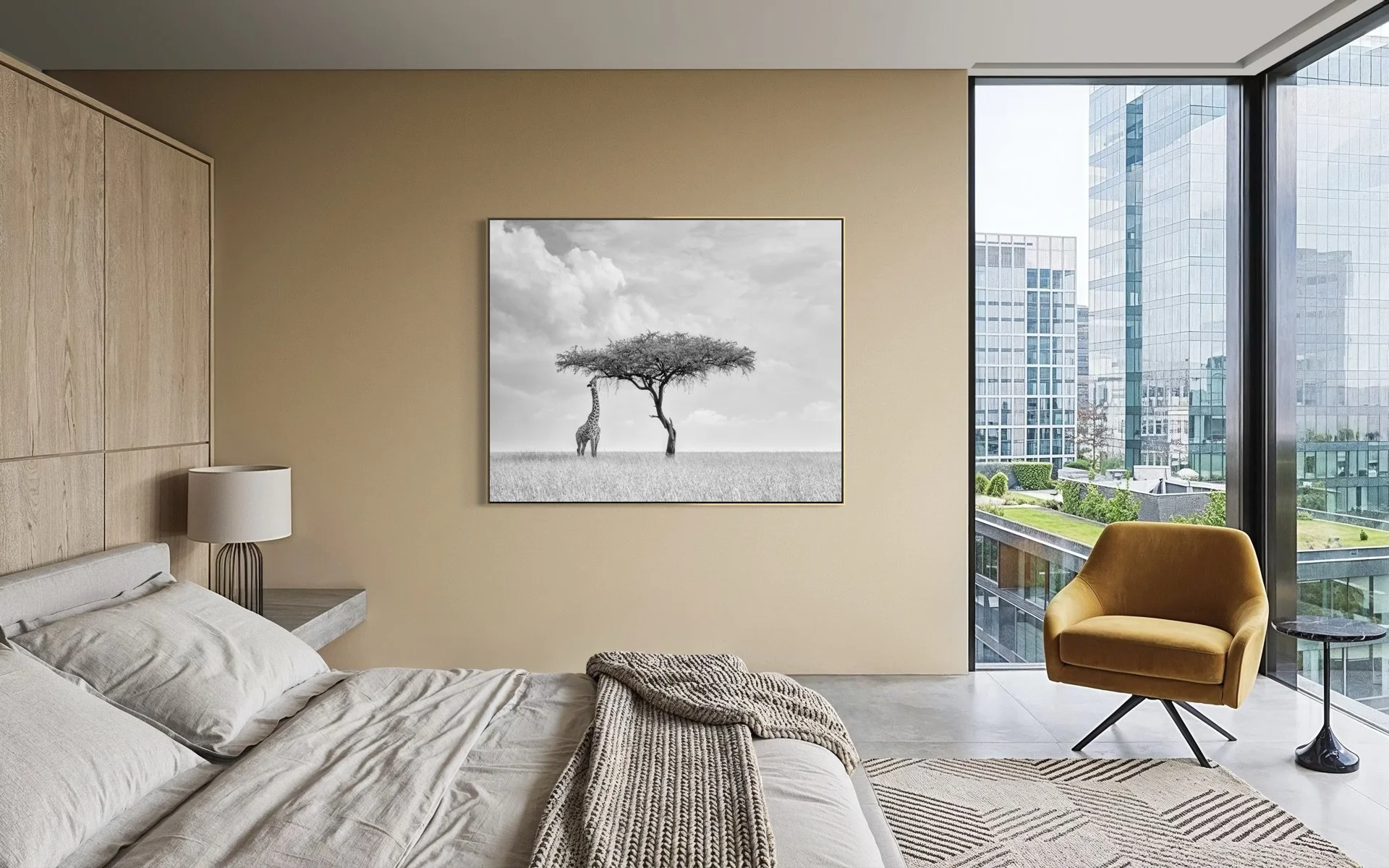
Camelopard | Hasselblad Masters-Finalist 2026
The wild belongs in your space too
What size works in which space
Smaller rooms and intimate spaces
Around 90 × 60 cm (35 × 24 in) creates a strong presence without overwhelming the room. Portrait-oriented photographs work particularly well here, as the intimacy of the subject complements the scale of the space.
Works such as Ruka & Rafiki and Old Tusker naturally draw the viewer closer, creating a more intimate relationship between the artwork and the room.
Black and white photography can be especially effective in smaller spaces, adding depth, contrast and character without introducing competing colour.
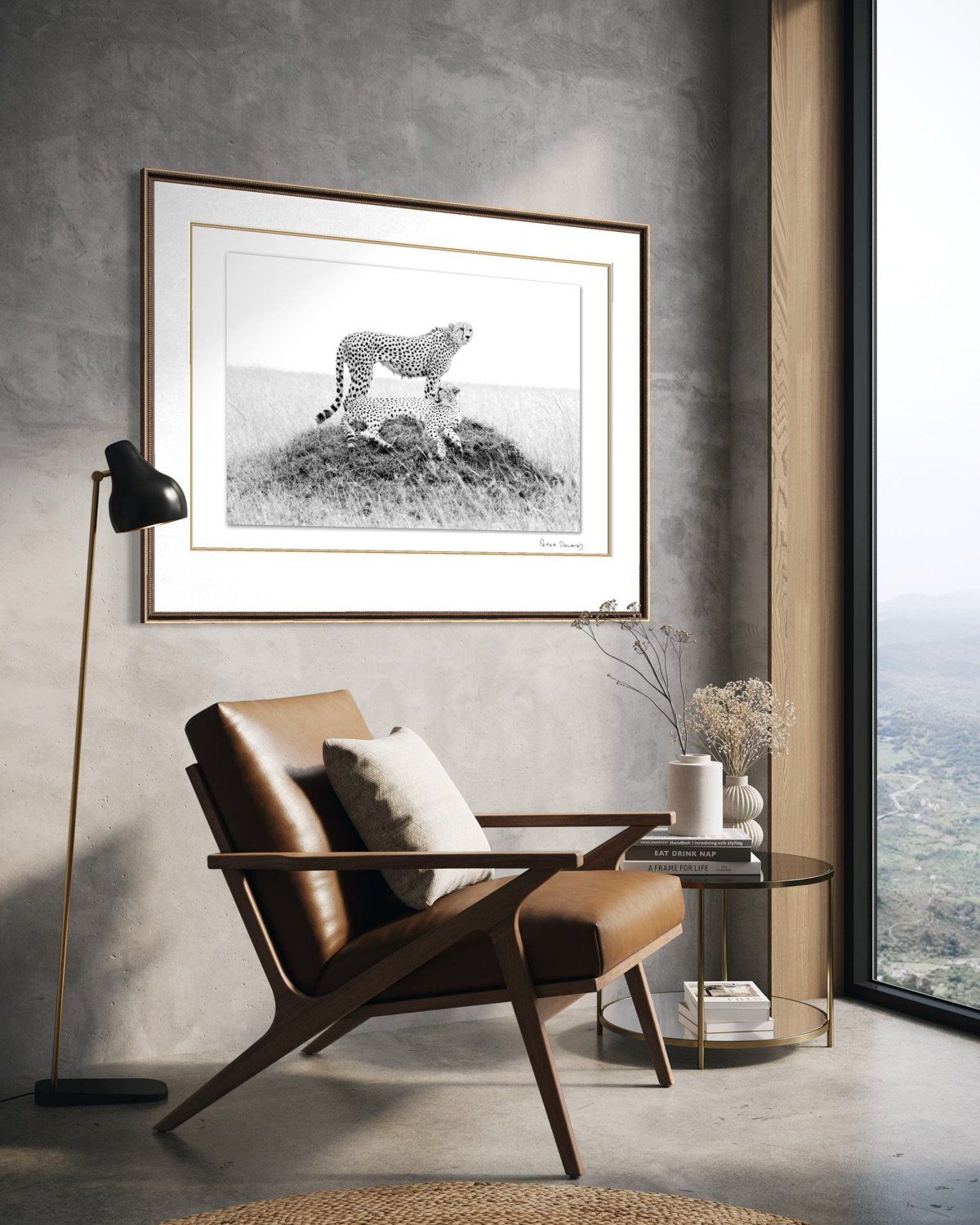
Ruka & Rafiki | Collector’s Edition
Open edition · Hand-signed · Made to order
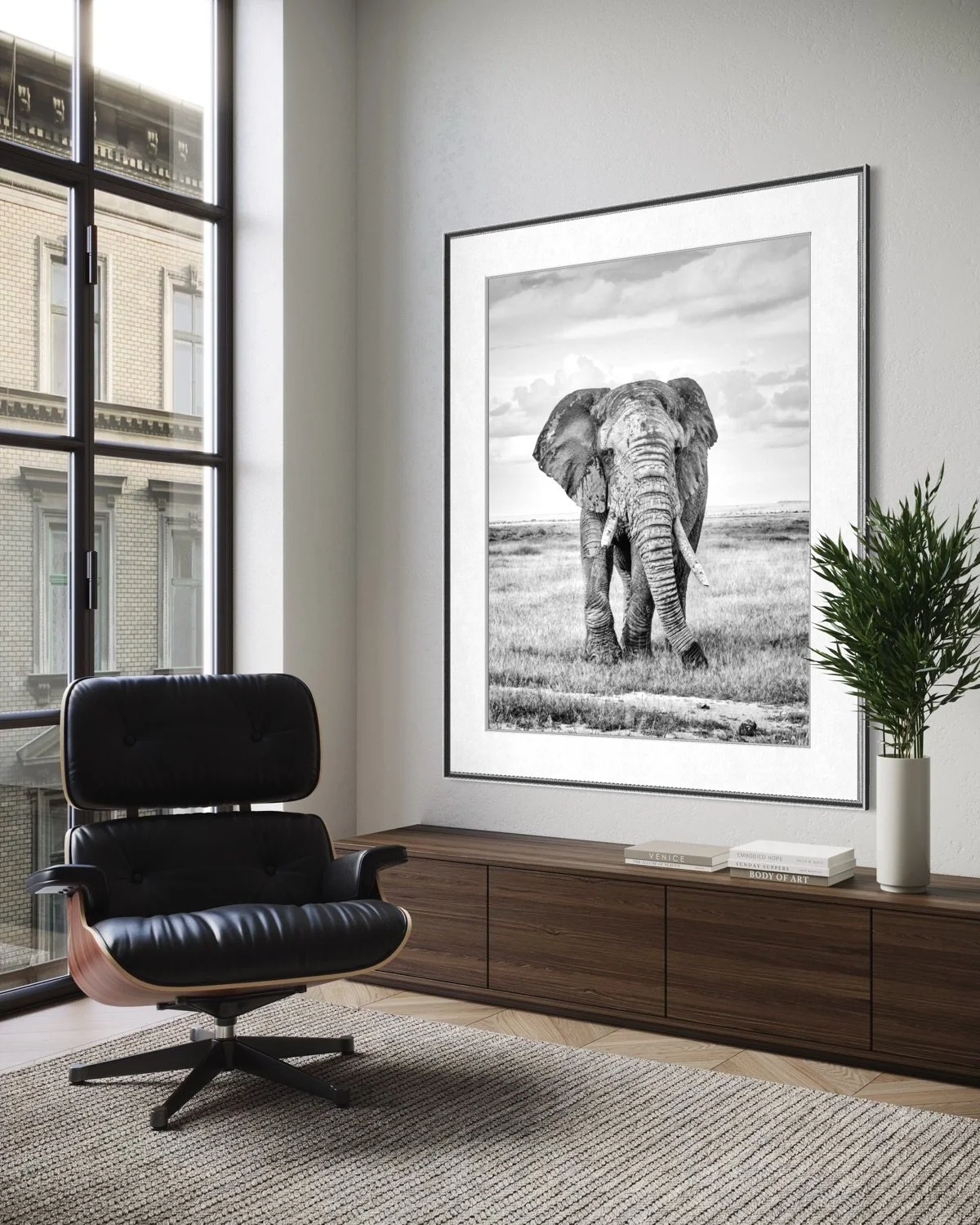
Old Tusker
A moment of wild, every day
Living rooms and open-plan spaces
This is where larger artwork really begins to shine. For most living room walls, I suggest starting at around 120 × 80 cm (47 × 31 in) and scaling up from there.
Panoramic prints at 213 × 110 cm (84 × 47 in) or 178 × 99 cm (70 × 39 in) can fill a wall with authority while maintaining a sense of balance.
A single large photograph will often create more impact than several smaller works competing for attention. Queen of the Mara, Elephant Ridge and The Matriarch are examples of photographs that command a room without overwhelming it.
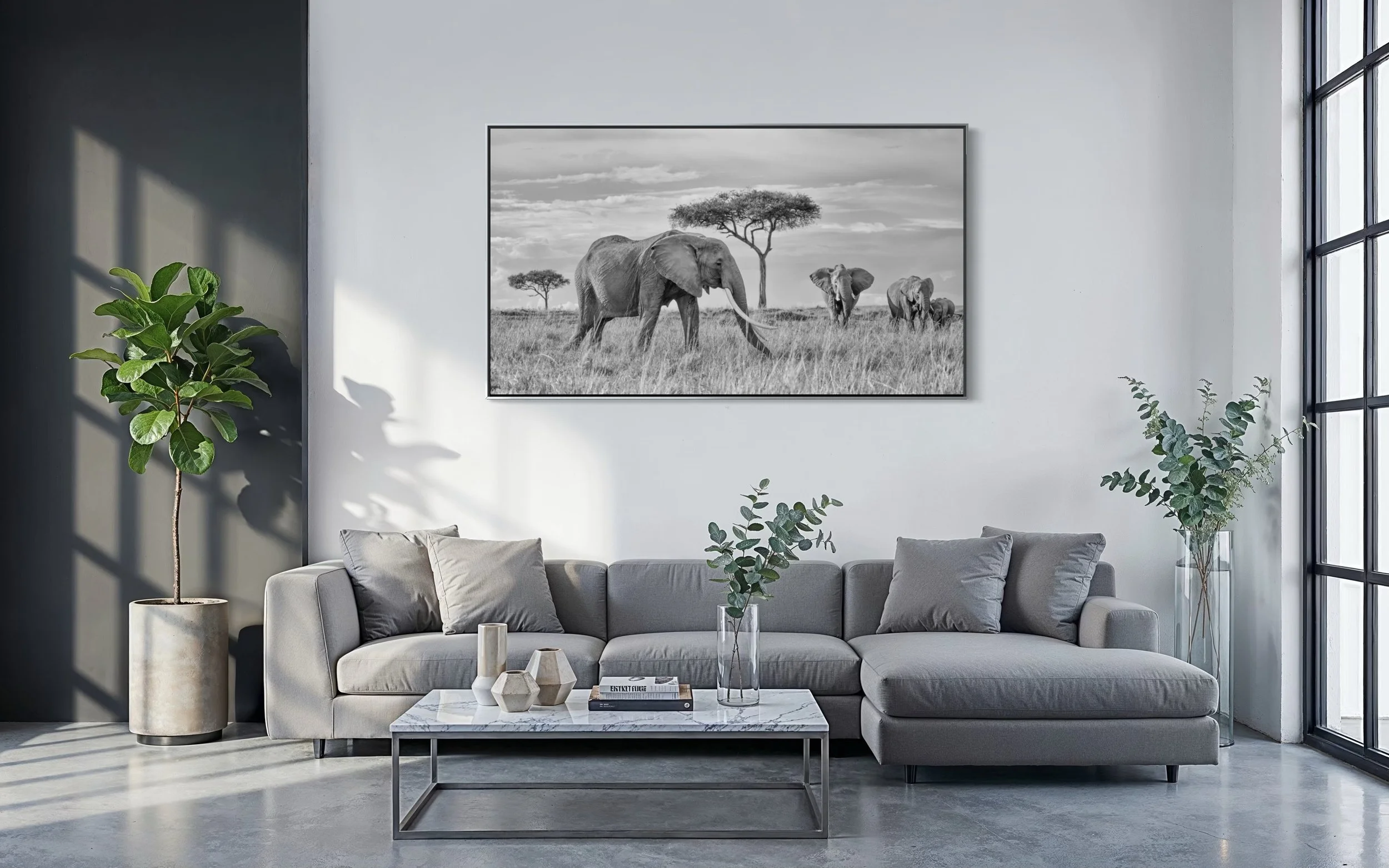
Queen of the Mara and Family
Three generations, one direction, the unspoken language of family.
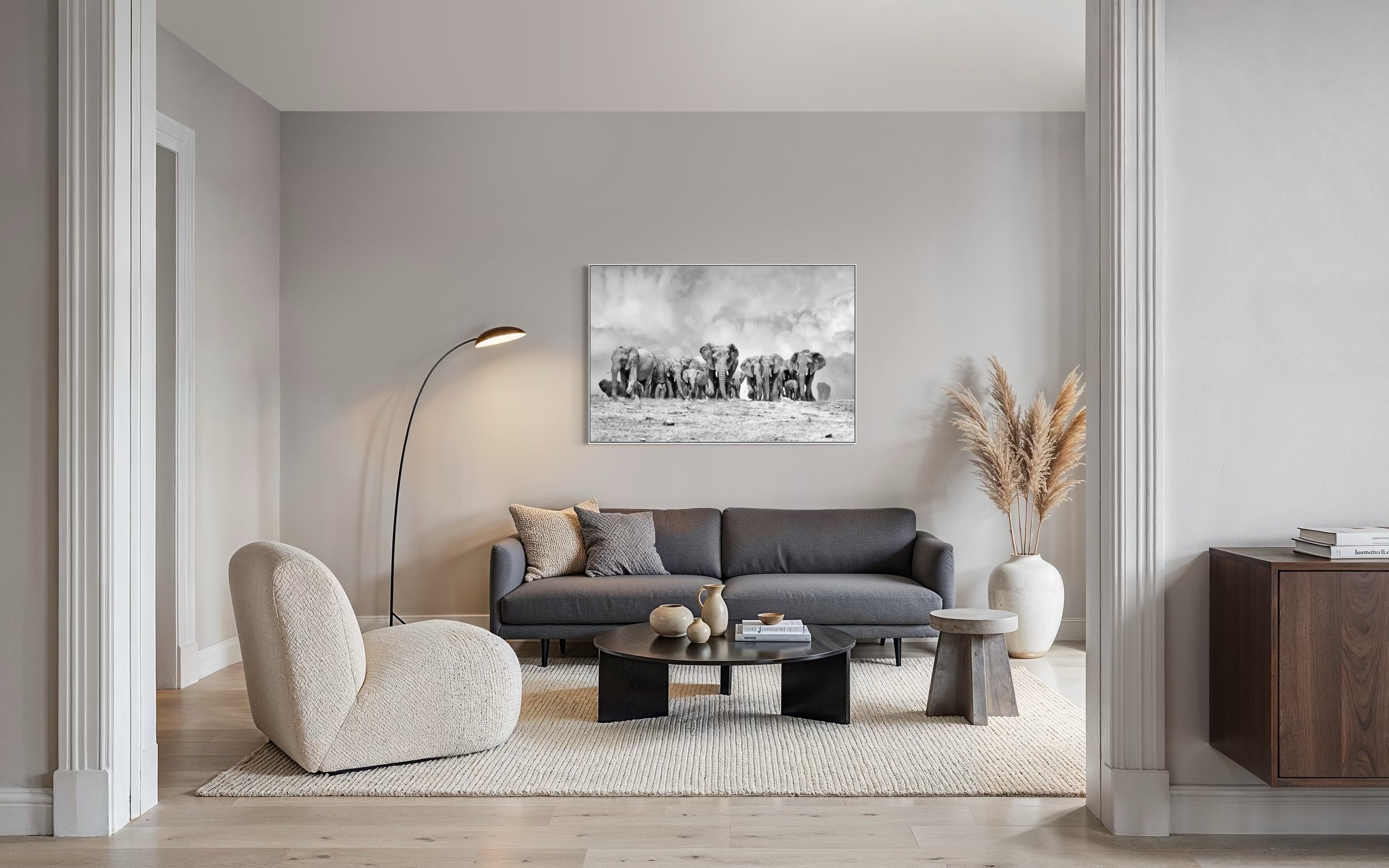
Elephant Ridge
Art that gives you a moment to pause
Statement walls and large spaces
For double-height walls, open stairwells, hotel lobbies and executive spaces, monumental scale can completely change the relationship between the artwork and the room.
Prints up to 240 × 120 cm (94 × 47 in) on acrylic, or up to 295 cm (116 in) as Monumental Acrylic, are available for spaces that demand a greater sense of presence. These larger works are produced to museum-level standards.
Production of Monumental Acrylic can take up to 30 days, because at this scale every detail matters.
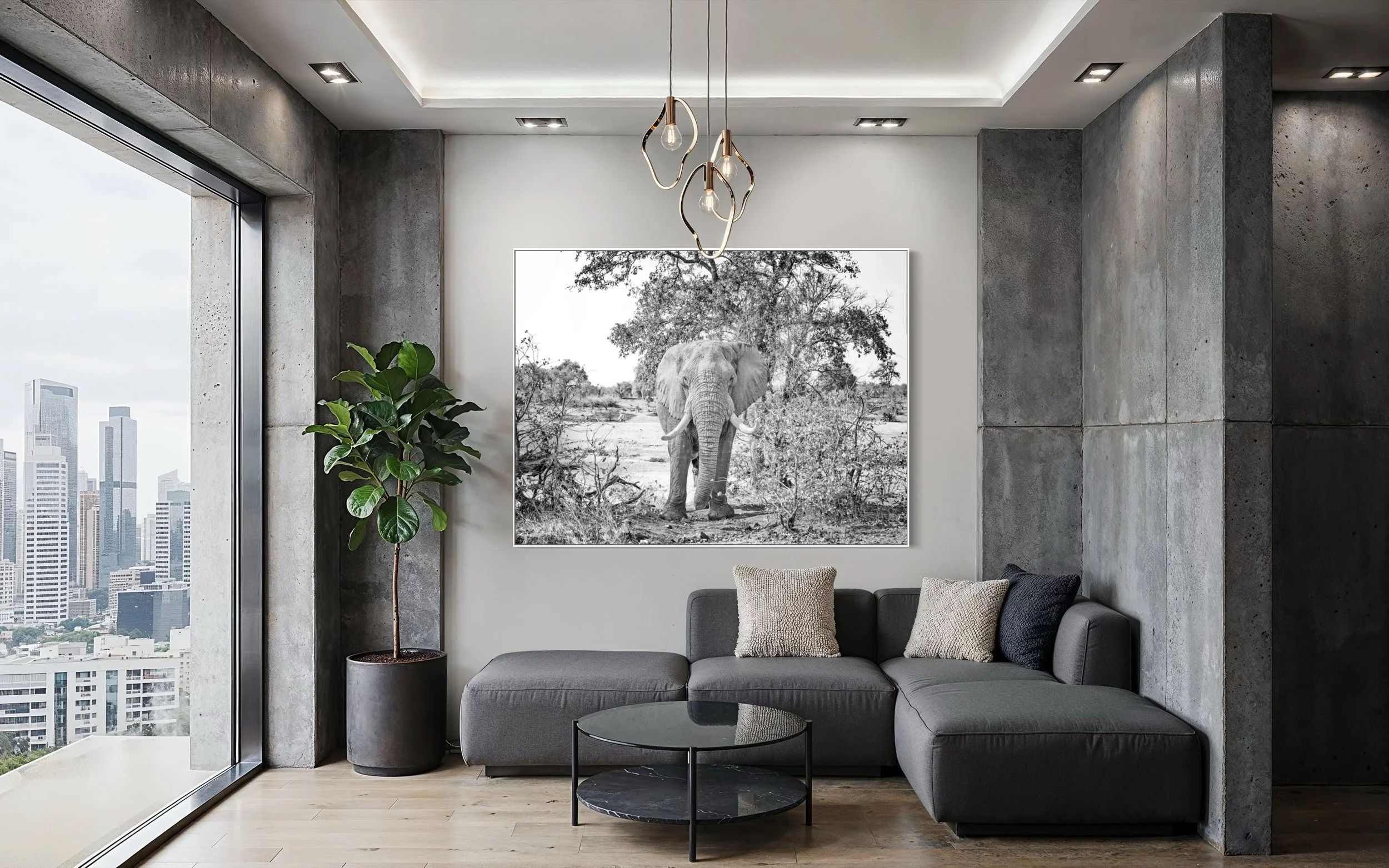
For walls that hold a room.
Museum-Scale Acrylic Glass Print Wall Art
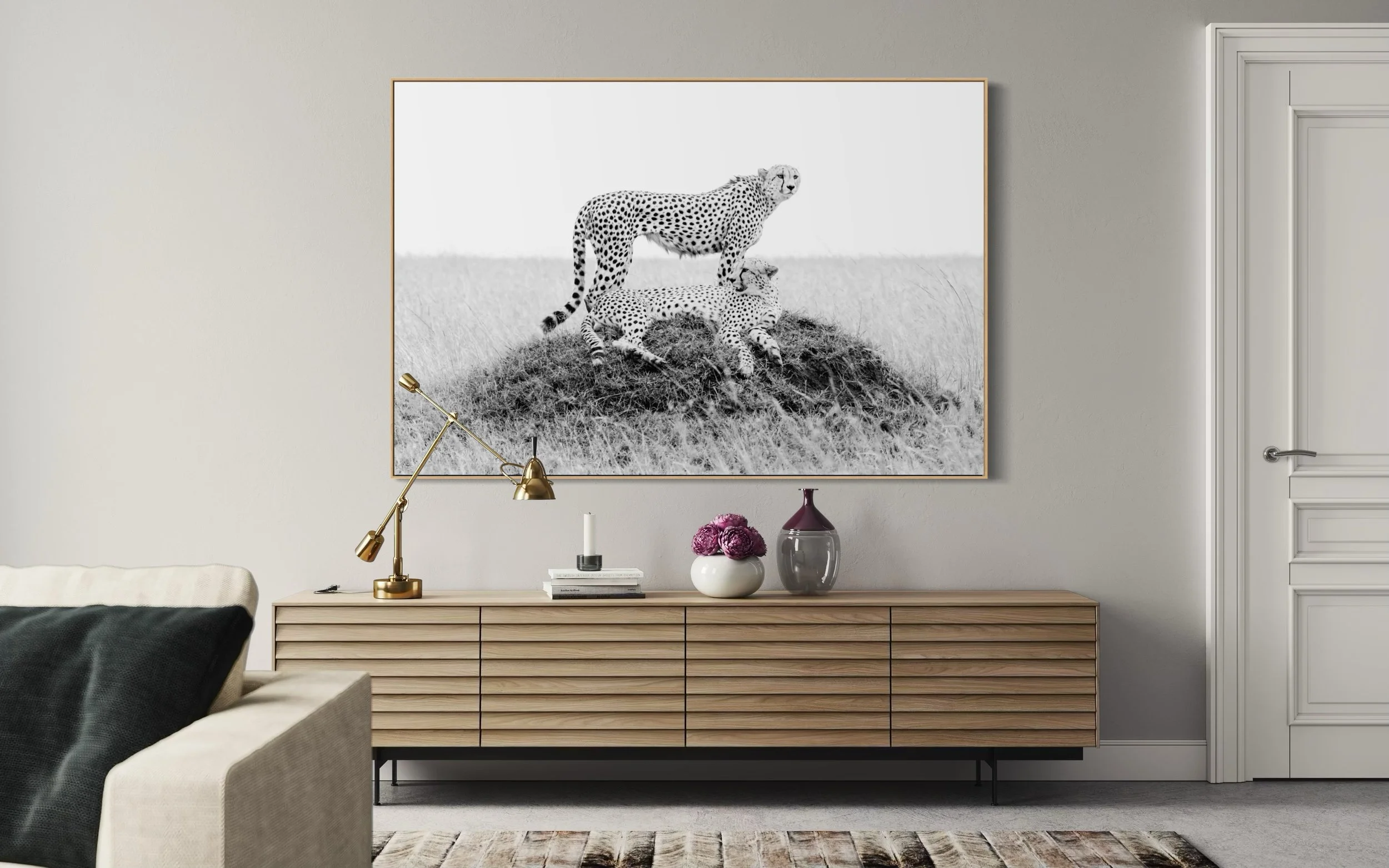
Cheetah Brothers Ruka and Rafiki
“Not a photograph on a wall, but a presence within the room”
Choosing your print finish
Acrylic prints, ready to hang
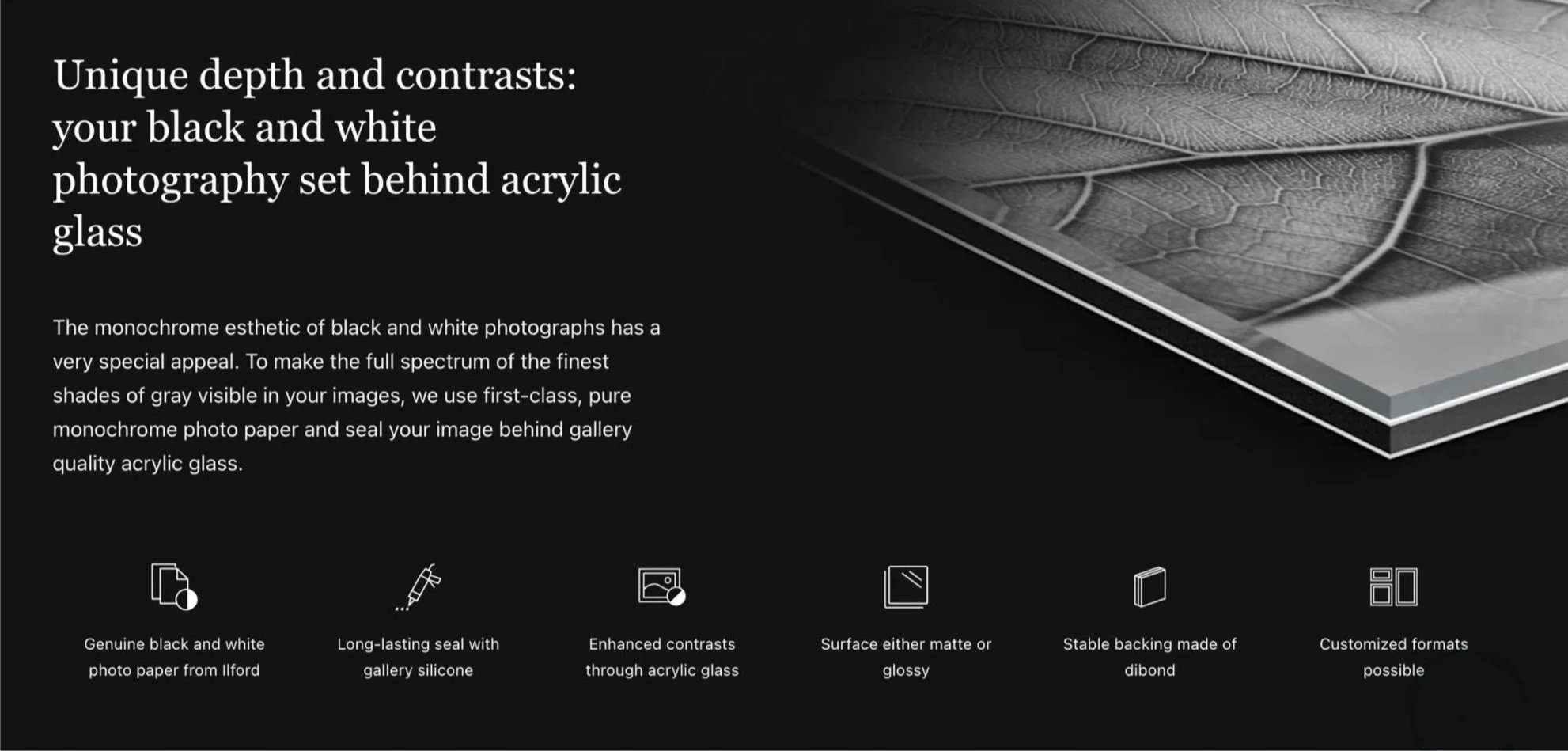
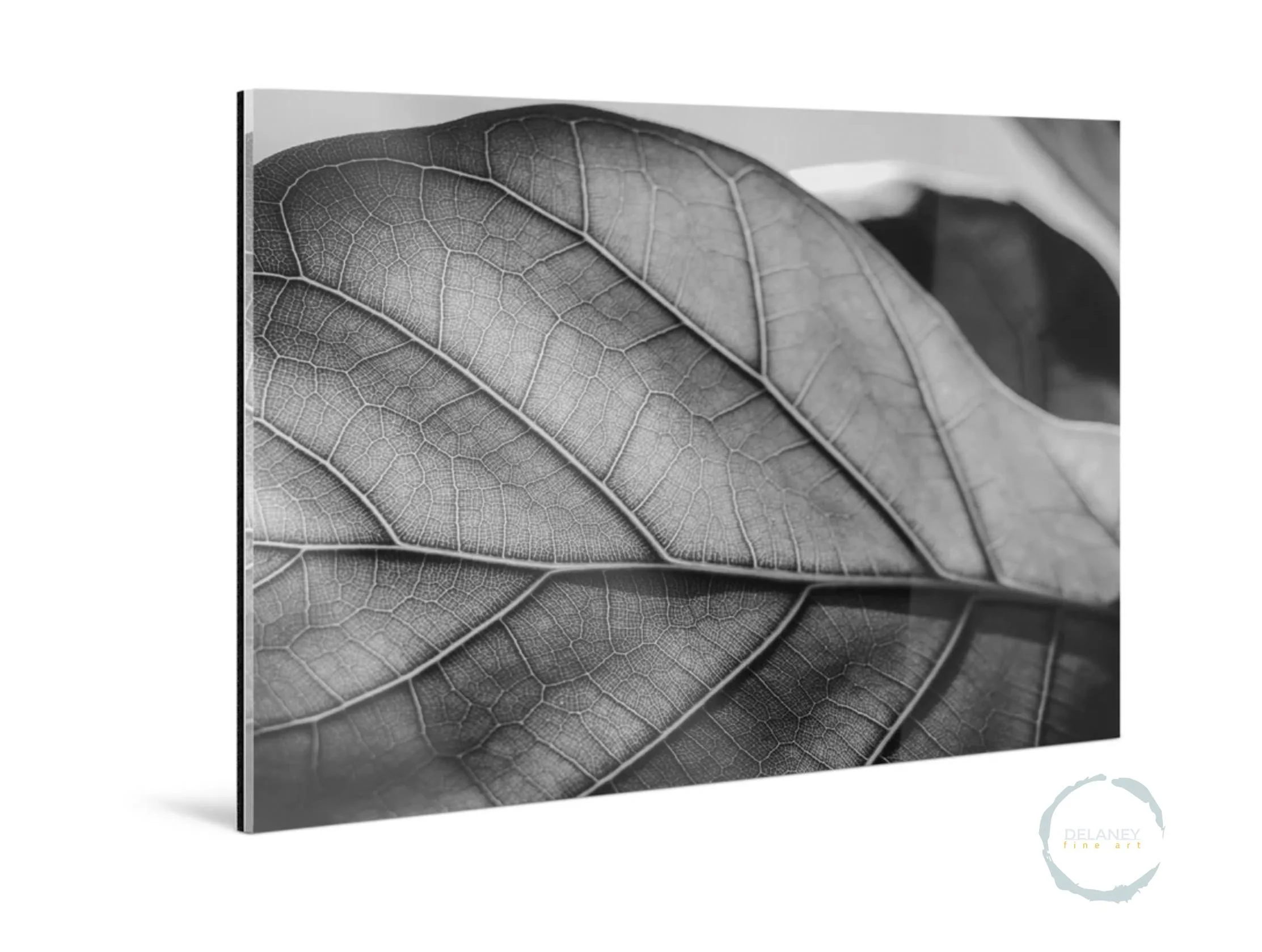
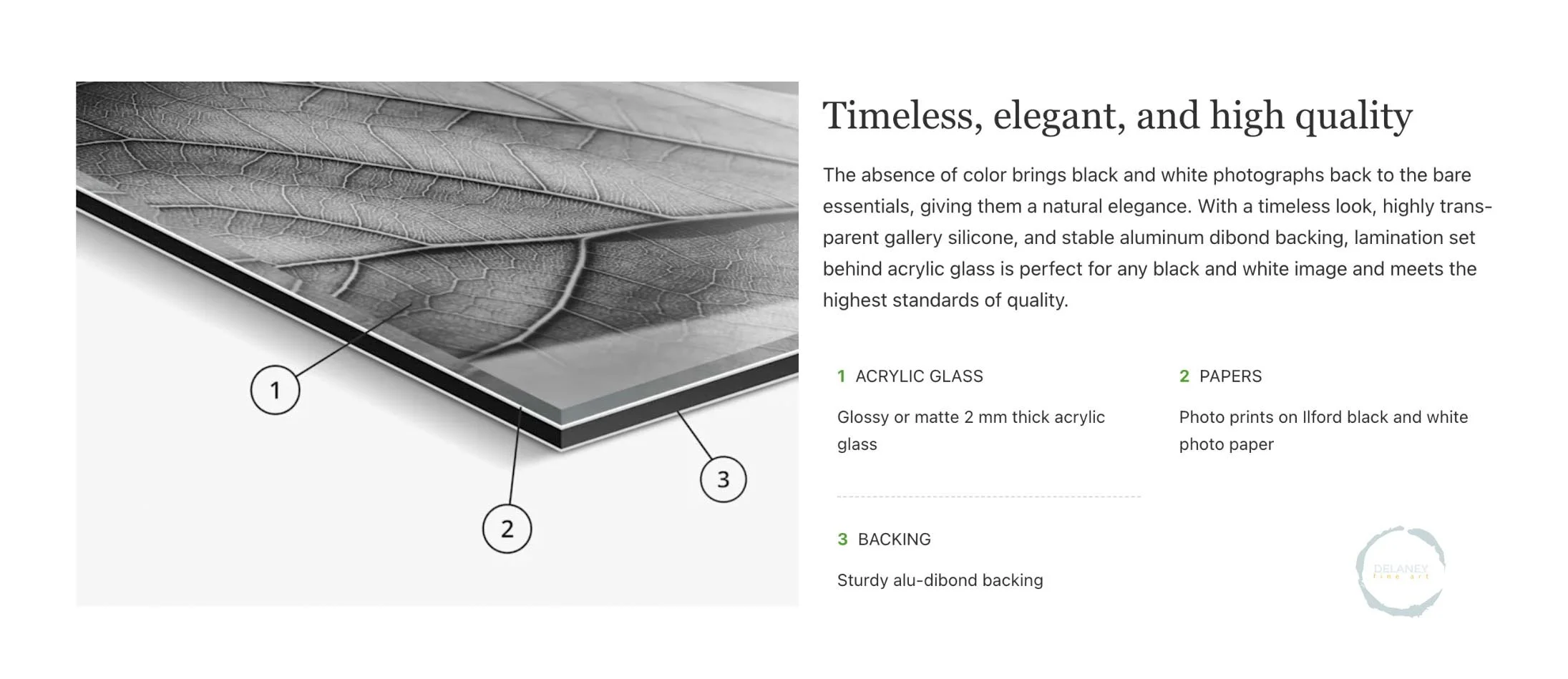
Museum-grade acrylic creates exceptional clarity, depth and luminosity, particularly with my black and white photographs where subtle tonal detail is so important.
The image is face-mounted beneath crystal-clear acrylic, using Ilford Premium Gloss archival paper by WhiteWall. The result is a contemporary presentation with remarkable depth and presence.
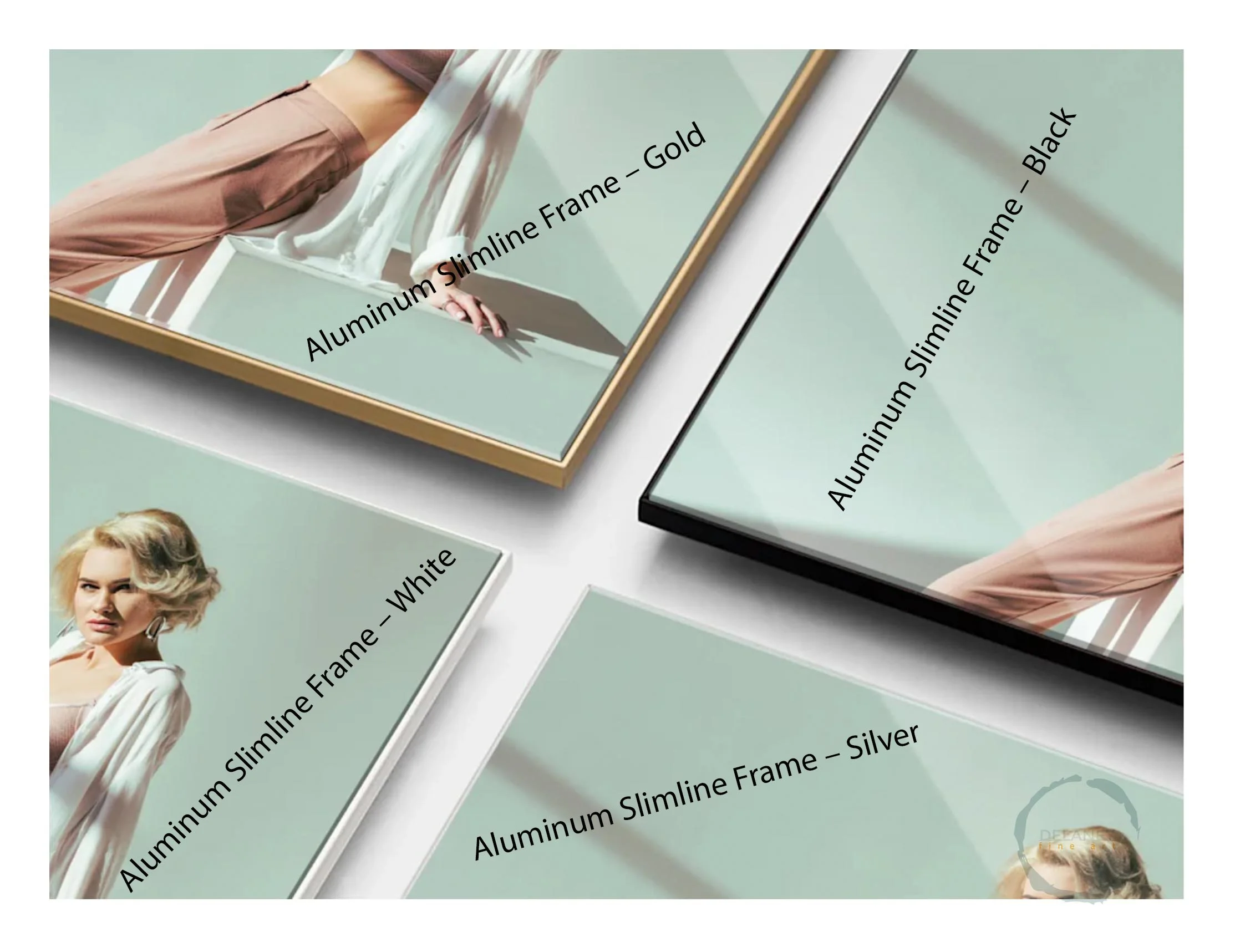
Acrylic prints are available frameless or with a slimline aluminium frame in gold, silver, black or white, with the frame included at no additional cost.
Available up to 240 × 120 cm (94 × 47 in), with larger works available as Monumental Acrylic up to 295 cm (116 in). Free worldwide shipping is included.
For bespoke requirements, including canvas and framing options, please contact me directly.
Unframed fine art prints — your frame, your choice
For collectors who want complete freedom over the final presentation, my loose archival fine art prints are produced on Hahnemühle Photo Rag® 310gsm, a 100% cotton, museum-grade matte fine art paper.
The paper has a beautiful tactile surface and renders the subtle tonal gradations of black and white photography with exceptional depth.
Unframed prints are available in a range of sizes, with panoramic options available for larger walls. Each print includes a white border ready for framing.
This is the natural choice for collectors and interior designers who want to select their own frame, mount and presentation to complement their space.
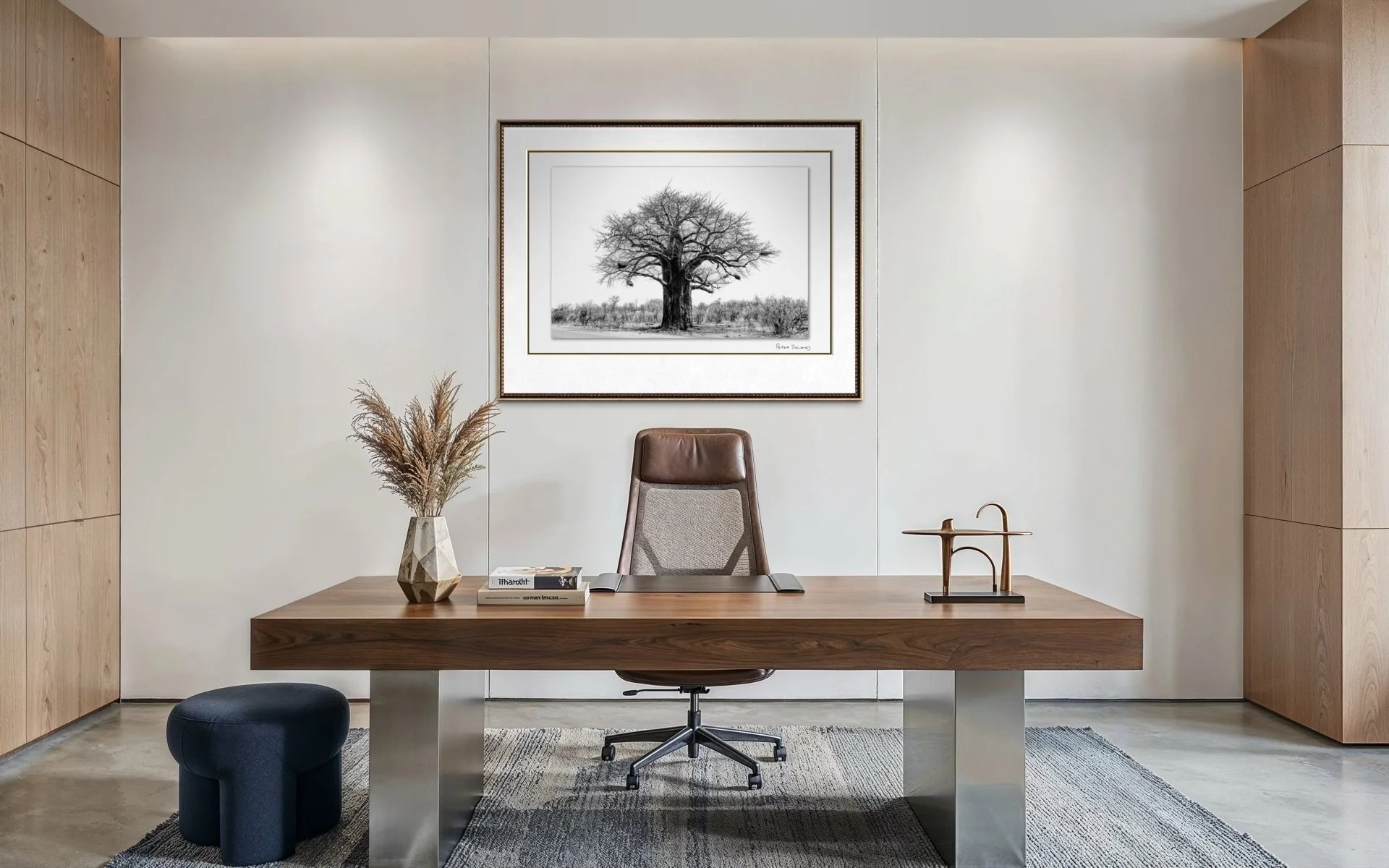
The Ancient One
The print that tends to find the right walls
Multi-panel installations
For expansive walls and architectural spaces, selected photographs are also available as multi-panel installations.
A single image can span an entire wall at a scale that would be difficult to achieve with a conventional framed print, creating a powerful and immersive focal point.
Multi-panel artwork works particularly well in open-plan homes, boardrooms, hotel interiors and luxury lodges.
Eye To Eye, for example, can be produced across three seamless acrylic panels, allowing the photograph to expand across the wall while retaining the strength and detail of the original image.

Eye To Eye | 3 Panel Acrylic Glass Wall Art
Across three seamless panels, his raw power and primal grace expand to full scale, an unyielding presence rendered across a panoramic window into the untamed beauty of the wild.
A note on scale from interior designers
One of the most common mistakes I see in residential spaces is choosing artwork that is simply too small for the wall.
A single, well-proportioned large photograph can often create far more impact than several smaller pieces. Artwork that is undersized or hung too high can make a room feel disconnected, while the right scale allows the artwork, furniture and architecture to work together.
Black and white photography has another advantage. Its restrained palette adds contrast and visual weight without creating a conflict with the colours already present in your interior.
In an open-plan space, an oversized photograph can become a natural focal point, giving the room a sense of structure and drawing the surrounding furniture into the composition.
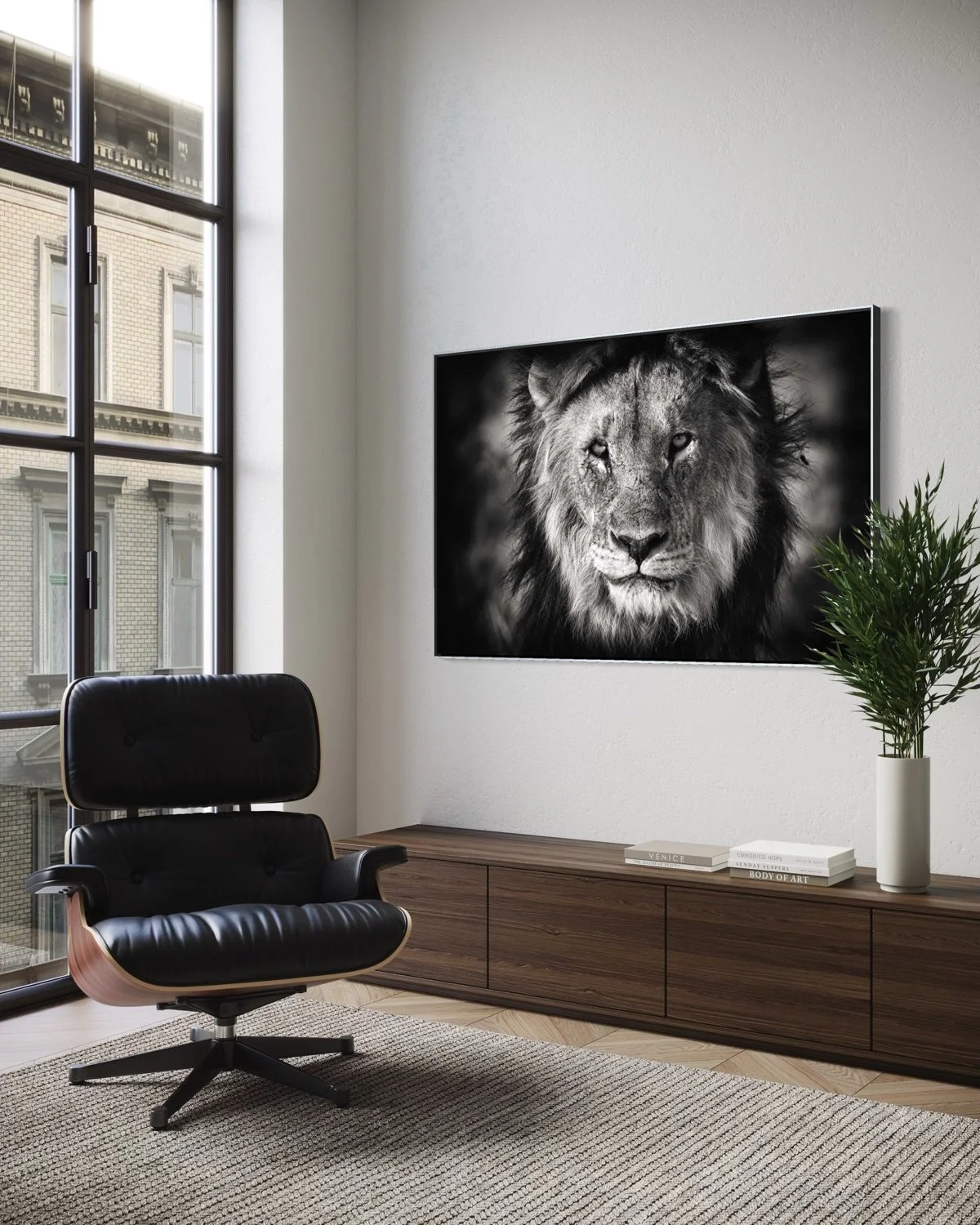
Heart of Darkness | Acrylic Print Silver Frame
He emerged from the darkness, and the silence stood still.
Built to last a lifetime
Every print, acrylic and unframed, is produced with archival materials rated to last generations without fading or degradation. These are not decorative prints. They are collectable objects, made to museum standard, that will still be on your wall and your children's walls in fifty years.
A fine art print is one of the few things you bring into a home that genuinely grows in meaning over time.
Not sure what size works for your space?
Choosing the right size can be difficult when you're looking at a photograph on a screen.
If you're unsure, send me a photograph of your wall and I'll give you my honest recommendation on the size and format I think would work best.
There is no obligation. Sometimes a simple second opinion is all you need to get the scale right.