Why Black and White African Wildlife Art Brings Africa Home
Africa Never Really Leaves You
There are places that stay with you long after you have left them.
Africa is one of them.
It is not only the landscapes or the wildlife. It is something quieter. The first light over open plains. The distant call of lions carried through the night. The movement of elephants through dust before sunrise. The feeling that everything important happens just beyond what you can fully hold onto.
For many who travel through Kenya, the experience does not end when they return home. It continues long after the journey is over.
And for some, it eventually finds its way back onto the walls of their home.
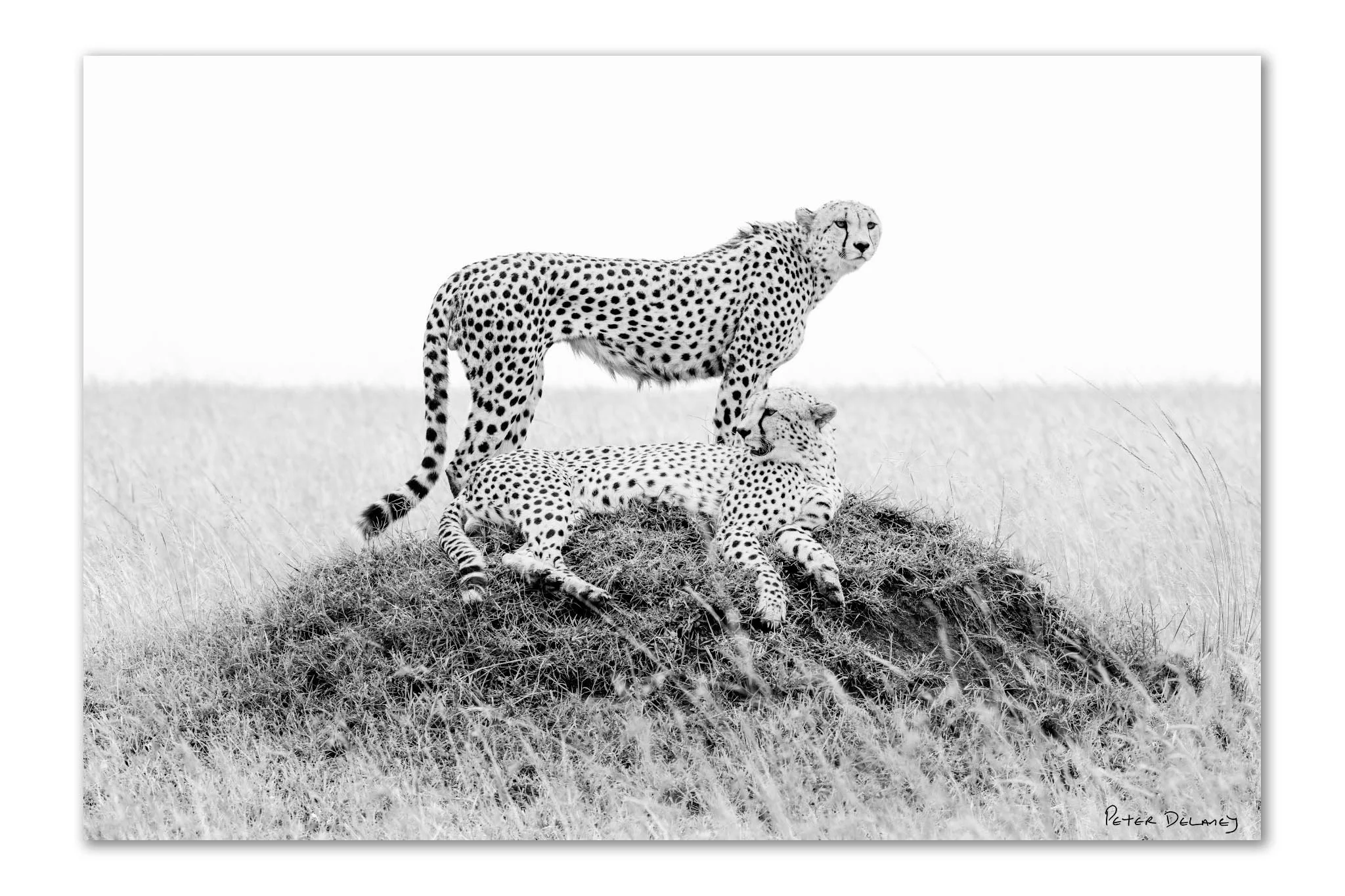
Ruka & Rafiki
Two brothers. One legacy. The silent code of survival in the Masai Mara.
Mara North — Lions, Giraffes, and Open Silence
Mara North is a place defined by space and atmosphere.
Wide plains. Shifting skies. Sudden weather. And moments that arrive without warning.
It is here that lions reveal their presence not through noise, but through stillness.
In Eye to Eye | The Serengeti Boys, a single male lion rises from rain-soaked grass, his gaze fixed, unbroken. There is no movement beyond the wind and rain. Only awareness. Only presence.
But Mara North is not only intensity.
It is also rhythm and quiet elegance.
In Camelopard and Serendipity, giraffes move through open space with a slow, deliberate grace. Their forms stretch into sky and horizon, creating a sense of balance that softens everything around them. Nothing rushes. Nothing competes. The landscape simply holds them.
This is where Africa feels most open. And most still.
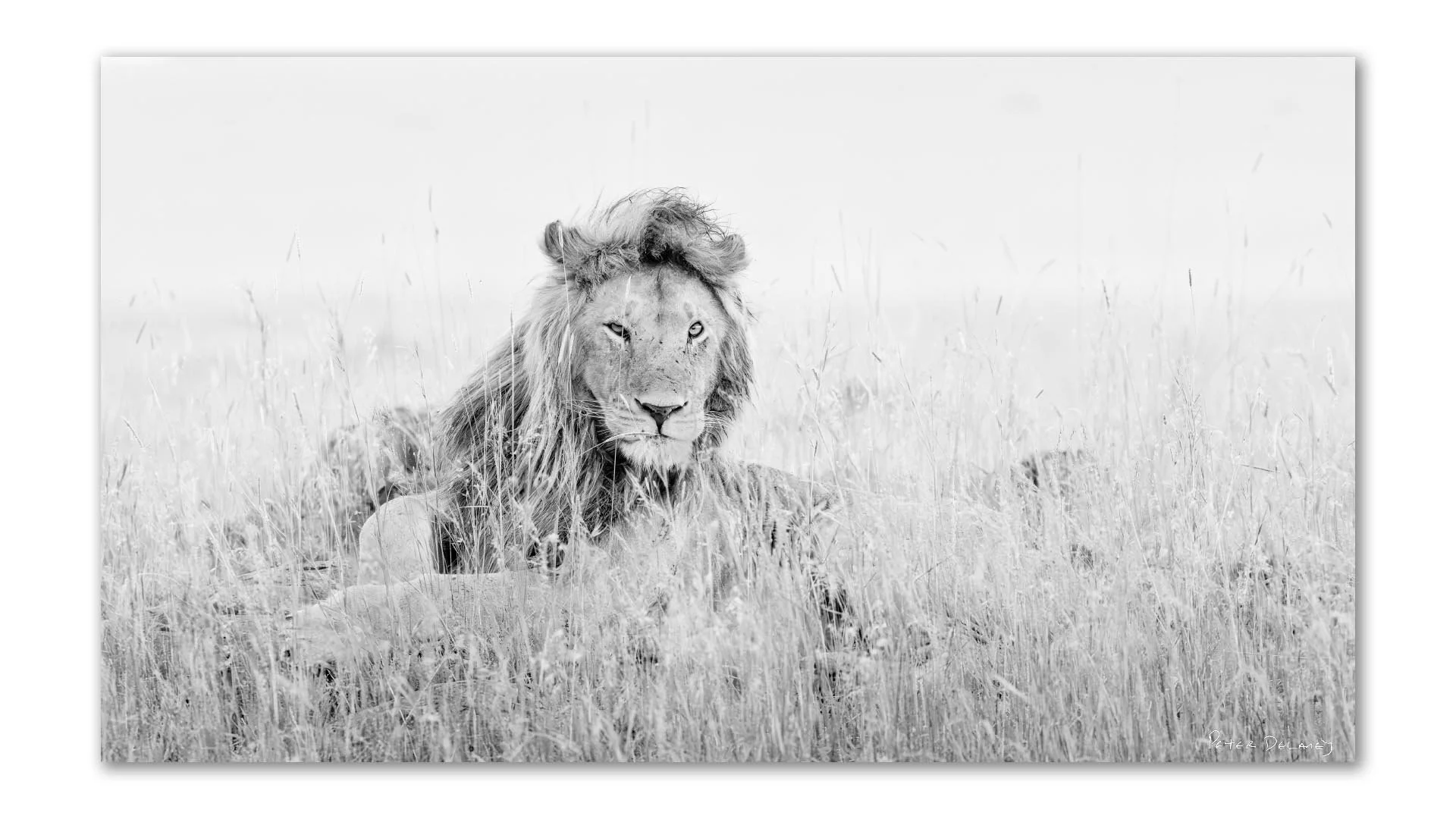
Eye to Eye |
A lion in mist and wet grass, unbroken stare into the lens.
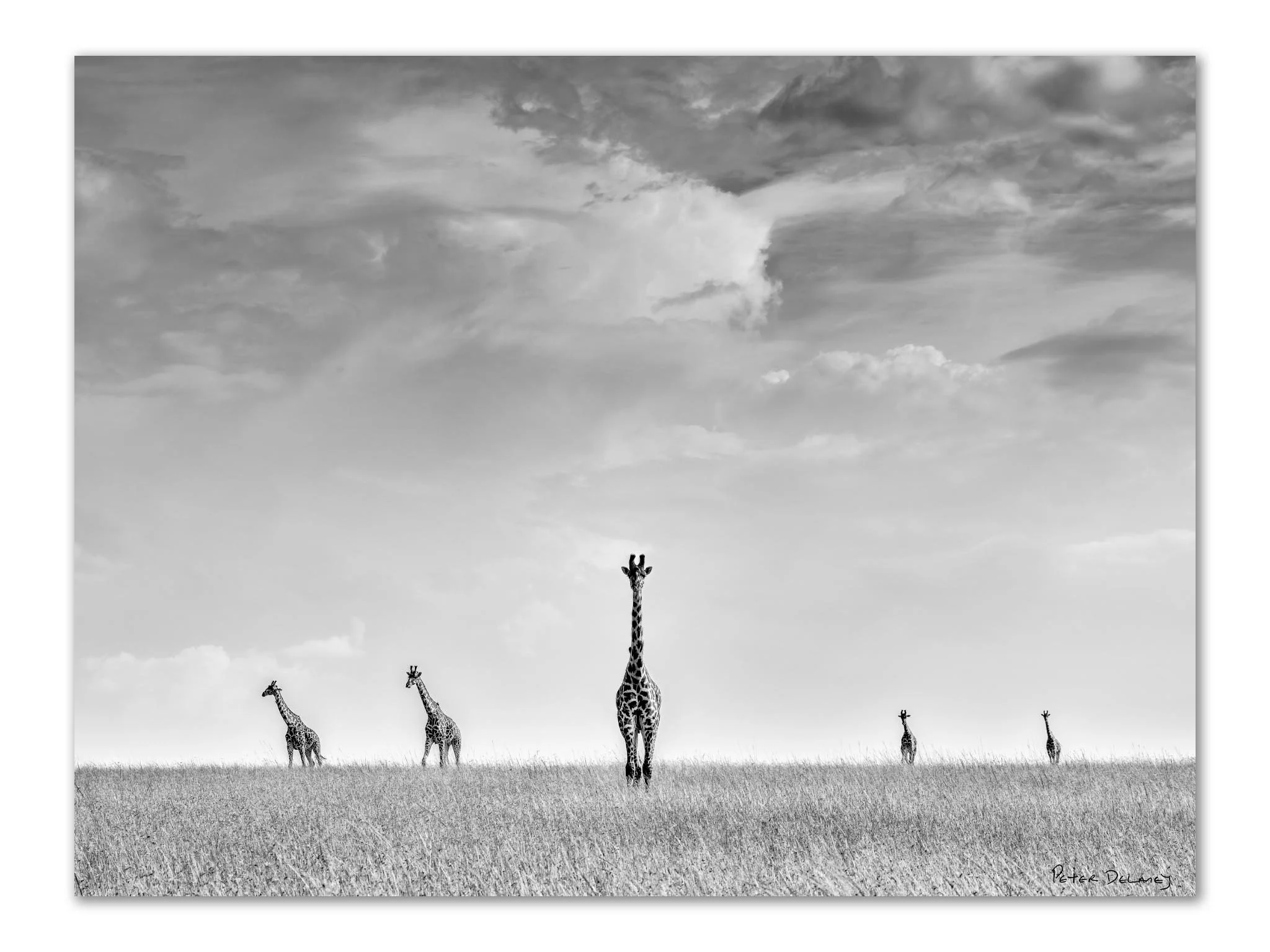
Serendipity
Giraffes crossing the Mara North plains in quiet alignment and chance.
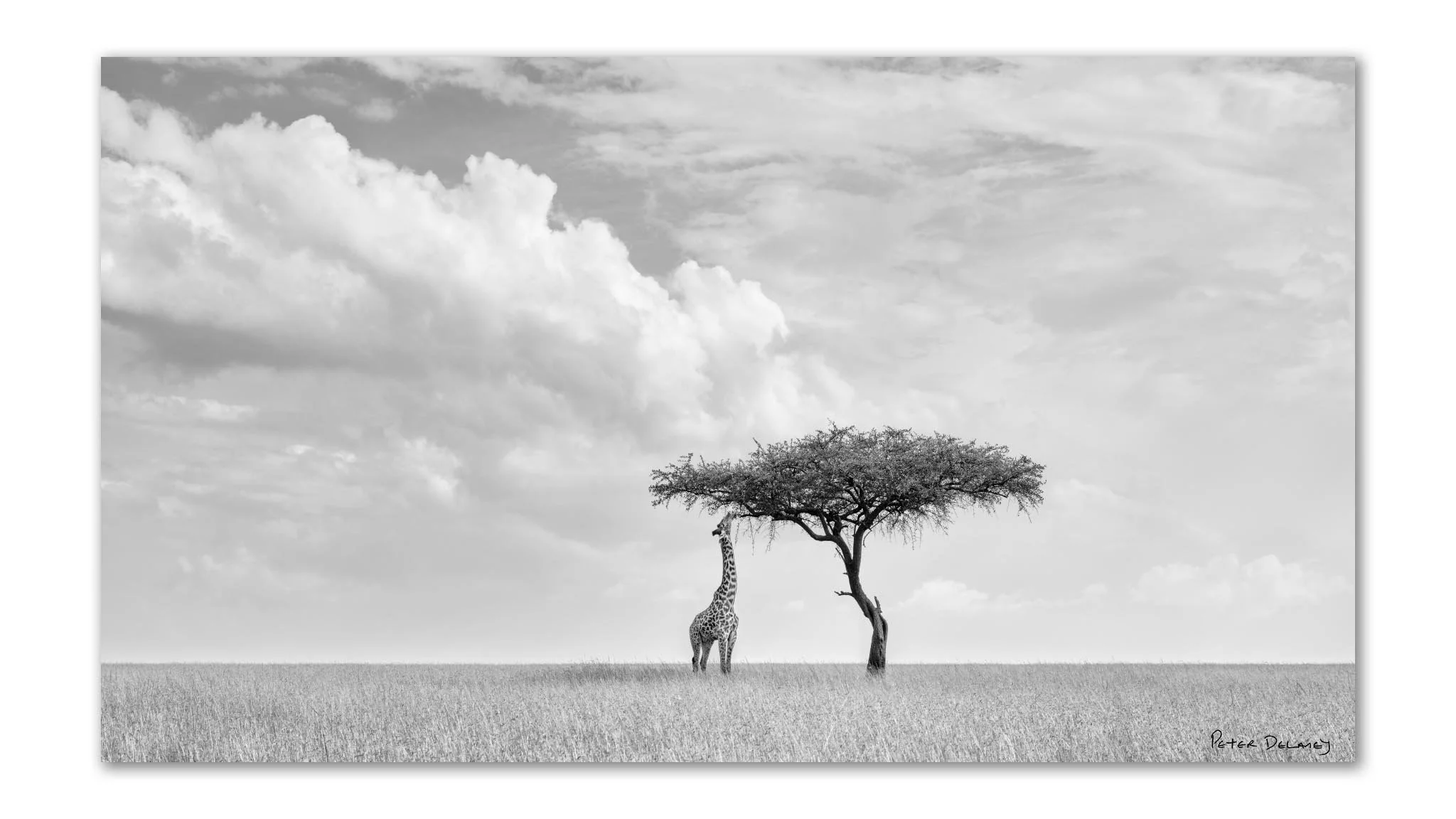
Camelopard
There are moments in the wild that feel almost dreamlike.
Amboseli — The Land of Tuskers and Kilimanjaro
Amboseli carries a different kind of weight.
Open ground. Heat. Dust. Distance. And always, Kilimanjaro standing quietly in the background.
This is the land of elephants, and more specifically, the land of tuskers.
In Old Tusker, age is written into every line. One tusk worn short through decades of use, the other still extending forward with strength and purpose. A life recorded not in words, but in form.
In Young Tusker, that same story begins again, still unfolding, still learning the rhythm of the land he will one day dominate.
And then there is Craig, one of the last great super tuskers. A rare presence moving through Amboseli as though the landscape itself recognises him.
Here, elephants are not scenery.
They are memory, lineage, and legacy.
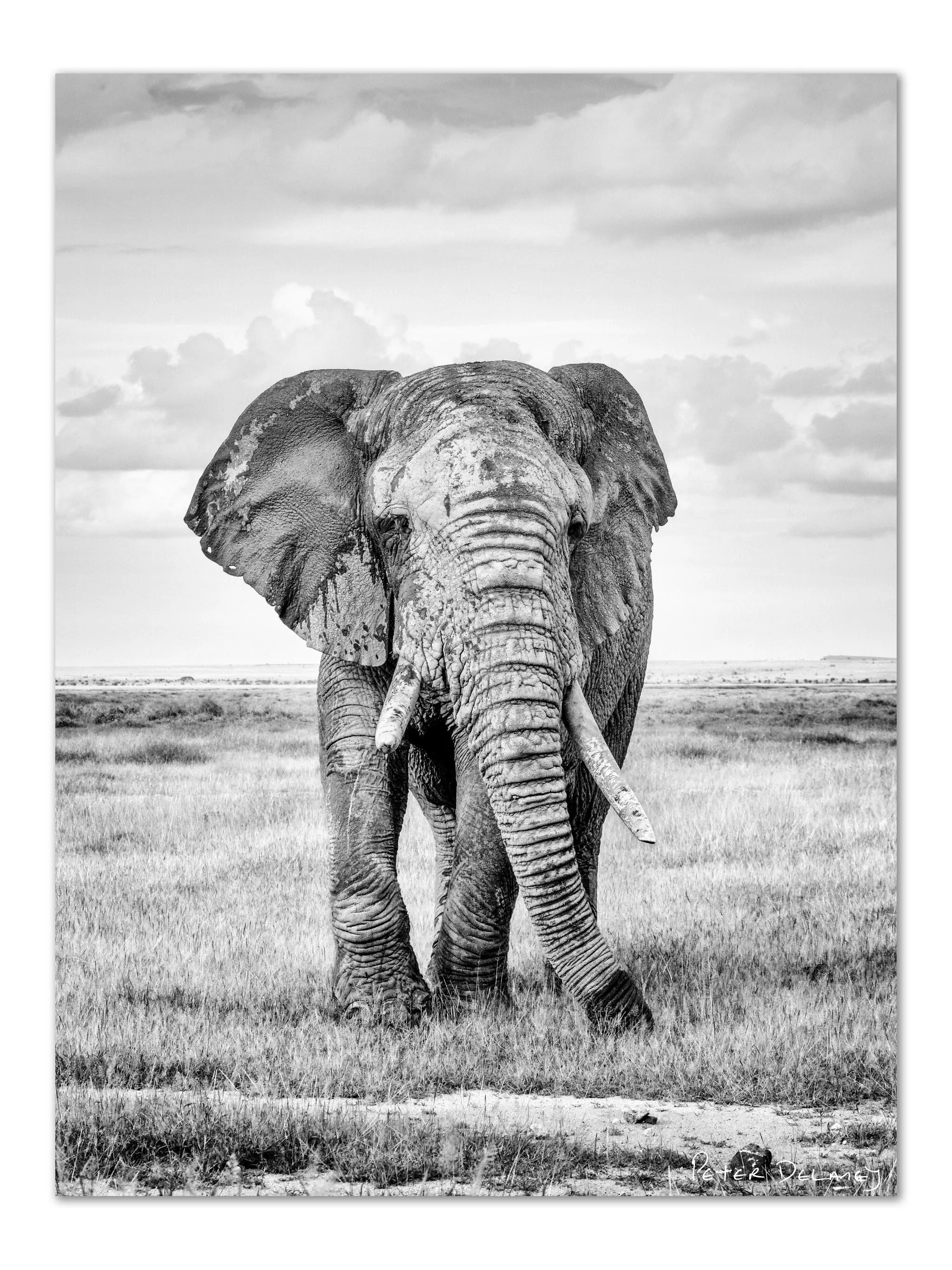
Old Tusker
No drama, no urgency, just quiet strength and the timeless rhythm of the wild..
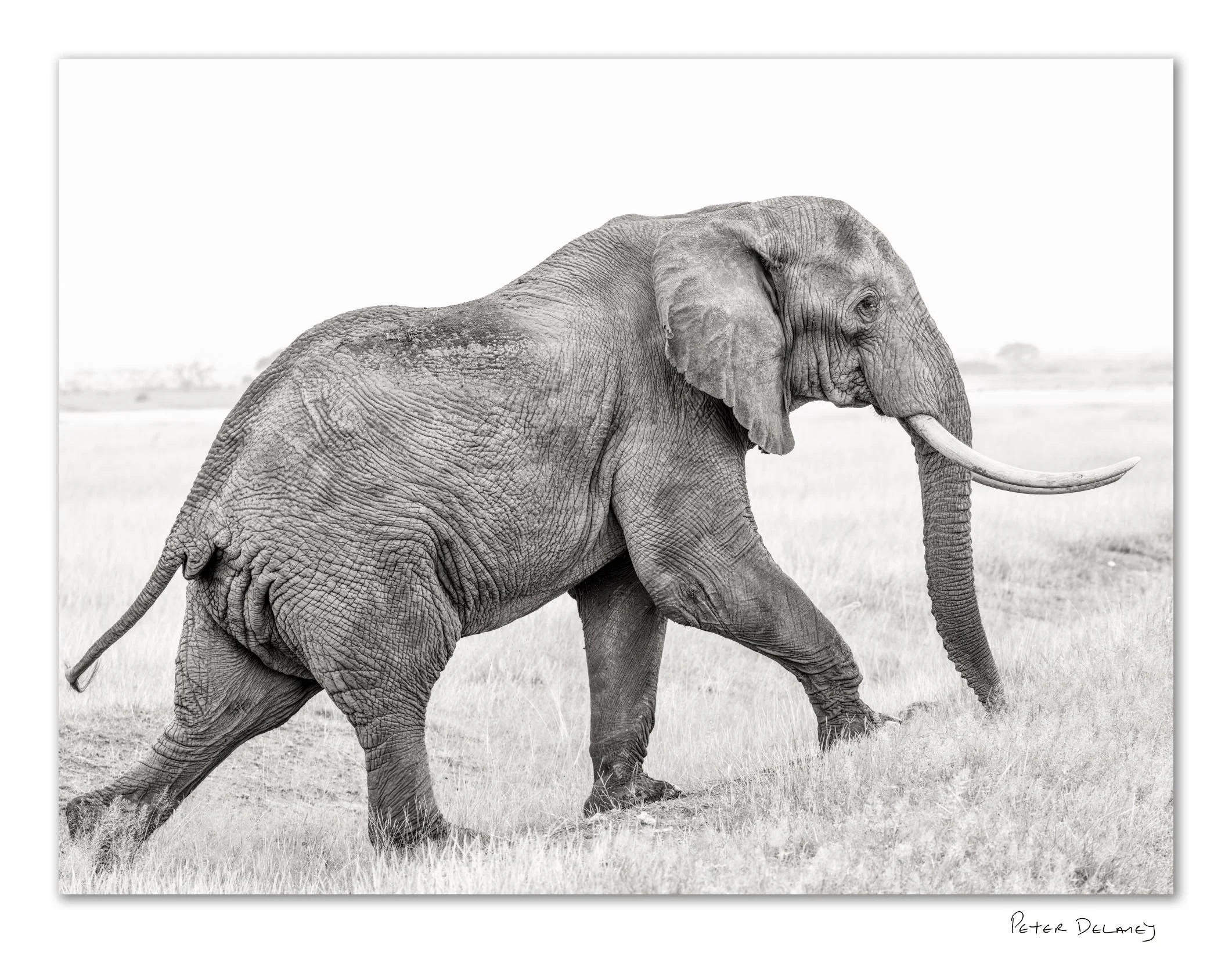
Young Tusker
A young bull moving through Amboseli’s open plains, still growing into his strength.
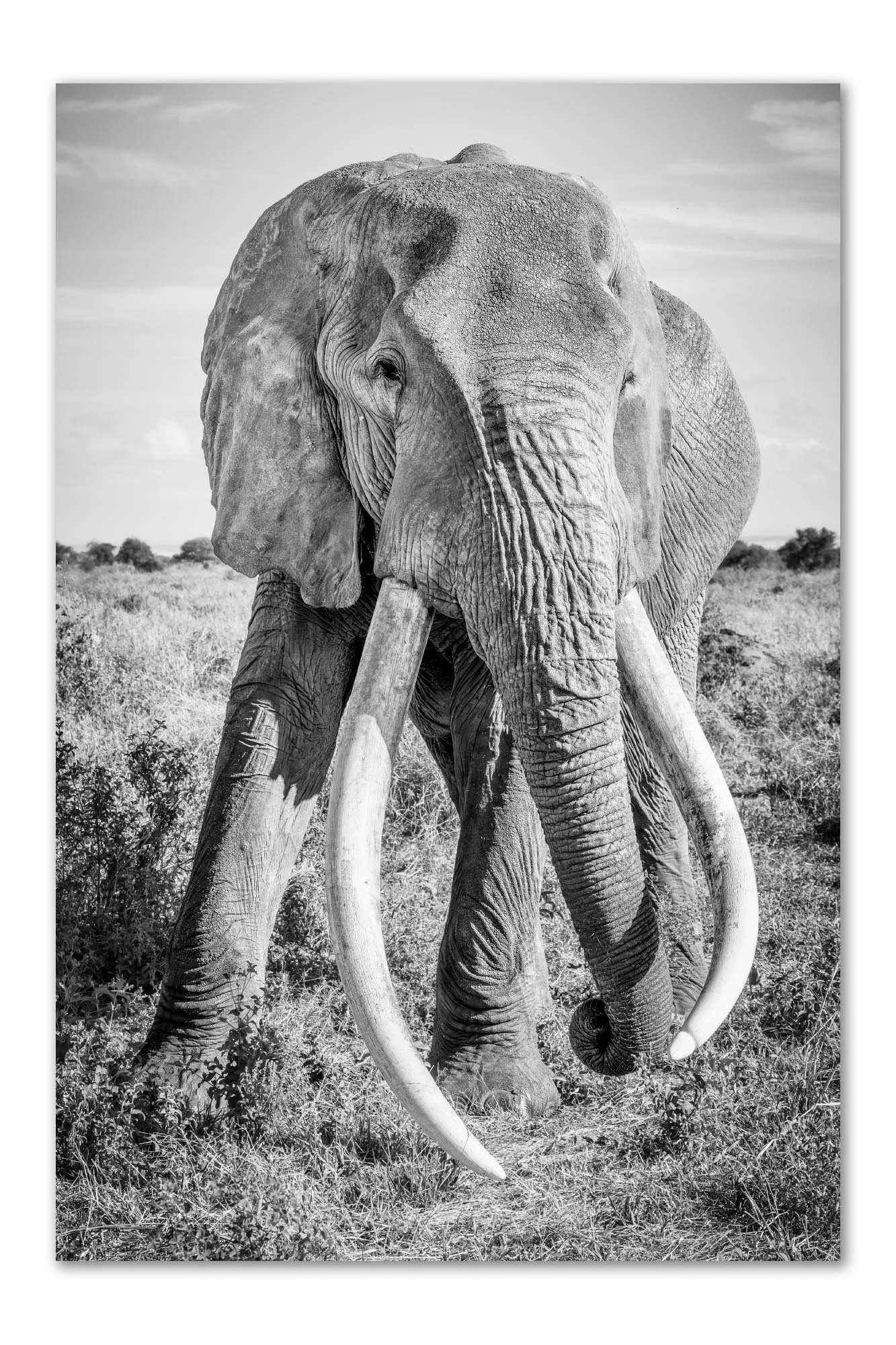
Craig
A super tusker of Amboseli, now passed, captured in a quiet moment of presence and memory.
Lake Nakuru — Light, Fever Trees, and the Leopard Moment
Lake Nakuru feels more intimate.
Enclosed. Textured. Defined by fever trees and shifting light.
It is here that the leopard reveals itself differently.
In Fever Tree Leopard, a young female moves through broken branches and golden light. She appears, disappears, and reappears again, guided by instinct rather than intention.
This is not the open theatre of the plains.
It is precision. Silence. Timing.
A single moment held between visibility and disappearance.
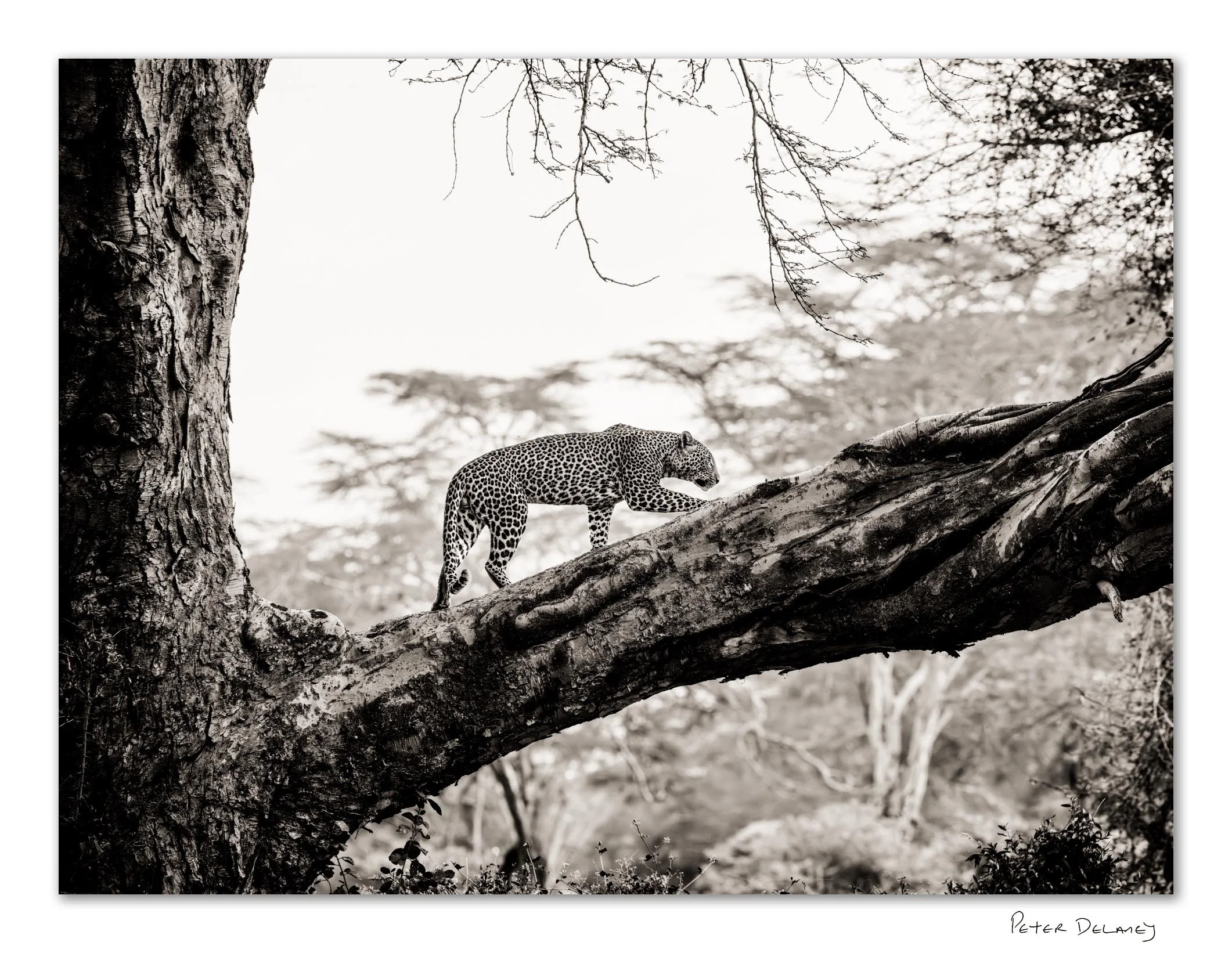
Fever Tree Leopard
A young leopard moving through fever trees in Lake Nakuru, caught between light and shadow.
Why Black and White Wildlife Photography Feels Timeless
Colour shows you what Africa looked like.
Black and white shows you what it felt like.
When colour is removed, distraction disappears with it. What remains is form, texture, and emotion. The weight of a lion’s gaze. The structure of a giraffe against sky. The worn surface of tusks shaped by time. The stillness of a landscape before change.
Monochrome does not simplify the image. It clarifies it.
And in that clarity, something deeper remains.
Something that does not fade.
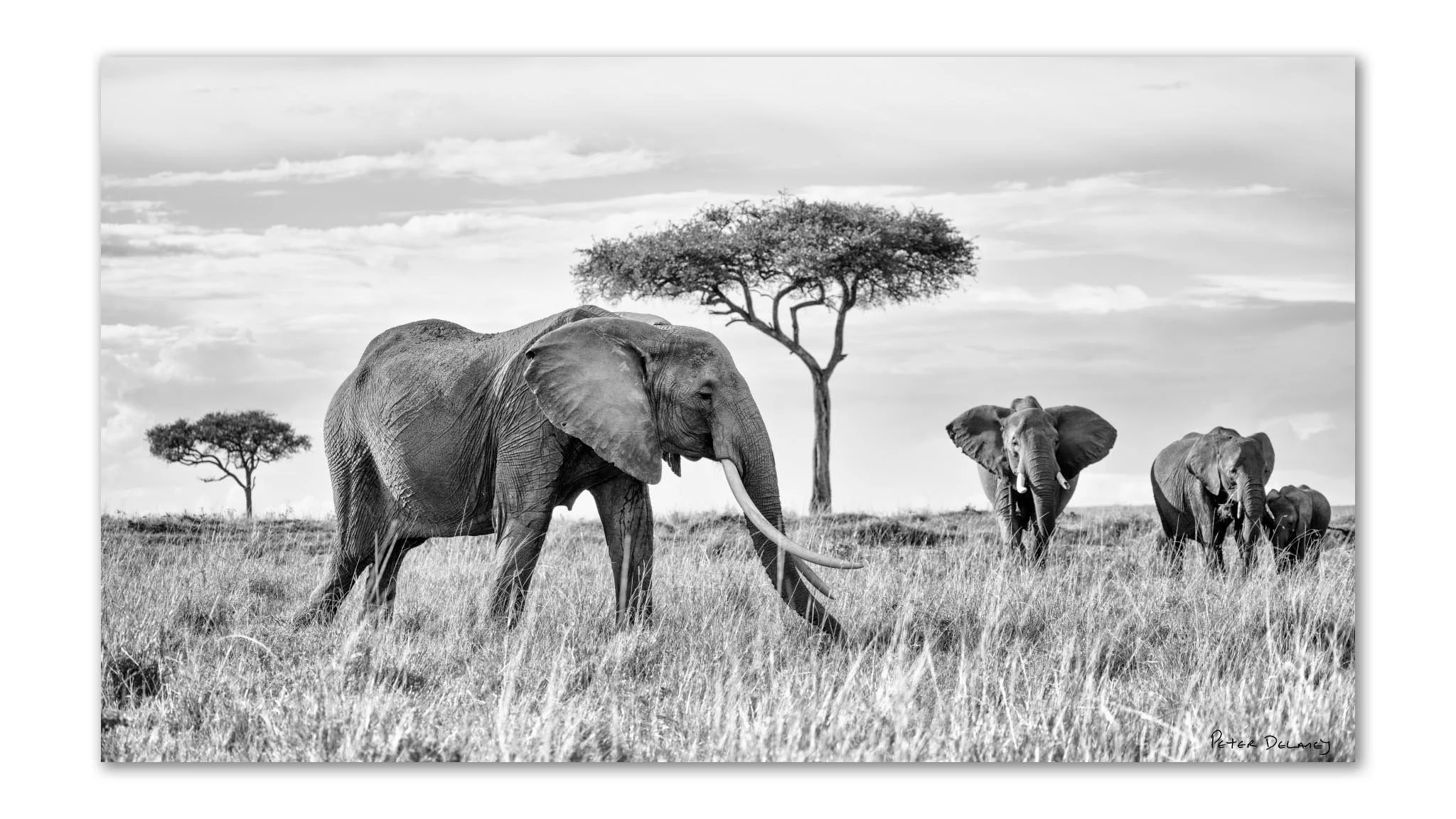
Queen of the Mara and Family
A matriarch moving through the Mara North, tusks carrying the weight of generations.
Bringing Africa Home
A fine art wildlife print is not a souvenir.
It is a continuation.
A way of holding onto something that once changed how you see the world. Whether experienced in Mara North at dawn, beneath Kilimanjaro in Amboseli, or in the fever tree corridors of Lake Nakuru, these moments do not end when the journey does.
They become part of daily life.
For some, they are memories of places once visited.
For others, they are places still waiting to be reached.
Either way, the wild does not stay on the wall.
It enters the room.
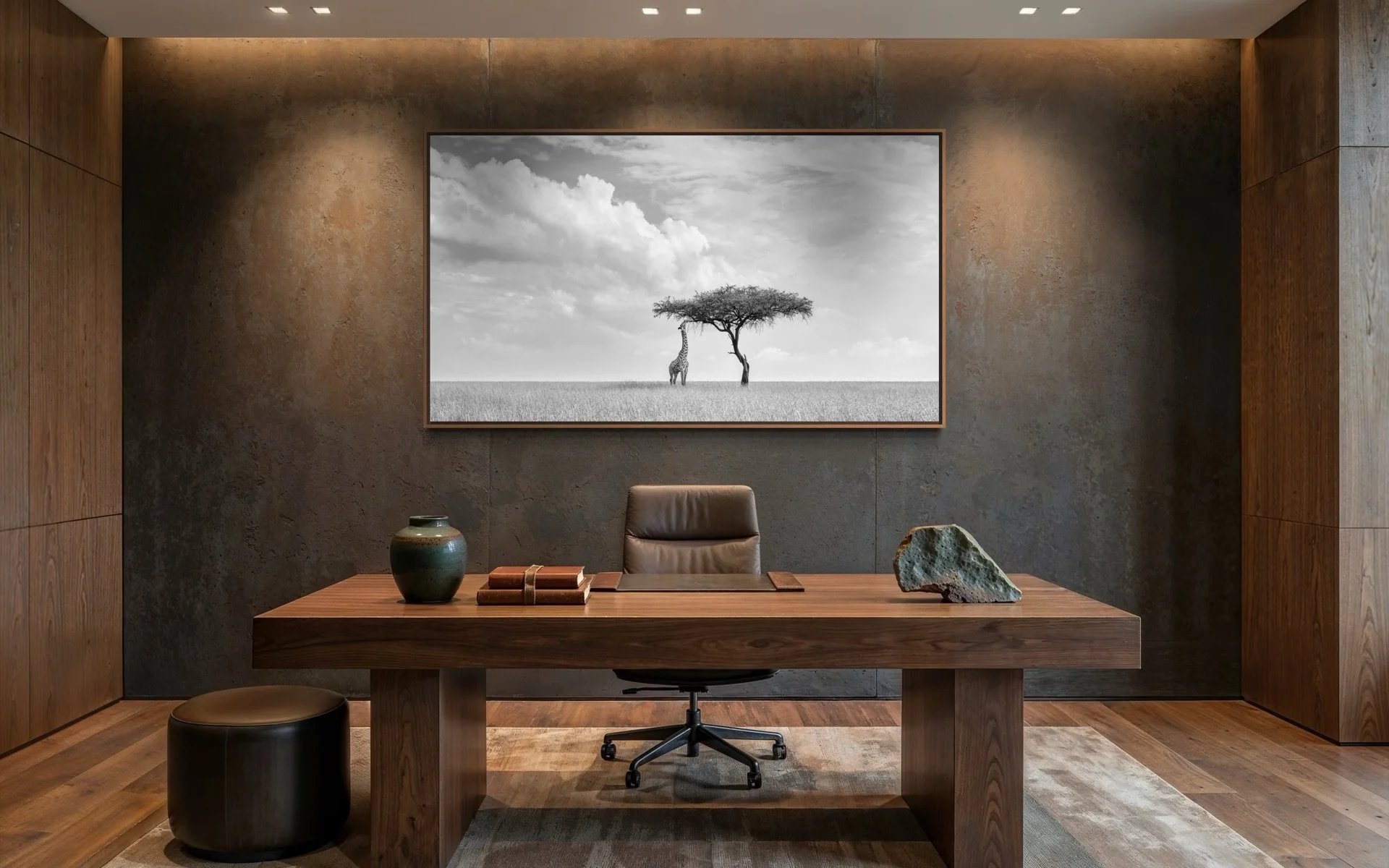
Art for Those Who Feel the Wild
Personal Note
I still find myself drawn back to the same places, not because they change, but because I do.
Each return feels like recognition rather than discovery.
And somehow, there is always something I missed the first time.
It is why I came to Africa. And why I never left.