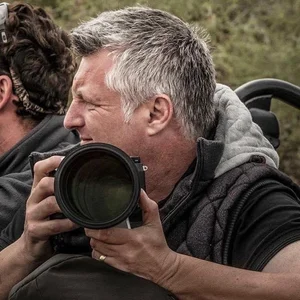
Hasselblad Masters 2026 Finalist | The Giraffe Triptych
There is a discipline to medium format that changes how you work in the field. It slows everything down. You begin to see less in terms of quantity and more in terms of placement, timing, and distance. Each frame becomes a decision rather than a reaction.
These three images were made across two locations in East Africa and submitted to Hasselblad Masters 2026 as a single triptych. They are not intended as variation for its own sake, but as three ways of observing the same subject in different states of presence.
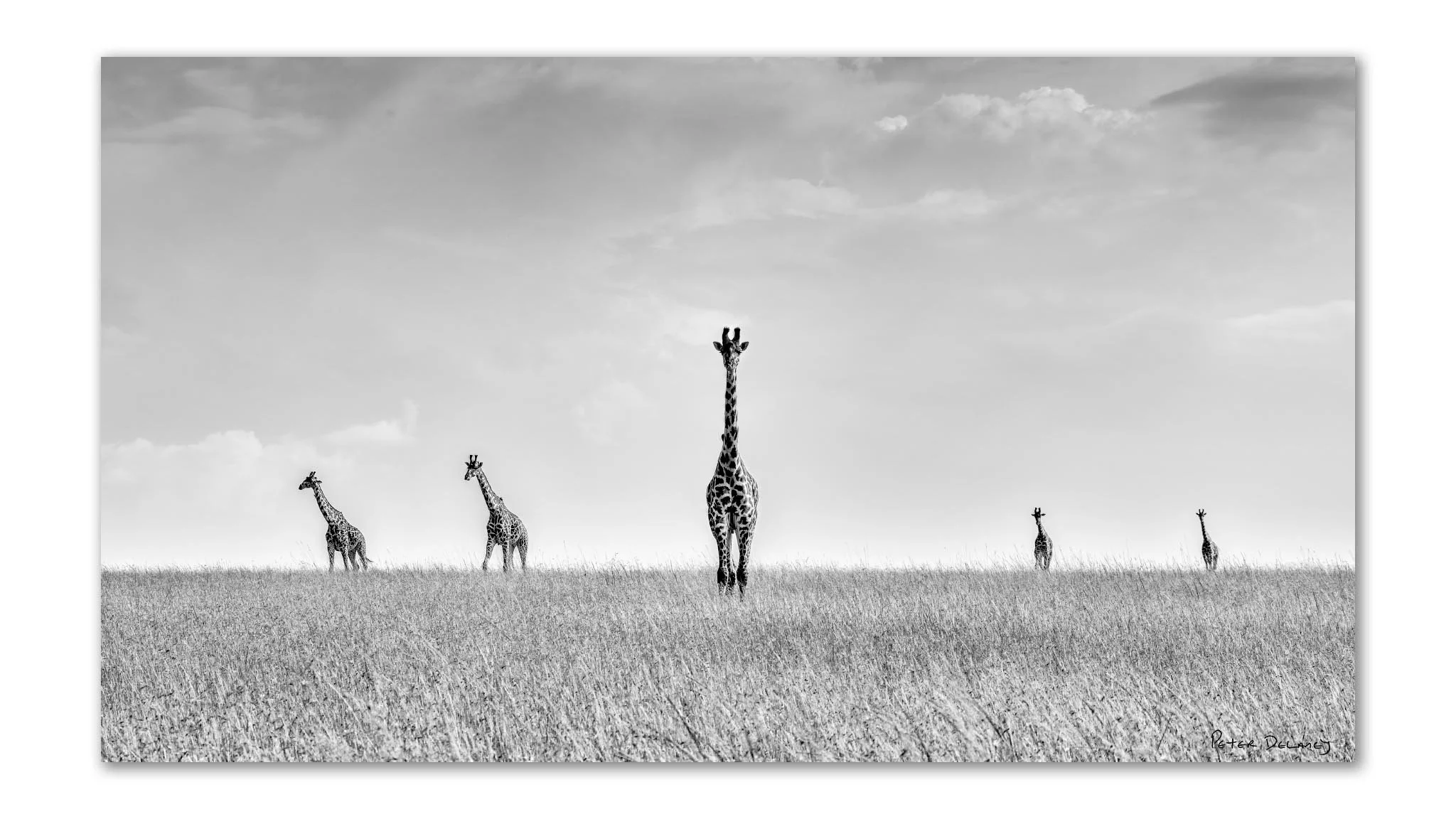
Serendipity
Harmony. Five giraffes aligned across the Mara, a fleeting order in open space.
Serendipity | Mara North Conservancy
A small tower of giraffes moving across an open plain after rain. The group formed a natural diagonal through the landscape, unplanned and momentary. In the centre of the frame, one animal pauses and turns, briefly holding the scene. The fine art print sits at the intersection of movement and stillness, where the group becomes a single structure within the space.
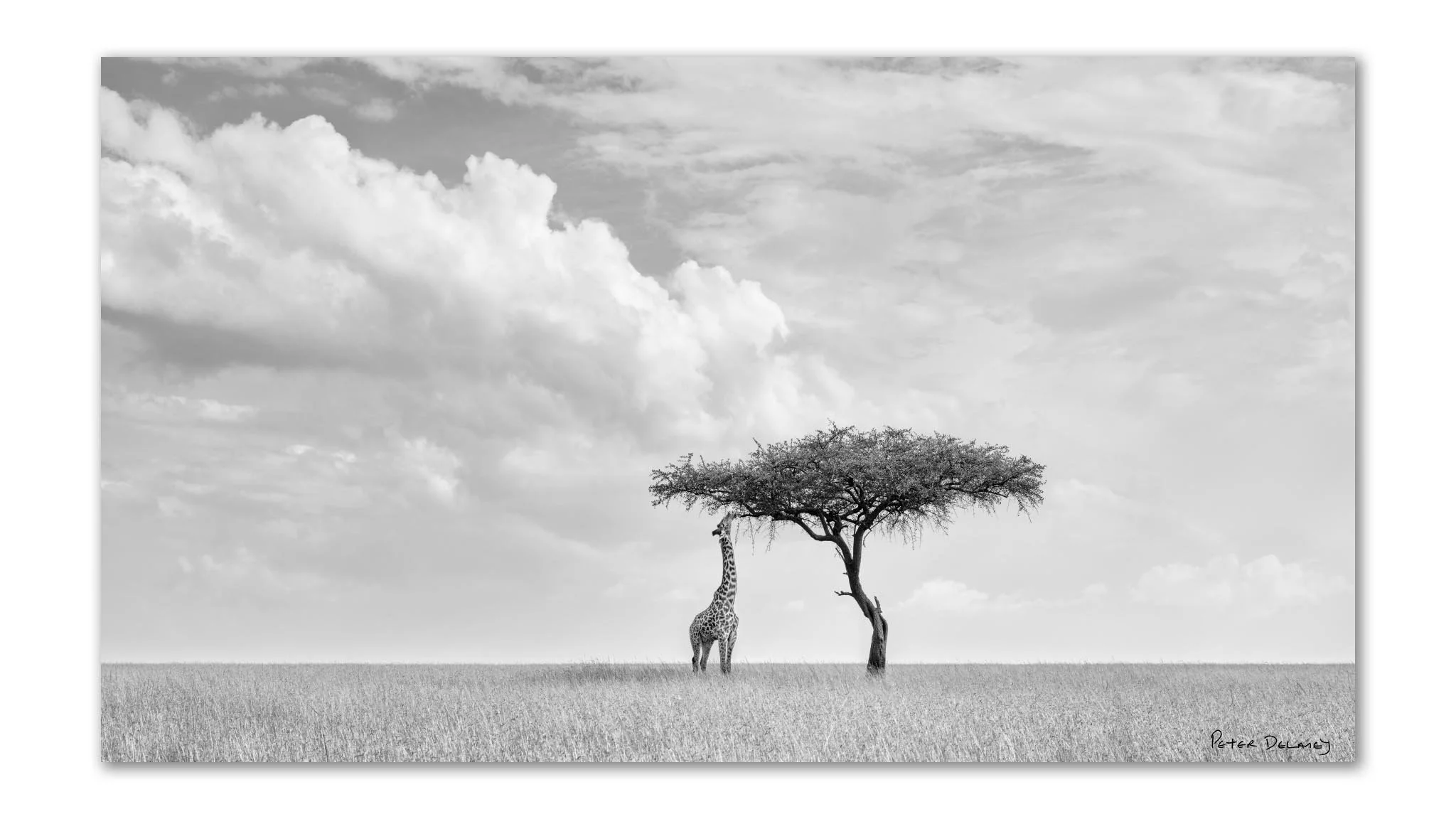
Camelopard
Solitude. A lone giraffe beneath an acacia, the storm passing into silence.
Camelopard | Mara North Conservancy
As the giraffes moved on, one giraffe remained beneath a lone acacia. The frame shifts from collective movement to solitude. Distance and negative space become part of the composition, shaping the subject as much as the animal itself. The fine art print holds that pause between departure and stillness.
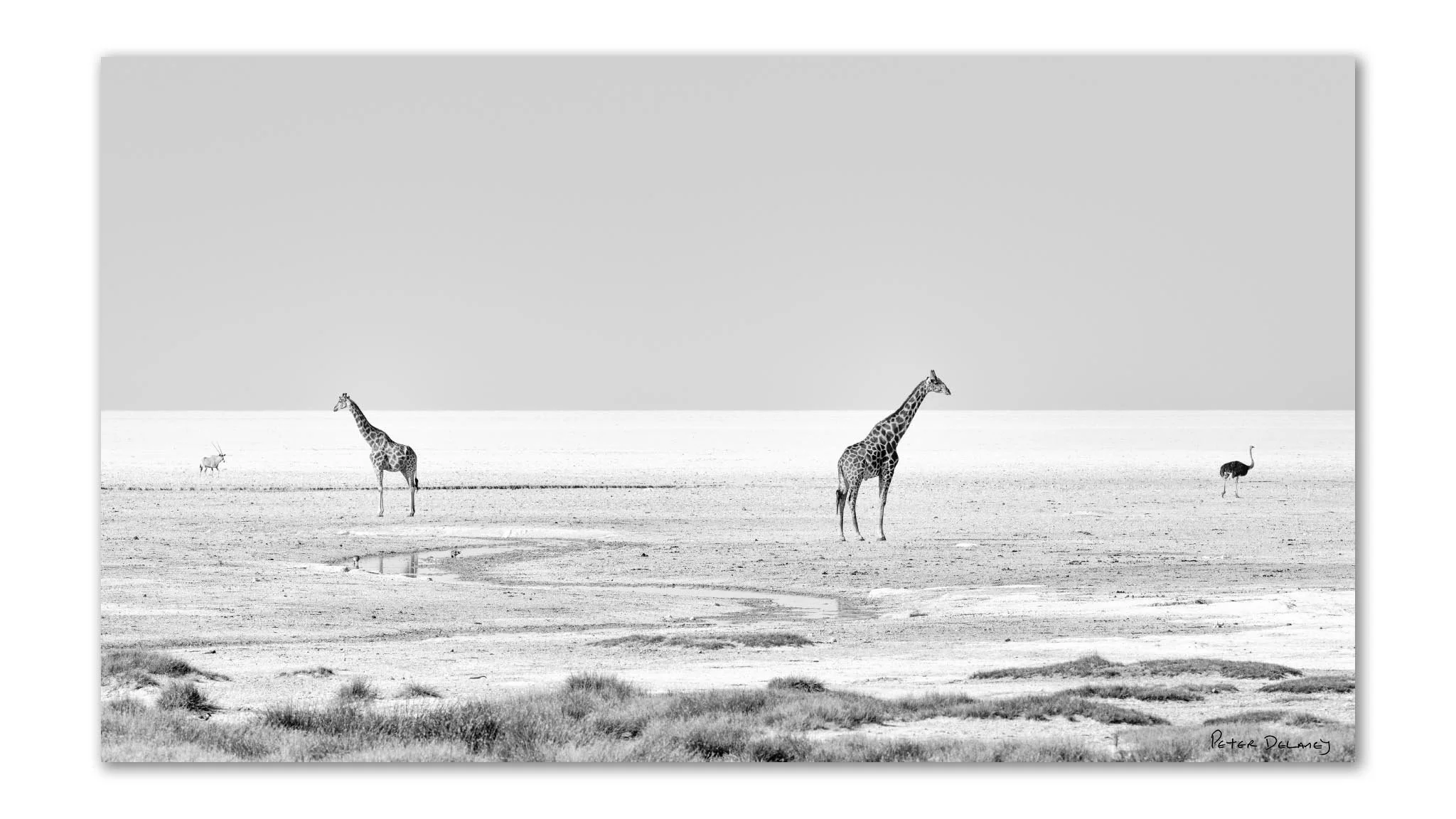
Life On The Edge
Vigilance. Two giraffes at a lion-marked waterhole, drinking between watchful pauses.
Life on the Edge | Etosha Pan
Earlier that morning, fifty kilometres away, I had watched two giraffes moving along the edge of the Etosha Pan with no visible destination. Hours later, they arrived at a waterhole I was watching.
It is a known lion ambush site. The berg wind had flattened the sky to grey. Sun-bleached bones lay scattered in the grass. They approached slowly, took positions facing opposite directions, and drank in turns while keeping watch.
As they stood together, I made the frame. The pan stretched behind them, cracked and heat-hazed. The simplicity of the scene defines its tension.
On the Triptych
Seen individually, each fine art print is a study of a single moment. Seen together, they form a progression of states: movement, pause, vigilance. The decision to present them as a triptych came from this shared restraint rather than difference.
Medium format reinforces this approach. It removes the impulse to overshoot and replaces it with attention to timing and distance. Each frame is held rather than taken.
Hasselblad Masters 2026 Finalist
Hasselblad Masters is a long-established photographic award recognising work defined by technical control and a clear point of view. To be selected as a finalist with a triptych of wildlife portraits made without reliance on extreme proximity or dramatic action is a quiet affirmation of that approach.