From Avoca To Africa — Part Three — An Irishman In Africa
A year is a long time, and my memory has never been the kind you'd want as a witness. So instead of trying to account for every week of it, I'll take it country by country, one story from each, and trust that the rest is in there somewhere too, even if I can't always find it.
One thing first, because it sets the tone for everything that follows. Every border crossing carried the same risk, an official looking for a bribe, and I had one thing in my favour that helped more than anything else.
This was the late nineties and early two thousands, when Manchester United were the most successful club in the world, and their captain was Roy Keane, an Irishman, fearless, a born leader.
Africans love football, and love Man United just as much, and a fellow Irishman standing in front of them was about as close as most of them would ever get to Roy Keane himself.
Every official who tried his luck got the same routine, a bit of football chat, Man United, Keane’s name dropped like a second passport, and for a few minutes I stopped being a target and became a friend instead.
It worked more times than I can count, and I have Roy Keane to thank for it.
I met other travellers who’d spent days stuck at the same crossings. I never did.
That was the only trick in the whole story.
Everything else was just driving, mostly on roads that existed more in theory than on the paper maps I’d bought for each country. This was a world before phones told you where to go, and asking strangers for directions when the maps inevitably lied.
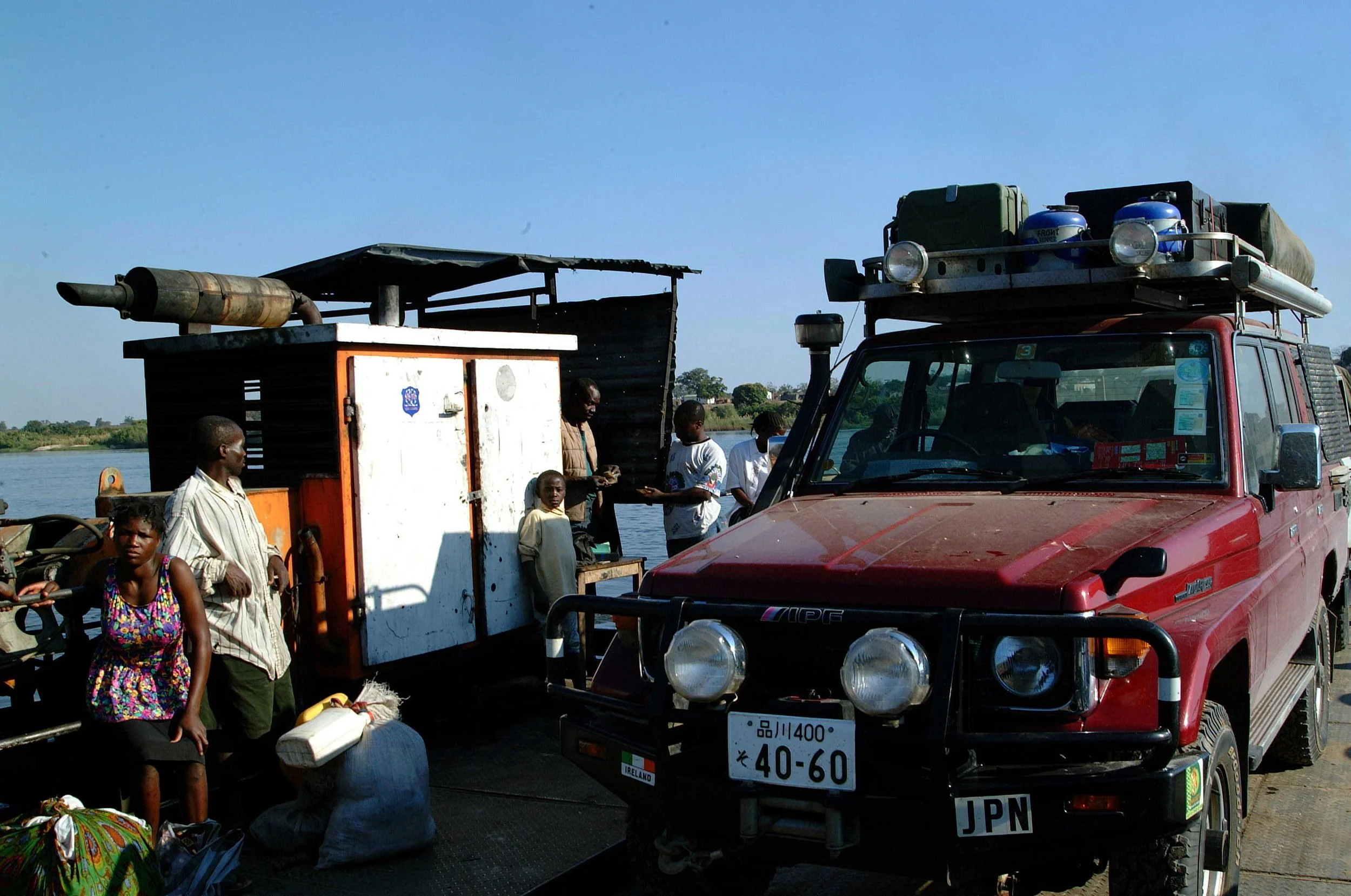
ZAMBEZI RIVER CROSSING
My 4×4 on a wooden pontoon crossing the mighty Zambezi River — I’m still not sure what was worse, the thought of losing the vehicle or the crocodiles waiting below
MOZAMBIQUE
Mozambique was where it began properly.
The Indian Ocean, the heat, the white sand, and Pansy Island, where I had a half-hearted attempt at learning to scuba dive. I got as far as putting the gear on. That was the end of my diving career.
I love the ocean. I’ve just never needed to be inside it.
Mozambique was also a country you had to navigate carefully. The civil war had left landmines long after it ended, and you saw the evidence in towns and villages.
You stayed on the tracks. You didn’t wander off for a shortcut or a better view.
The route into Zimbabwe ran through the Tete Corridor, one of the most dangerous roads I drove on the entire trip.
Beauty and danger sat side by side there.
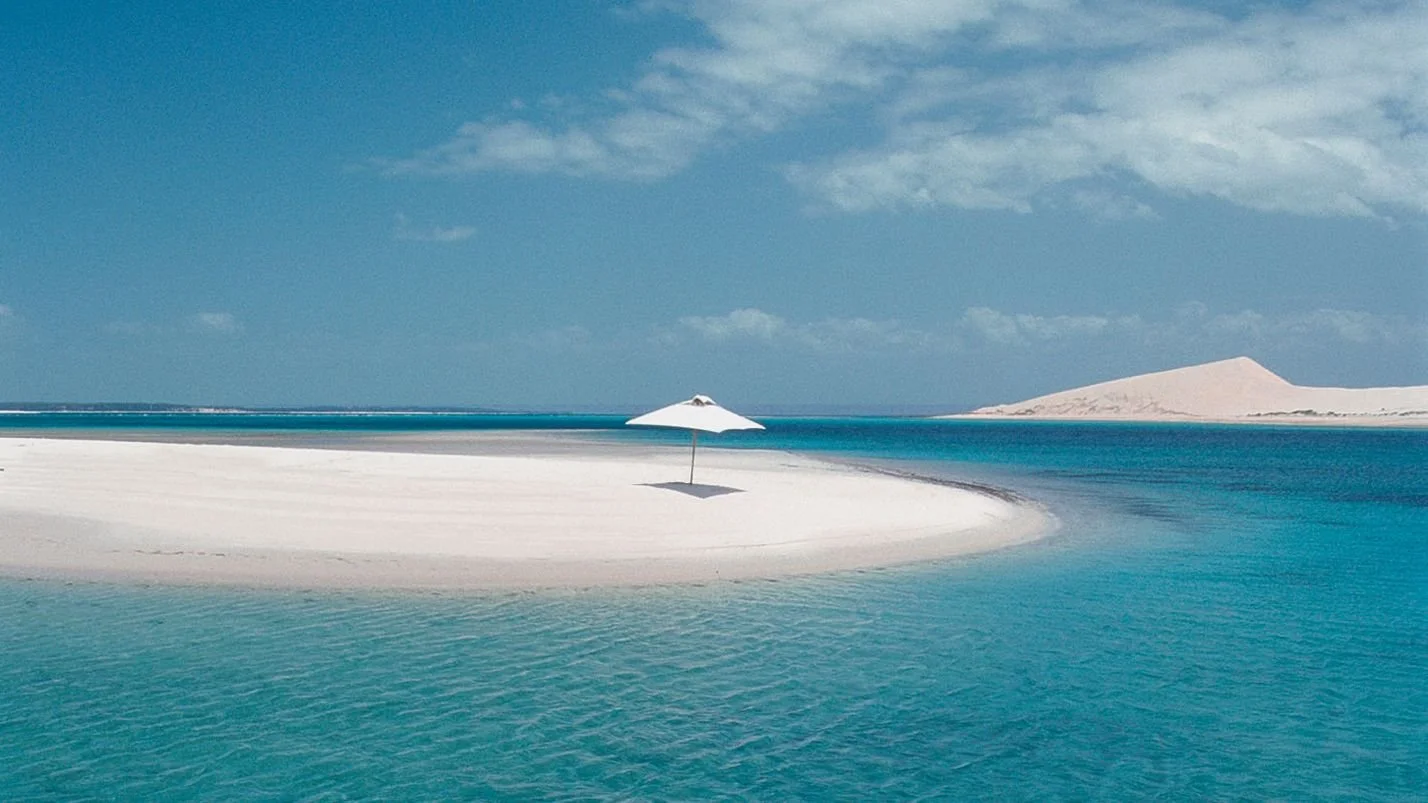
Pansy Island, Mozambique
white dunes, empty shoreline, and a single umbrella set against the vastness of the Indian Ocean
ZIMBABWE
Zimbabwe is still one of the countries I think about most.
Victoria Falls is everything people say it is, the sound of it before you see it, and then the sight of it catching up with the sound.
But Hwange stayed with me.
I sat in a hide on a hill and watched a storm build across the wilderness. At first just a line on the horizon, then something heavier, gathering force.
When it broke, it was ferocious and beautiful in the same breath, and gone almost as quickly as it arrived.
Afterwards came the smell of rain on hot red soil, something everyone who has spent time in Africa knows, and nobody who hasn’t can quite imagine.
I camped at Matobo on the edge of a lake and had my first proper snake encounter, in an outdoor shower heated by the sun.
I looked up mid-wash to find a snake curled around the top of the tin wall, drinking from the water running down.
I have never liked snakes. That did nothing to improve things.
One night in a hotel, the mosquitoes were so bad I gave up, got dressed, and slept in the roof rack tent in the car park instead.
Best sleep I had the whole trip.
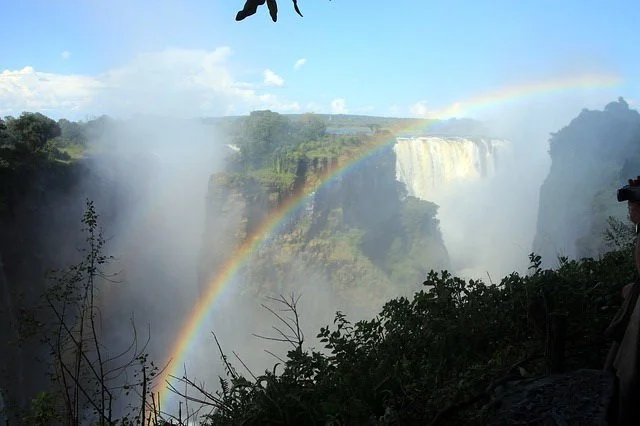
Victoria Falls, Zimbabwe
thunder in the air, endless spray, and a rainbow hanging in the mist above the gorge
ZAMBIA
Zambia slowed everything down in a good way.
I met a couple farming in the Copperbelt, chillies among other things, and one of them had gone to school with my parents back in Avoca. Small world, even in the middle of nowhere.
I also got the worst haircut of my life there, so bad I told the barber to shave it all off.
Zambia was also where I found The Africa House, a place I knew from Michael Palin’s Pole to Pole series years earlier in Tokyo.
Palin had stayed there. Not long after, the owners were murdered, a story that still hangs over the place.
I went anyway, and I’m glad I did.
Later, the hot springs at Kapishya were something else entirely, a clear sulphur-free pool tucked into forest on the banks of the Mansha River, warm at night after days on the road.
Like the bush had built its own bath.
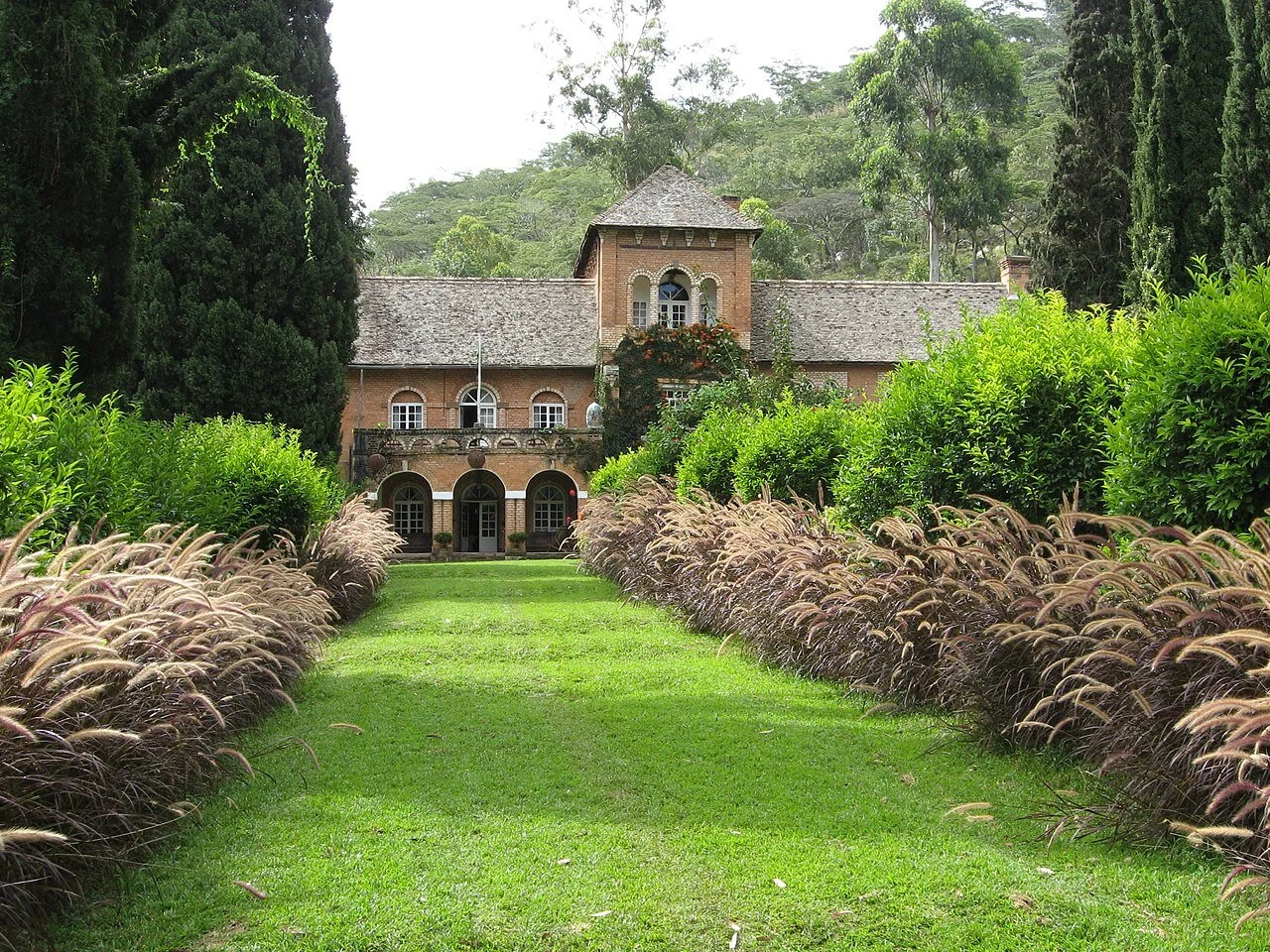
THE AFRICA HOUSE — ZAMBIA
a remote lodge on the banks of the Mansha River, a place layered with history, stories, and the quiet weight of passing travellers
MALAWI
Malawi is almost the country I left out, which tells its own story.
I climbed a mountain in the south, camped on the shores of Lake Malawi, and then drove into the highlands, which were cold, green, and oddly reminded me of Scotland.
From there I saw a Big Five reserve on the map and decided, with misplaced confidence, that I was experienced enough to track lions alone.
The grass was over my head. I couldn’t see anything ahead.
I reversed straight into a swamp.
The front stayed on firm ground. The back disappeared.
For two days and nights I tried everything to get out, sleeping at an angle in the vehicle, covered in mud, in a reserve known for poaching, with nothing around me but grass taller than me.
On the third day I heard voices.
I climbed onto the roof and saw a group of men moving through the grass carrying AK-47s.
I genuinely thought that was it.
I got out and walked towards them anyway.
They turned out to be an anti-poaching patrol.
Five hours and two hundred and fifty dollars later, I was back on the road.
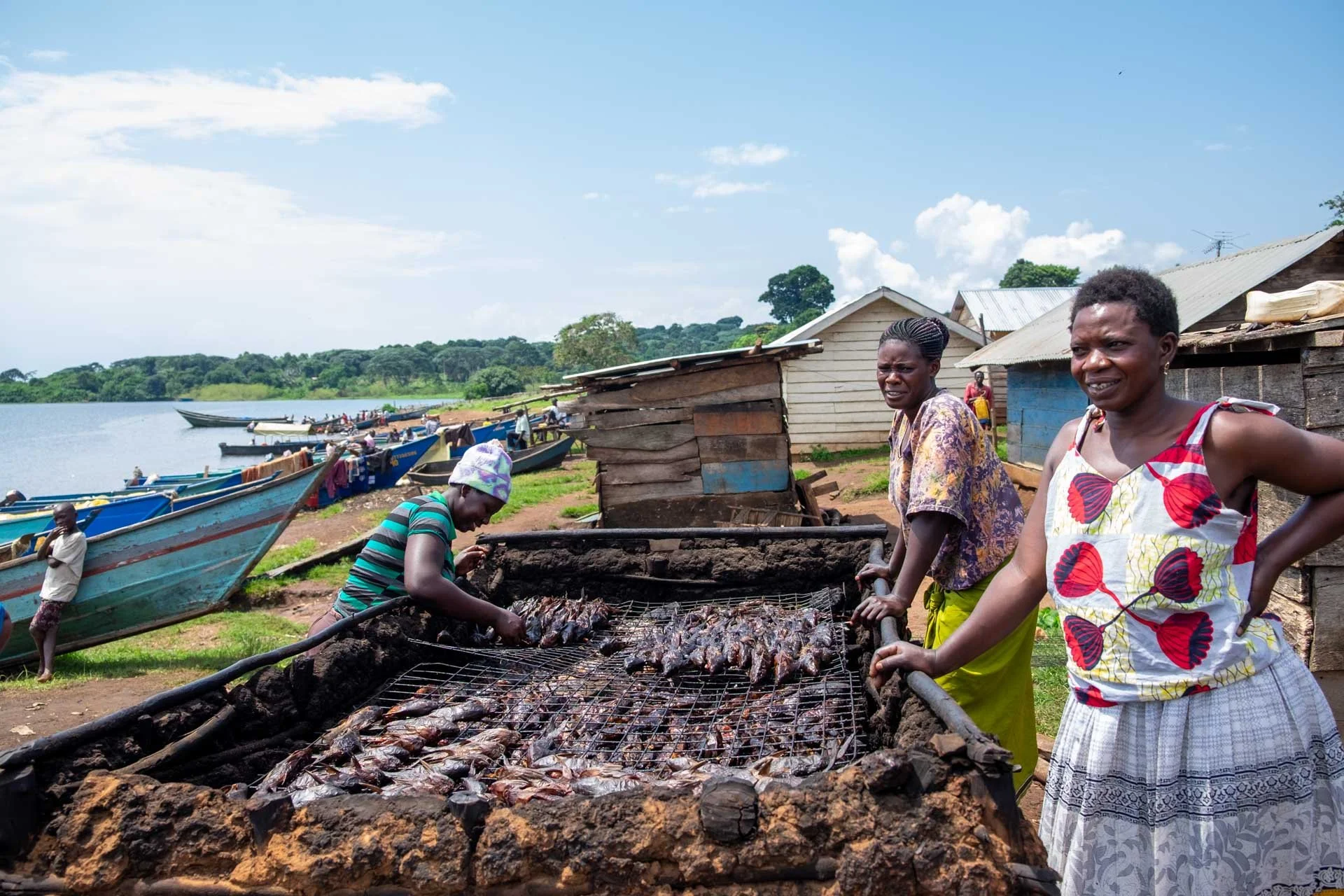
LAKE MALAWI — FISHING VILLAGE
a fishing village on the shoreline where villagers harvest and dry small fish under the open sun, life shaped by the rhythm of the lake
TANZANIA
Tanzania was my first real taste of East African safari at scale.
I camped on the rim of Ngorongoro Crater and woke to a view I still think about.
Then days in the Serengeti, self-driving before that meant convoys of vehicles.
Flamingos on the lakes, elephants and wildebeest on the plains, more animals than I had ever seen.
I shot it all on slide film. The rolls are still in a box somewhere.
Mostly because my photography at the time wasn’t good enough to look at twice.
Zanzibar was the rest.
Stone Town, the food, the coffee. I’d been hooked on coffee before I left home, and every country that grew it, I bought beans.
Zanzibar was also the first place that reminded me of Vietnam, in the way people worked the streets.
I loved it and found it exhausting in equal measure.
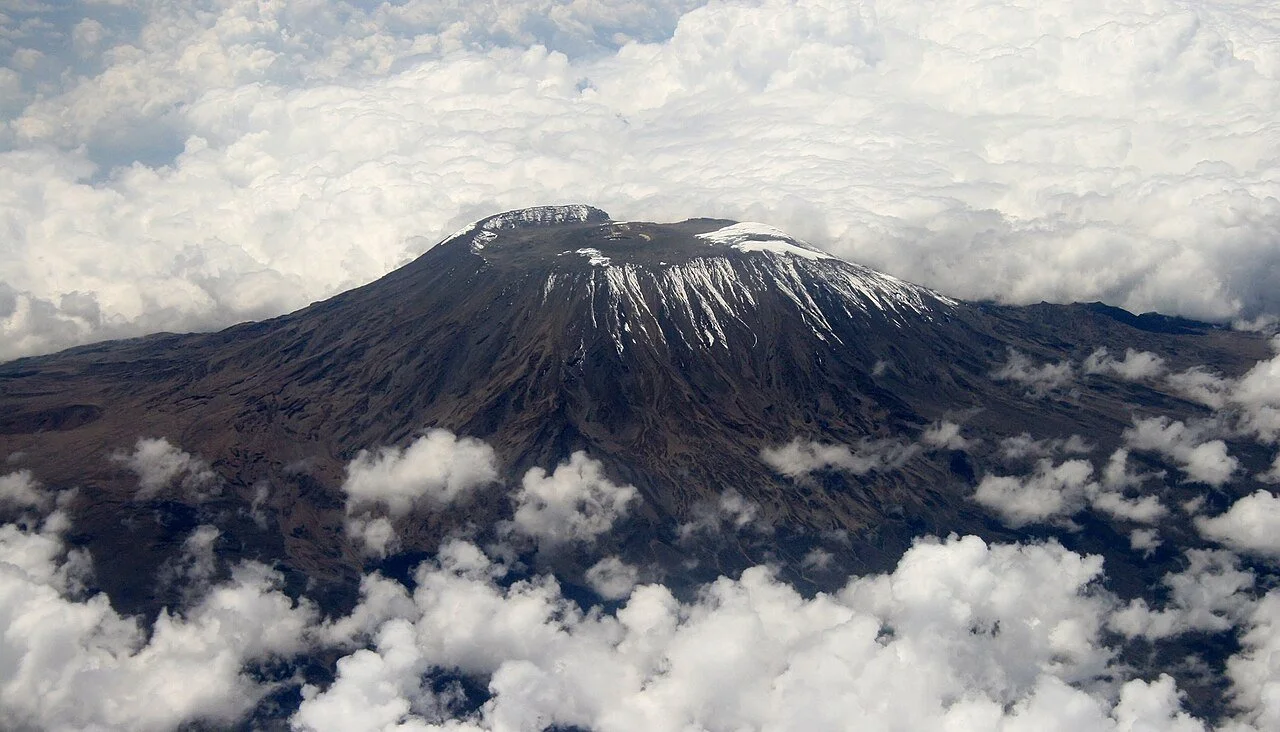
MOUNT KILIMANJARO — AERIAL VIEW
Mount Kilimanjaro, Tanzania — rising above a vast ocean of clouds, the summit appearing and disappearing with the shifting light
KENYA
Kenya was the Masai Mara before it became what it is today.
Self-drive, long grass, and animal numbers so high I stopped counting one elephant herd somewhere past a hundred.
I’d had this trip in my head for years. Near the top was Mount Kenya and Kilimanjaro.
I climbed Mount Kenya first, without a porter, carrying everything myself.
Somewhere on the way up, my guide warned me about the vertical bog.
I’m Irish. I thought I knew bogs.
That climb cured me of that idea.
Near the summit, a narrow ledge of snow and ice ran between sheer drops.
The view from the top made it all worth it.
I was down in a few hours and drove straight to the Java Cafe in Nairobi, then just a small garage café serving the best coffee and tuna sandwich I’ve ever had.
The following weekend I climbed Kilimanjaro.
This time with a porter.
Men who carry everything, often without proper boots, moving with a strength that doesn’t seem possible.
The final stretch is brutal.
I didn’t turn back.
Two mountains. Two weekends.
I still don’t fully believe it.
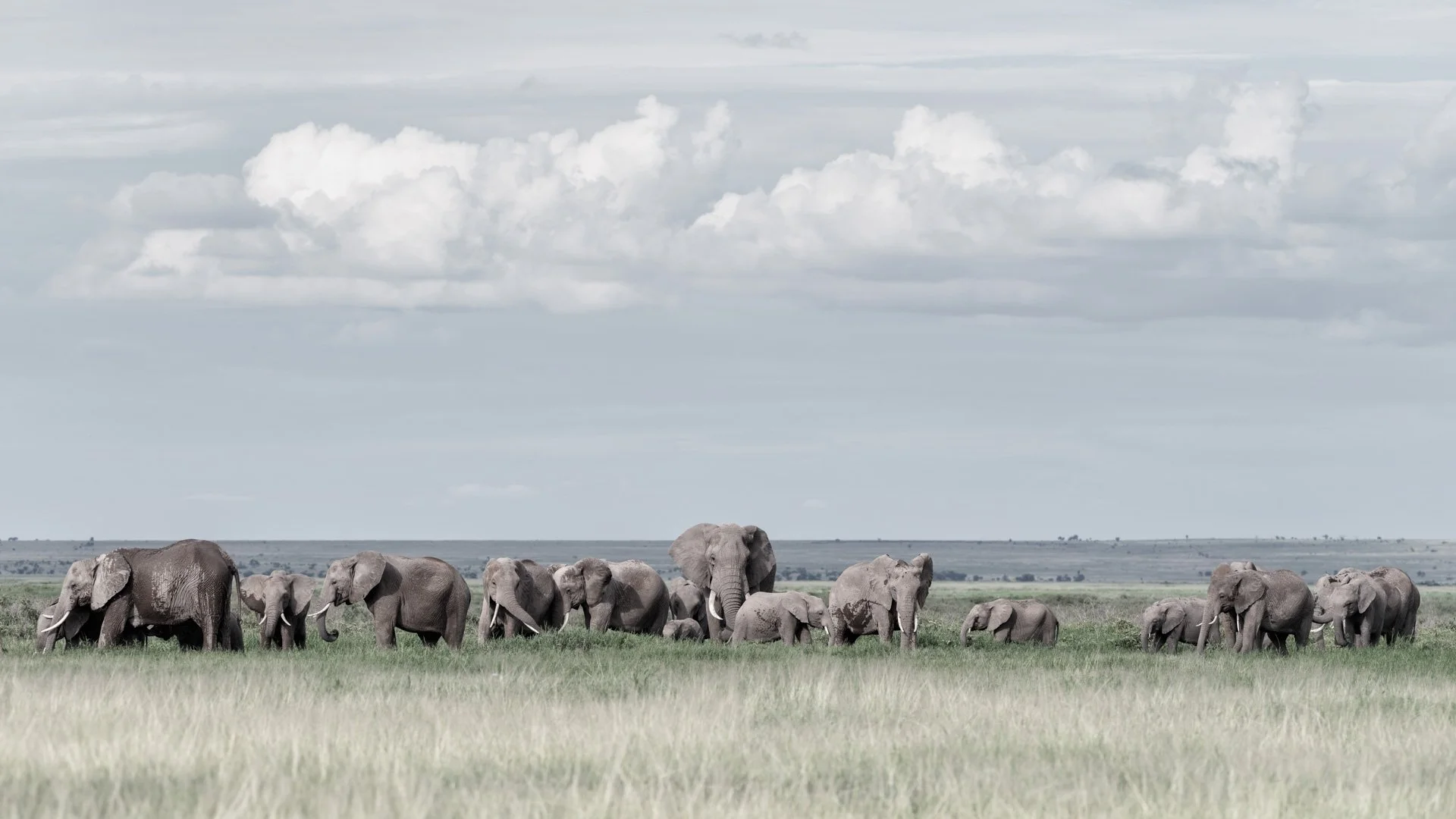
AMBOSELI — ELEPHANT HERD
Amboseli National Park, Kenya — a vast herd of elephants moving across open plains beneath drifting clouds
Uganda
Uganda earns its nickname, the Pearl of Africa.
The first place I went was the source of the Nile. Standing there, at the point where something so vast begins, felt quietly unremarkable in the best possible way.
No drama. Just water becoming something larger than itself.
From there I travelled north to Murchison Falls, where the Nile is forced through a narrow gorge and drops with a violence you hear long before you see it.
I camped on the banks above the falls, where the river is still wide and slow before everything changes. Below, the number of hippos was extraordinary, packed tightly together, shifting constantly in the current. At night the sound of the falls never really left you.
From there I moved west towards Bwindi, trekking for gorillas through steep jungle and altitude. It is slow, physical work, and I’ve done it since more than once. It never gets easier, only more meaningful when you finally find them.
While I was there, a group of Pygmies from the Congo crossed over for a mobile clinic, and for an evening we ended up dancing and singing together. Nothing to do with gorillas, everything to do with why I kept coming back to this part of the world.
From Bwindi I moved down towards Queen Elizabeth National Park.
Queen Elizabeth National Park, where elephants followed me most days. I was told that during the Idi Amin years the elephant population had been heavily reduced through poaching and the collapse of control, and that in the years since the animals had become more wary of people. Whether that was entirely accurate or not, I couldn’t say, but I felt something of it in the way they moved through the landscape. I was charged by elephants there more than once, never quite sure if it was warning or intent, only that you paid attention.
The park itself is vast and unsettled in a way that feels alive rather than chaotic, with huge herds of buffalo, tree-climbing lions, and a landscape that never settles into one mood.
From there I moved towards the Rwenzori Mountains, the Mountains of the Moon, before looping through forest routes as the journey loosened into instinct rather than plan.
In Kibale Forest I spent time with chimpanzees, fast and unpredictable in the canopy, a place that at the time felt like just another stop on the road. I had no idea then that fifteen years later, a portrait I took there would win a category in Wildlife Photographer of the Year.
At the time I was just a traveller with a camera. The forest didn’t know what it was giving me. Neither did I.
By then I needed space from people as much as anything, so I booked a remote camp near the Sudan border.
On the drive in, a soldier stepped out of nowhere with a machine gun and waved me down.
He got in.
The smell of alcohol on him was immediate and unsettling.
I drove in silence until he told me to stop. He tried to get out, couldn’t, so I helped him, took the gun, gave it back, and watched him walk off towards a village.
I drove the rest of the way in shock.
At the lodge, two things stayed with me.
A Frans Lanting book on the coffee table.
And the guest register.
Above my name was Michael Palin.
The same Michael Palin I had watched years earlier in the 1992 series Pole to Pole, moving through Africa in a way that made the continent feel both impossible and completely real at the same time. That series stayed with me longer than I ever admitted, and in many ways it was part of what planted the idea of this journey in the first place.
It was also the reason I had gone looking for The Africa House in Zambia — a place he had stayed during that same journey. I had seen it on screen in Tokyo years before, when Africa still felt like something distant and half imagined, and now here I was, sitting in places that had quietly existed in that same story.
So seeing his name in that lodge register, years later, felt less like coincidence and more like a thread running through everything I had been chasing without realising it.
I don’t remember exactly what I thought in that moment.
Only that it was the moment.
I was a short drive from Sudan.
And instead of crossing, I turned around.
I realised I could do whatever I wanted with this.
And what I wanted was to stay in Africa.
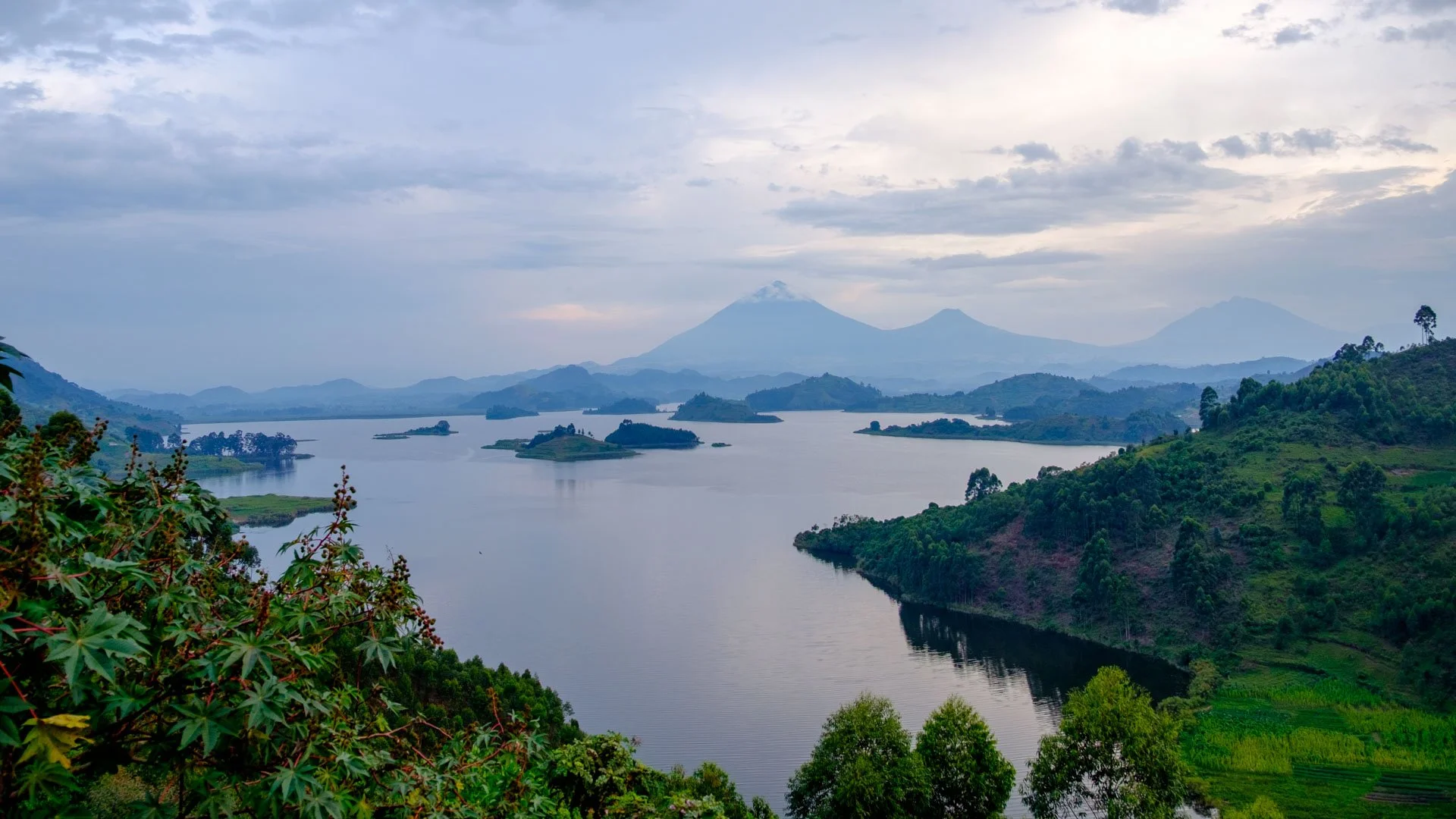
LAKE BUNYONYI — UGANDA
Lake Bunyonyi, Uganda — a quiet expanse of water on the edge of Rwanda, where islands float in stillness and the volcanic mountains sit on the horizon
The Return: the road south, the turn back, and the moment Africa stopped being a journey and became a decision
While you wait for Part Three, explore the photographs that came from that journey.
Elephant Portraits | Giraffe Studies | African Landscapes | Lion Prints