Africa Beyond Wildlife
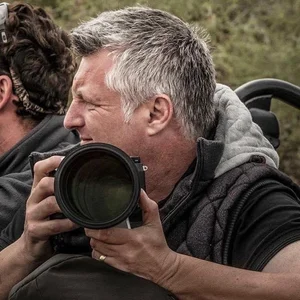
Most people know me for elephants, lions, and the black and white wildlife photographs that have taken me across Africa.
But some of my favourite memories from the past twenty years don't involve wildlife at all. They belong to quiet places. A dune at dusk. A lone baobab. The first crack of thunder across the Karoo after months without rain.
These landscapes ask something different of me. They reward patience more than speed, observation more than instinct, and sometimes the willingness to leave empty-handed.
This collection brings together five places that have stayed with me long after I packed the camera away. Two are in colour, three in black and white. Together they form a quieter body of work that has always existed alongside my wildlife photography, reminding me that Africa's greatest stories aren't always told by its animals.paces.
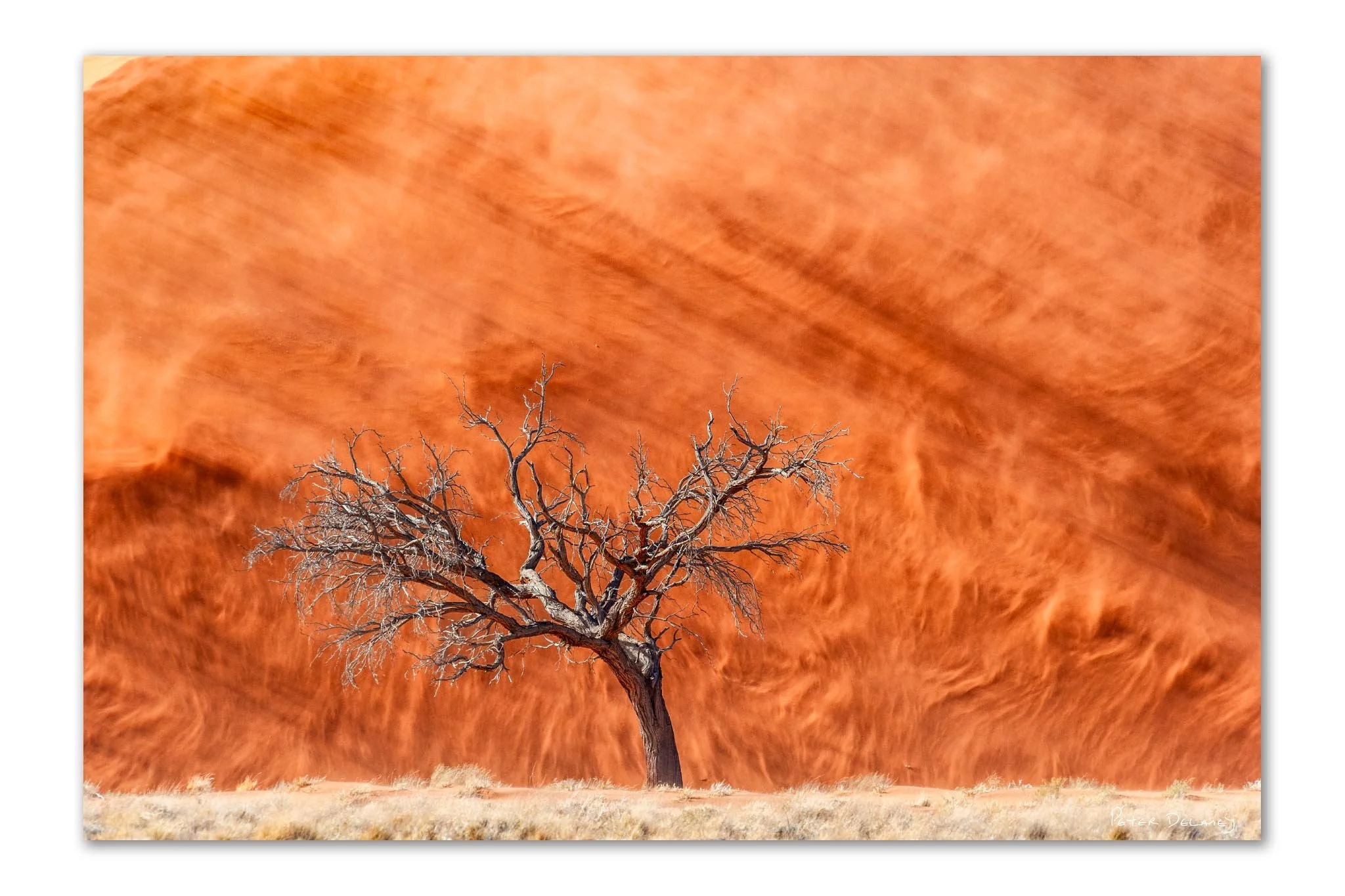
Dune on Fire
Dune 45, Sossusvlei, Namibia
A late afternoon sandstorm sweeps red and gold sand across Dune 45, Namibia, a lone photographer dwarfed by the desert's scale.
A moment when the desert came alive.
Dune 45 is one of the most photographed dunes in the world, and finding something personal within such an iconic place is never easy. The constant flow of visitors, climbing from morning through late afternoon, often leaves little room for solitude. But every so often, patience is rewarded.
Late one afternoon, as a sandstorm rolled in, everyone fled for cover. Suddenly the desert was empty. Alone with the dunes, I watched the wind erase every trace of human presence, smoothing the sand back into something ancient.
I reached instinctively for my 600mm lens, a choice shaped by years as a wildlife photographer, and crouched behind my 4x4 as the wind whipped sand through the air. The grains stung my face and eyes, but through the long lens the dunes transformed, glowing red, alive with movement. It was a fleeting moment, raw and elemental, shared with my wife Nicolinah, one we will never forget.
Dune on Fire went on to receive recognition at the Memorial Maria Luisa Competition. But its real value lies in what it gave us that evening: solitude, intensity, and awe.
A Moment When the Desert Came Alive
“For those who seek the desert’s soul, where wind and sand ignite the earth in a tapestry of fire.”
Why Dune 45 draws photographers from around the world
Dune 45 sits 45 kilometres from the Sesriem gate, close enough to the road that it has become one of the world's most photographed sand dunes. Part of the appeal is access: unlike the taller dunes further into the park, it can be reached easily and climbed by almost anyone willing to do it barefoot before sunrise. Part of it is geology. The sand here was carried by wind from the Namib coast and is around five million years old, its deep red colour coming from iron oxide built up over that time. As the sun moves, one face of the dune falls into shadow while the other holds the light, which is why the same dune can look entirely different an hour apart.
I've returned to Dune 45 several times, usually in the soft light of sunrise or sunset. This photograph came in conditions nobody plans for.
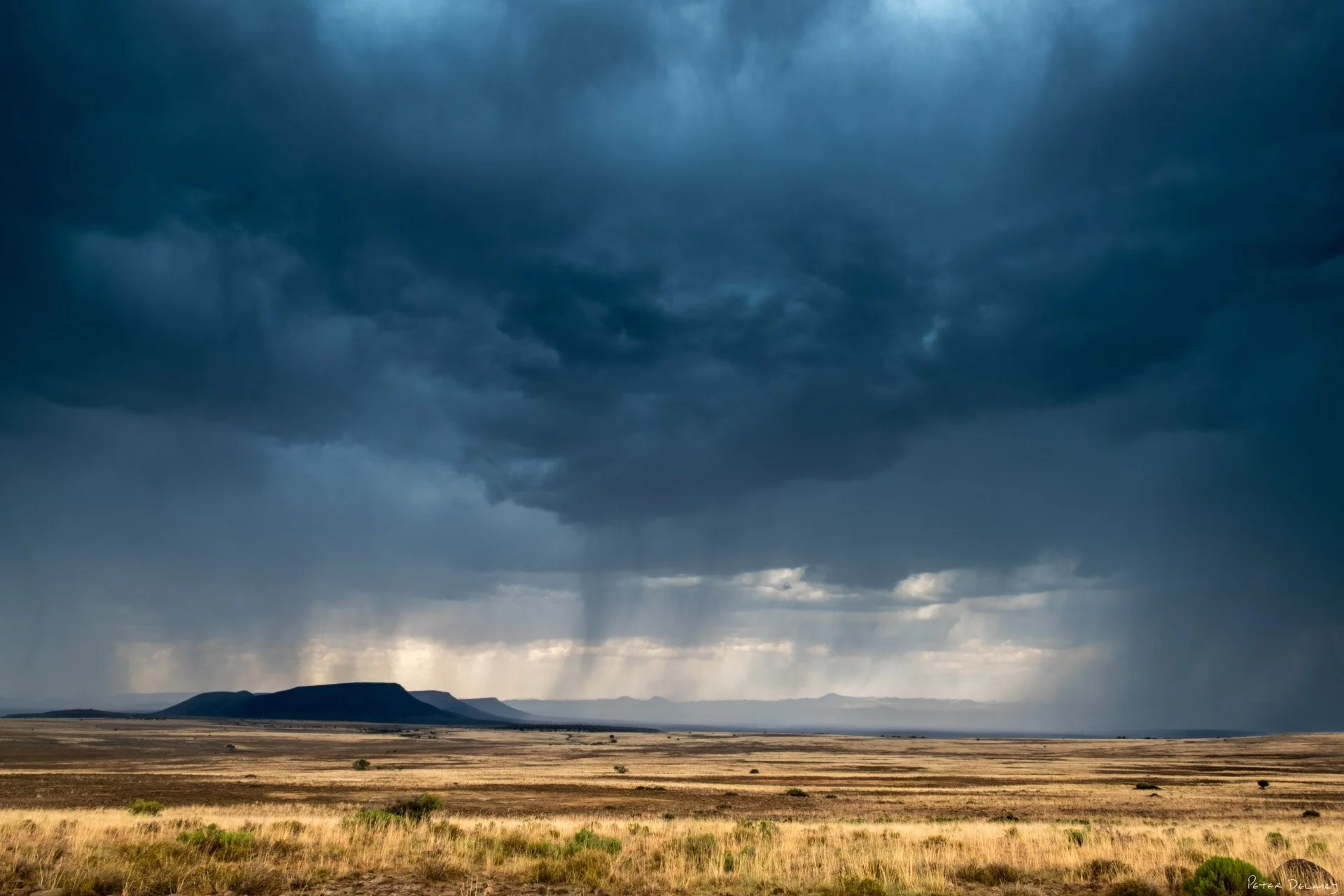
Storm Over the Karoo
Mountain Zebra National Park, South Africa
A thunderstorm builds over the Karoo's arid plains, dark clouds and lightning against dry earth.
Endurance under a breaking sky.
If Dune on Fire speaks of heat and desolation, Storm Over the Karoo is its natural counterpoint. Together they form a quiet dichotomy, the same harsh land revealed through opposing states of being.
The Karoo has always held a special place for me. Its vast openness and silence bring a deep sense of calm. Yet during one visit to Mountain Zebra National Park, that stillness broke under a storm of almost biblical scale. Dark clouds built rapidly over the parched land. Thunder rolled across the plains. Lightning tore through the sky.
I had imagined this image for years, but nothing prepares you for witnessing such power firsthand. For a brief window the land transformed, tension replacing stillness. This photograph captures that rare convergence: drought meeting deluge, permanence meeting change.
For those who yearn for Africa’s dramatic soul.
“For Those Who Carry the Karoo in Their Heart and The Sound of Rain on Dust, Forever”
The Karoo's storms, and why they matter to the land
The Karoo is a semi-desert, one of the driest biomes in South Africa, where rain can be scarce for long stretches at a time. When storms do arrive, often in short, violent bursts rather than steady rainfall, they carry an intensity that feels disproportionate to how rarely they come. For the land itself, these storms are a lifeline. Seeds that have waited years germinate within days. For a photographer, they are a narrow, unpredictable window, gone almost as quickly as it opens.
Even the most familiar landscapes can surprise us, revealing strength, drama, and vulnerability in equal measure.
Available as: Unframed Fine Art Print • Acrylic Glass Print • Collector's Edition
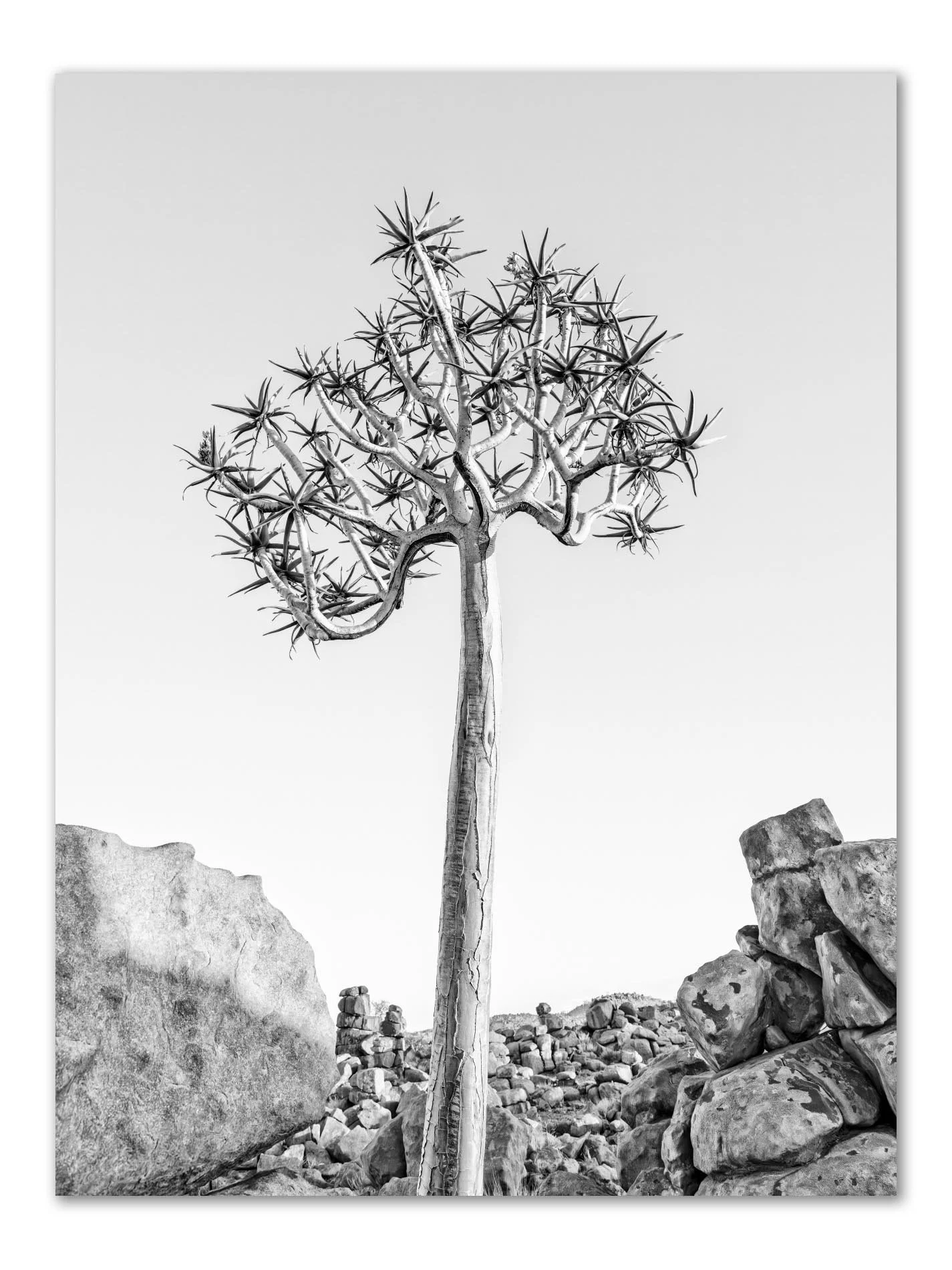
Choje Among the Giants
Giant's Playground, Namibia
A solitary quiver tree stands among fractured dolerite boulders in Giant's Playground, Namibia, its sculptural form set against austere stone.
Survival, written in stone.
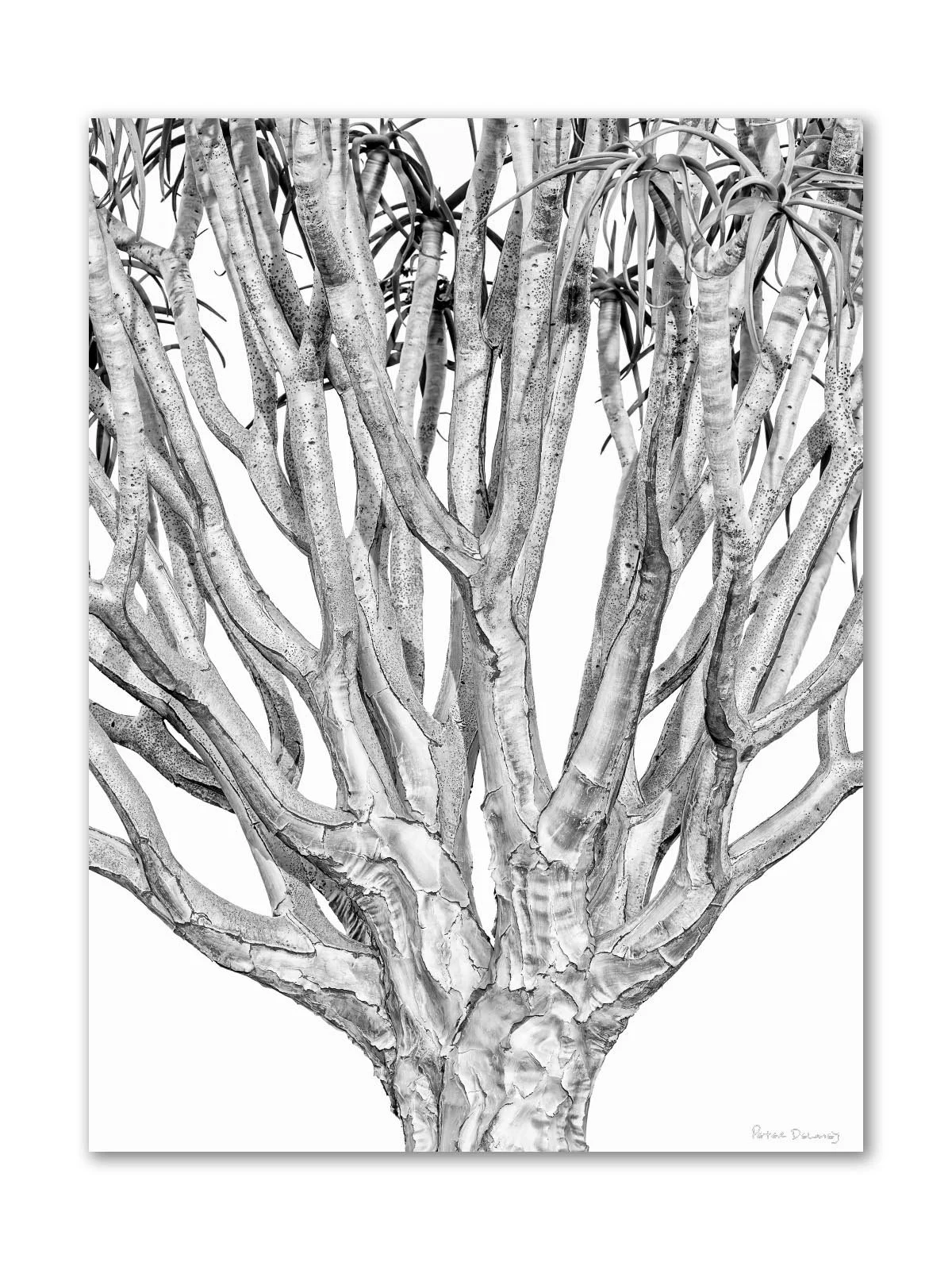
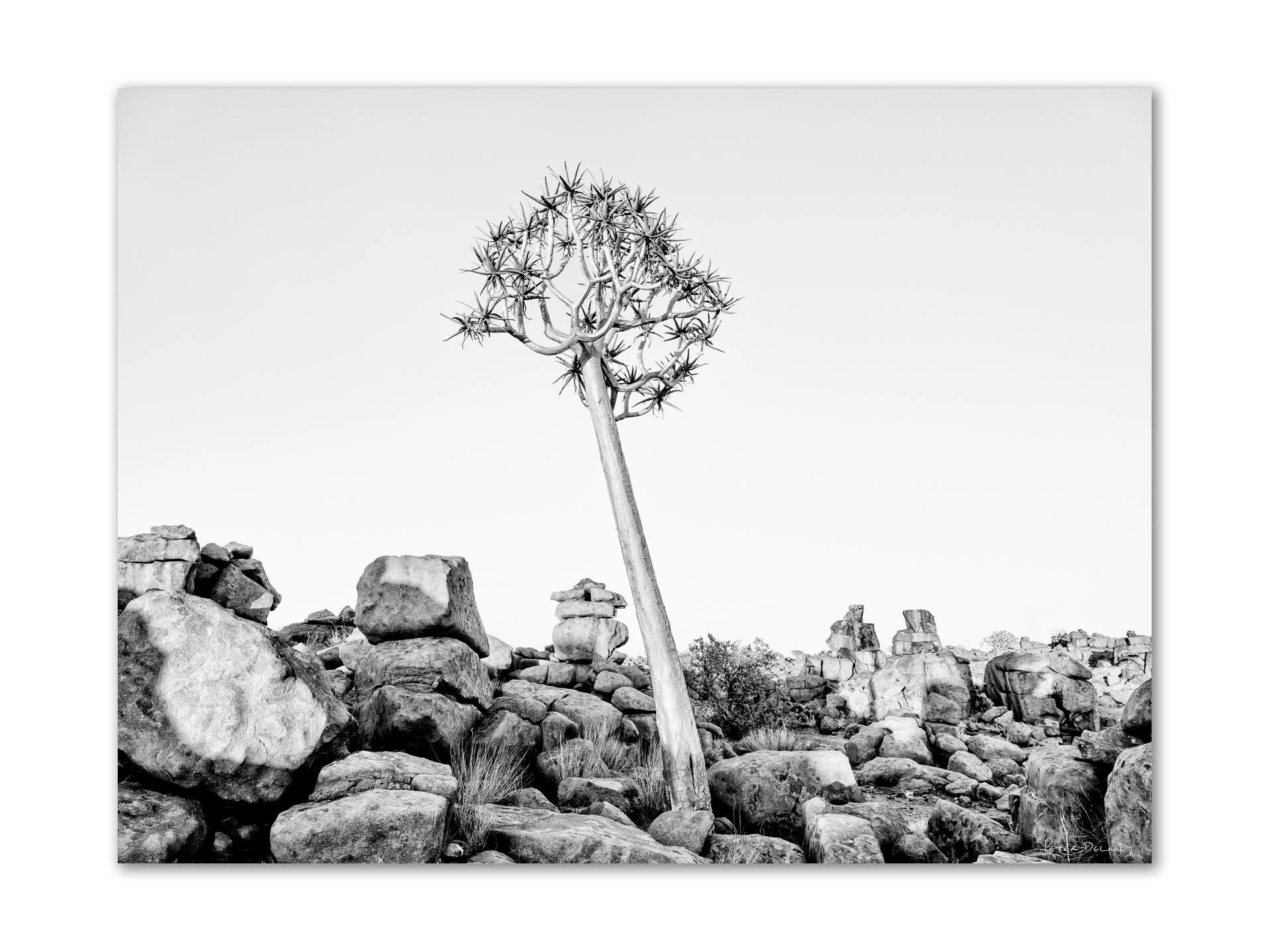
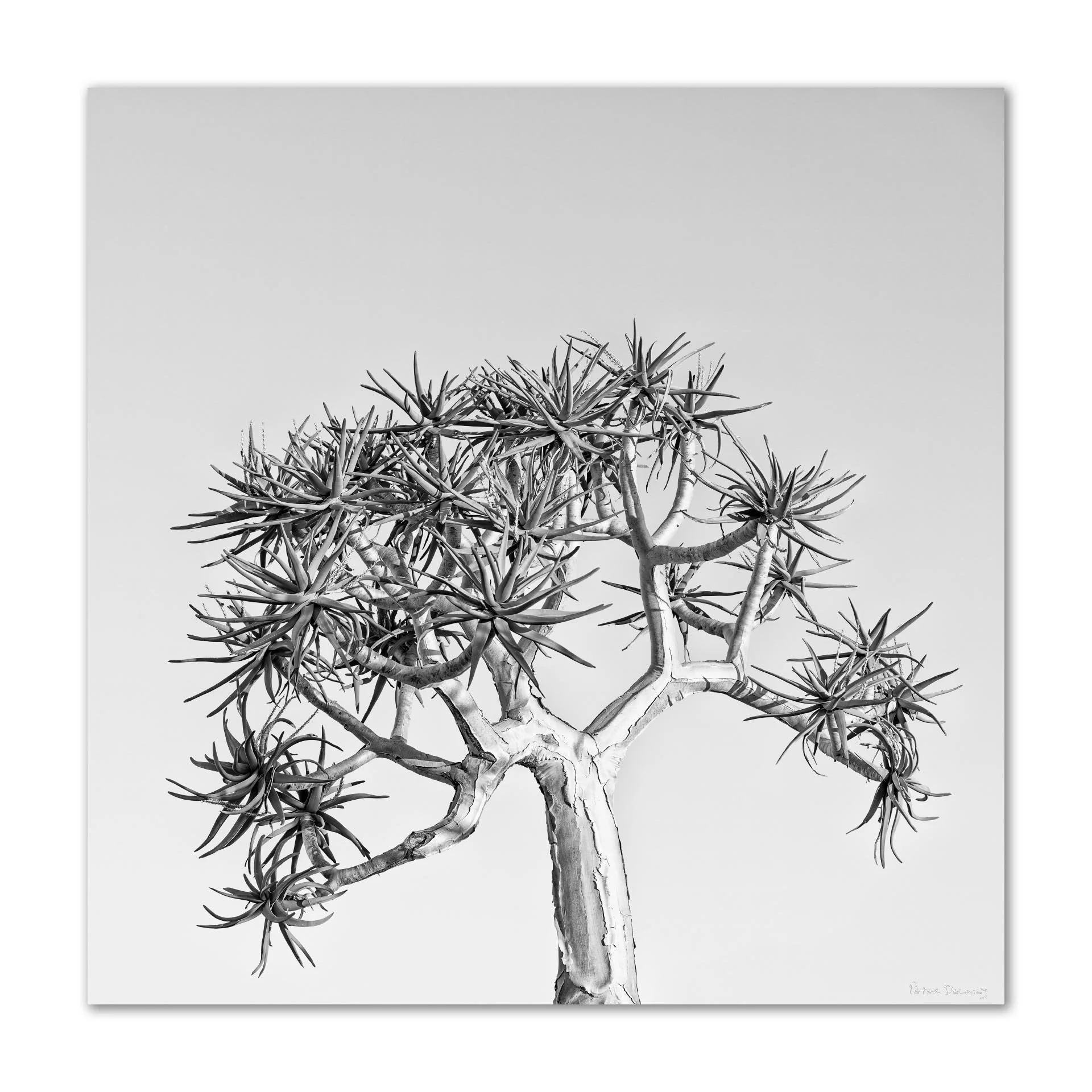
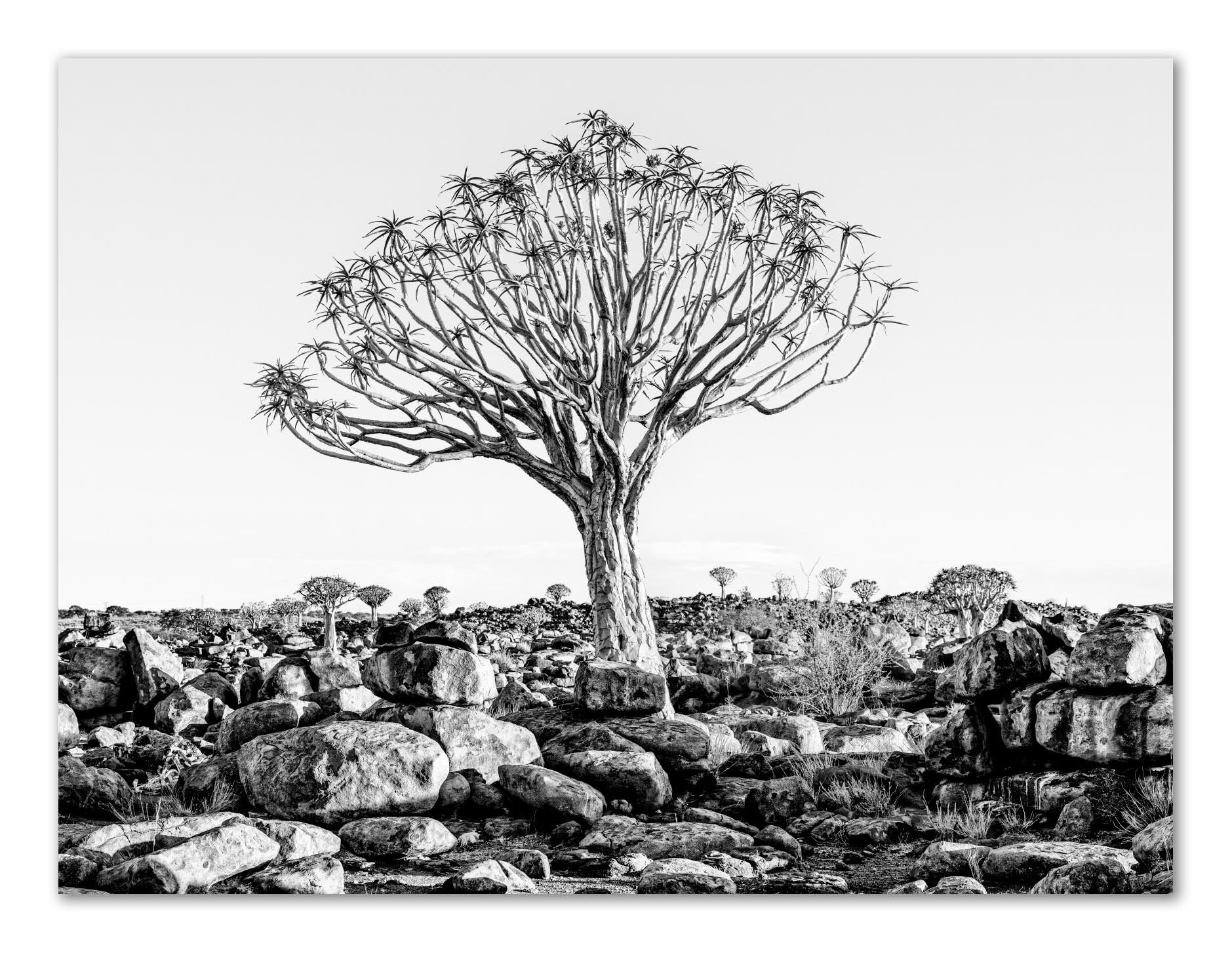
My relationship with the quiver tree runs deep. Known to the San people as choje, it takes its English name, quiver tree, from the San practice of hollowing out its branches to make quivers for their hunting arrows. Long before that, it was known simply as the Tree of Life: a giver of shade, water in its trunk during drought, and a quiet presence in San folklore.
At Giant's Playground, fractured dolerite boulders lie scattered as if tossed by giants, a place steeped in that same folklore. Rising among them stands a solitary quiver tree, sculptural and enduring. Cropped low in the frame, the image draws attention to its twisted limbs and architectural form, set against the stark geometry of stone.
Rendered in black and white, the textures of bark and rock become a quiet dialogue. This is not a portrait of abundance but of survival, a meditation on life persisting where even giants erode.
A Monochrome Meditation on Survival in Shadow and Stone
"Beneath the gaze of ancient stone, Choje endures—weathered, bowed, but unbroken."
A tree that is slowly disappearing
Although most live for around a century, some specimens are thought to survive for well over 200 years, storing water in its trunk to survive months without rain. It is classified as Vulnerable by conservation authorities, its range shrinking as the climate across southern Namibia and the Northern Cape grows hotter and drier than the tree evolved for. Photographing it now feels less like documenting a permanent fixture of the landscape and more like recording something that won't always look quite like this.
Available as: Unframed Fine Art Print • Acrylic Glass Print
Related Quiver Tree Prints:
The Ancient One
Baobab, Kruger, South Africa
A solitary ancient baobab stands in Southern Africa, its textured bark and sprawling limbs conveying resilience and timeless presence.
Centuries etched in bark.
This is not merely a tree. It is a monument to time itself.
Known as the Tree of Life, the baobab is Africa's great survivor, a symbol of resilience woven through the folklore of the continent. Stories tell of baobabs wandering by night, their spirits frozen in place by the dawn, forever guarding the landscapes they inhabit.
I found this solitary giant standing sentinel in a parched land. Its ancient, textured bark reads like a living map of centuries, etched with the scars of elephants that have sought its moisture and the quiet history of all who have rested in its shade.
Standing beneath it, it was impossible not to think about time. Long before I arrived, it had endured droughts, storms and generations of wildlife. Long after I'm gone, I hope it will still be standing.
Available as: Unframed Fine Art Print • Acrylic Glass Print
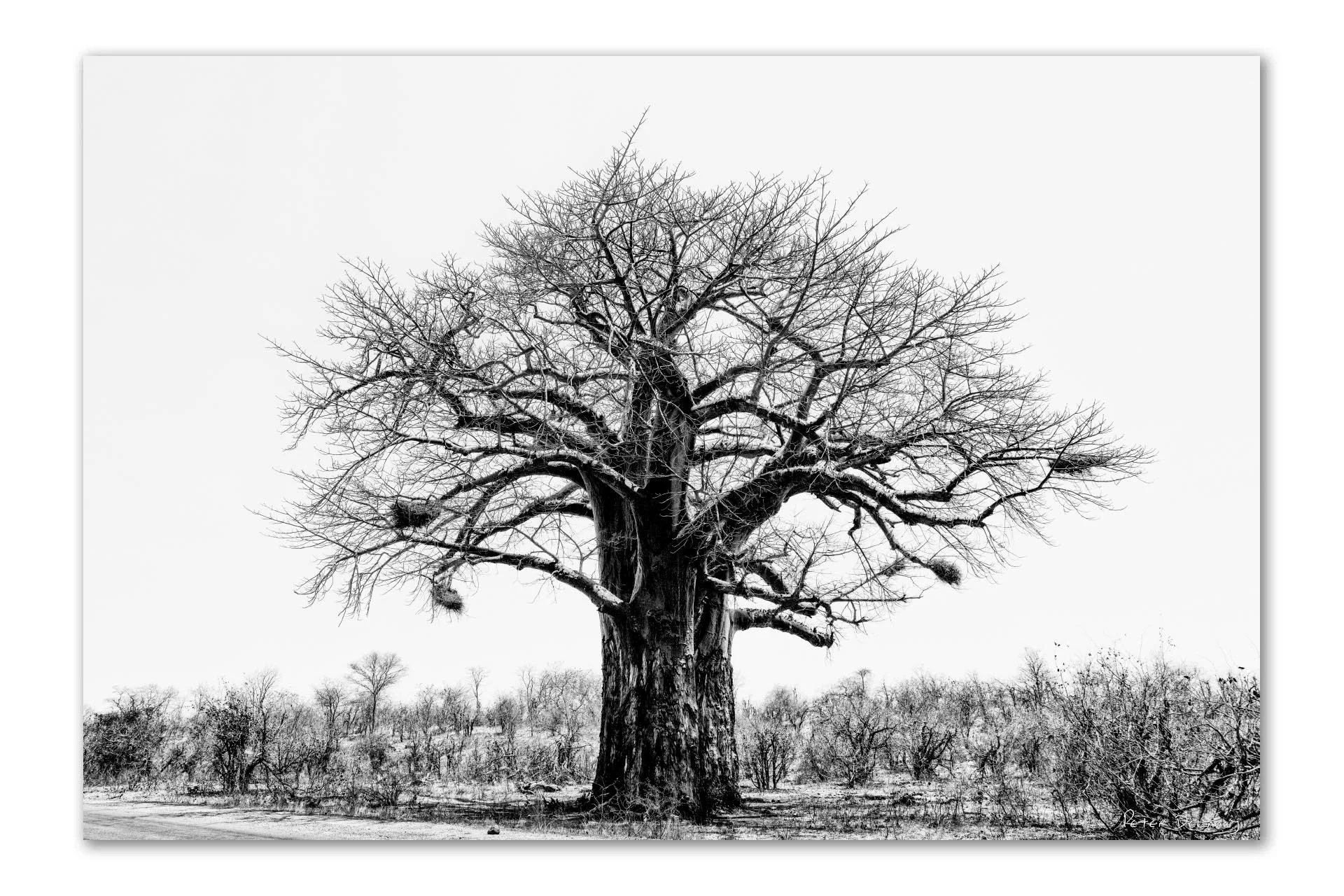
Centuries etched in bark, a sentinel of life, endurance, and spirit
“Immerse Yourself in the Echoes of the Past with The Ancient One Baobab Art”
Spectre of Deadvlei
Namib-Naukluft National Park, Namibia
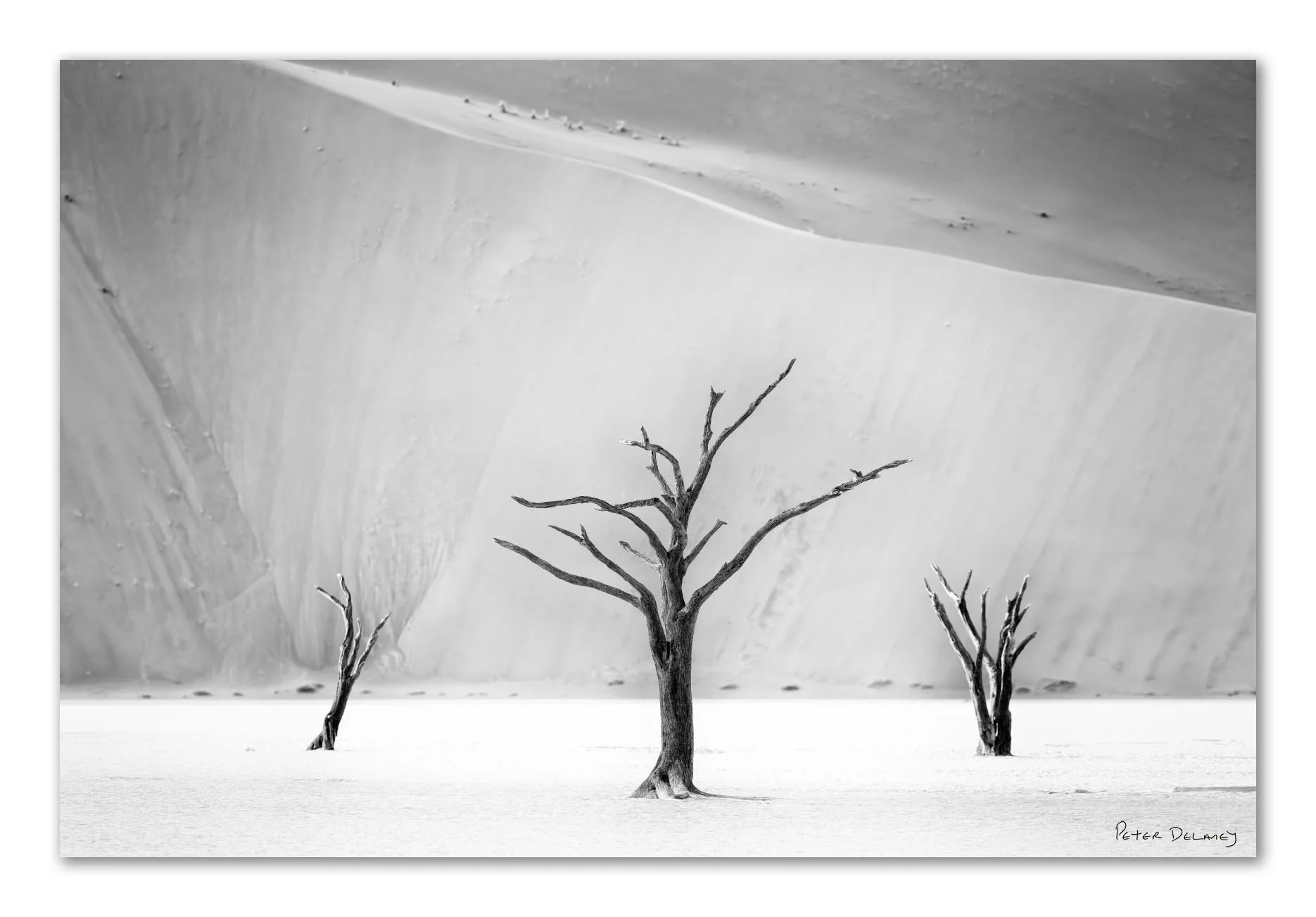
Two standing camelthorn trees and one fallen, skeletal against Deadvlei's white clay pan and distant dunes.
A realm sculpted by time.
Thirteen years ago, on my first visit to Deadvlei with my partner, now my wife Nicolinah, I sensed the potential of a particular tree. Walking among the dead camelthorn giants before sunrise was hauntingly beautiful, but the image I imagined never quite revealed itself.
Years later, I returned while guiding a client, teaching the art of photography. As we stood at a distance, a sudden gust of wind swept across the clay pan, lifting chalky dust and fine sand into the air. For a few seconds the scene transformed.
Handholding a 200mm lens, I managed to capture what I had envisioned all those years before. Through the haze, the tree emerged like a spectre, its skeletal limbs raised against the towering dune behind it. The dust filtered the light into silvery tones, revealing texture, shadow, and form.
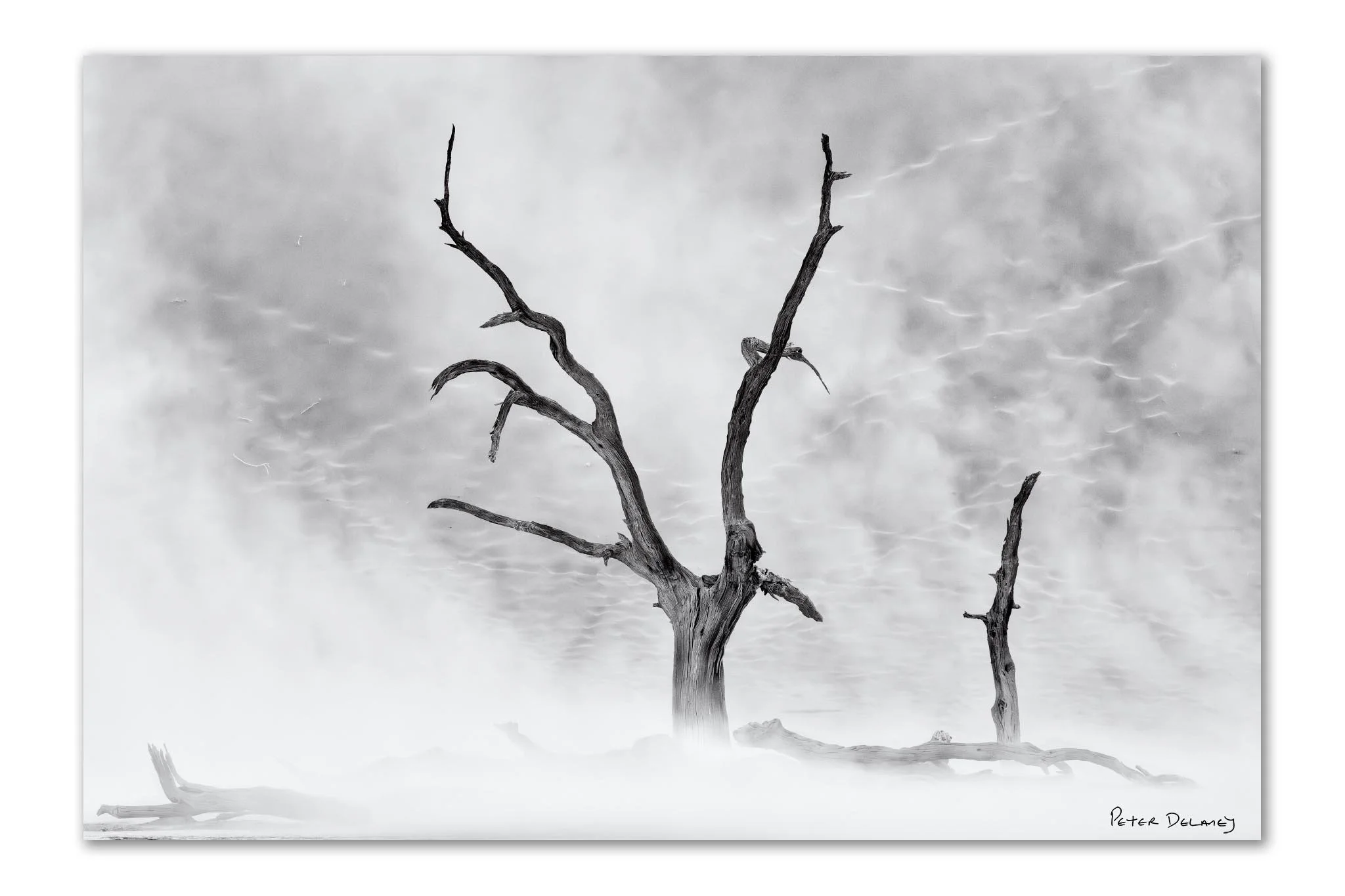
Spectre of Deadvlei, A Realm Sculpted by Time
“For those who find beauty in stillness, solitude, and the echoes of forgotten worlds.”
Why the trees of Deadvlei never fell
The camelthorn trees standing in Deadvlei are believed to be around 900 years old, killed centuries ago when a shift in climate cut off the river that once fed the pan. What makes the place so extraordinary is that they never decomposed. Deadvlei receives so little rainfall that the bacteria and fungi needed to break down dead wood simply can't survive there. The trees are, in effect, naturally mummified: still standing exactly where they died, scorched black by centuries of sun against a clay pan bleached almost white.
Some images take years to realise. The land remembers, even when we must wait.
Available as: Unframed Fine Art Print • Acrylic Glass Print
Related Deadvlei Prints:
[Image gallery: three thumbnails, linking to their respective product pages]
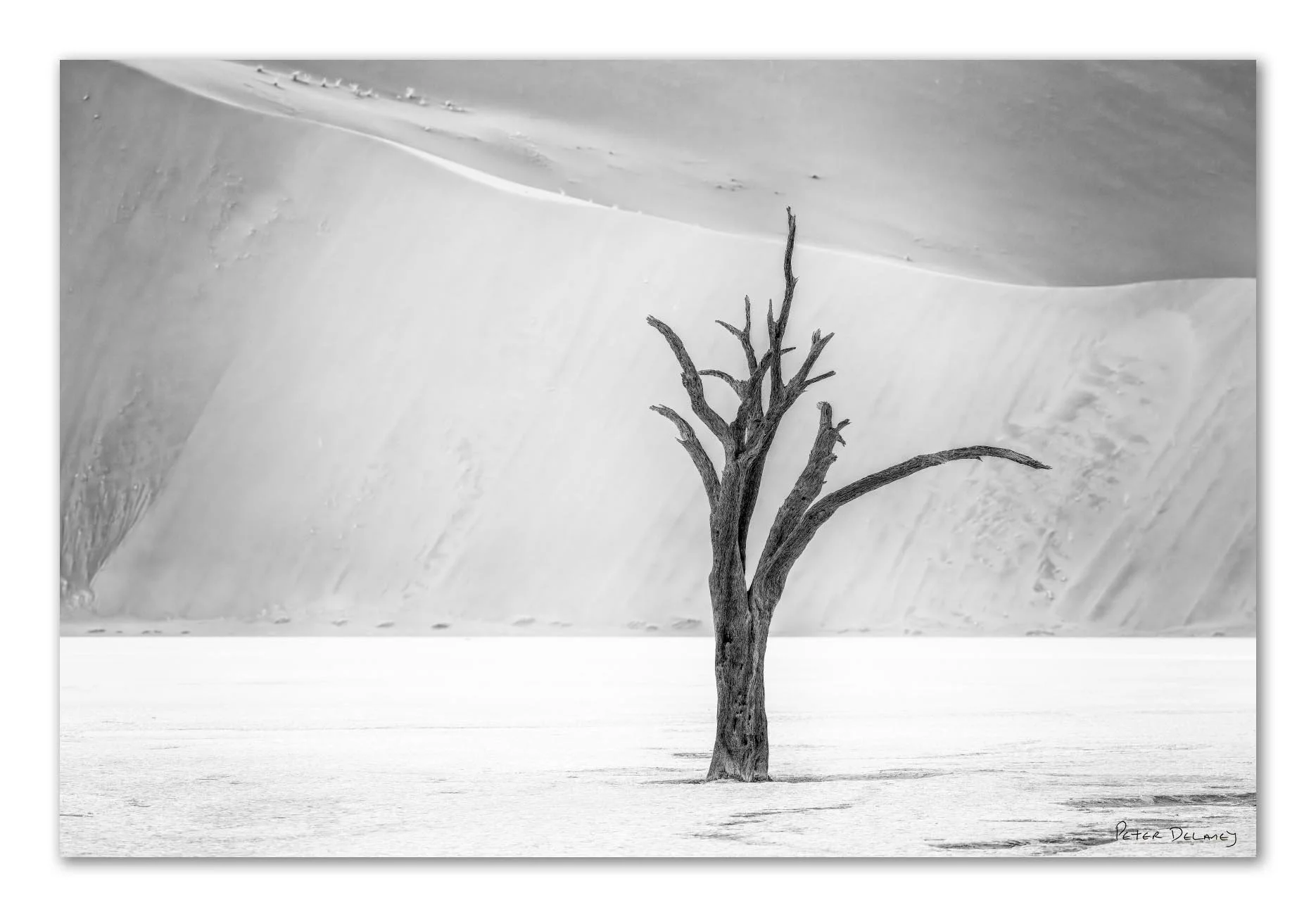
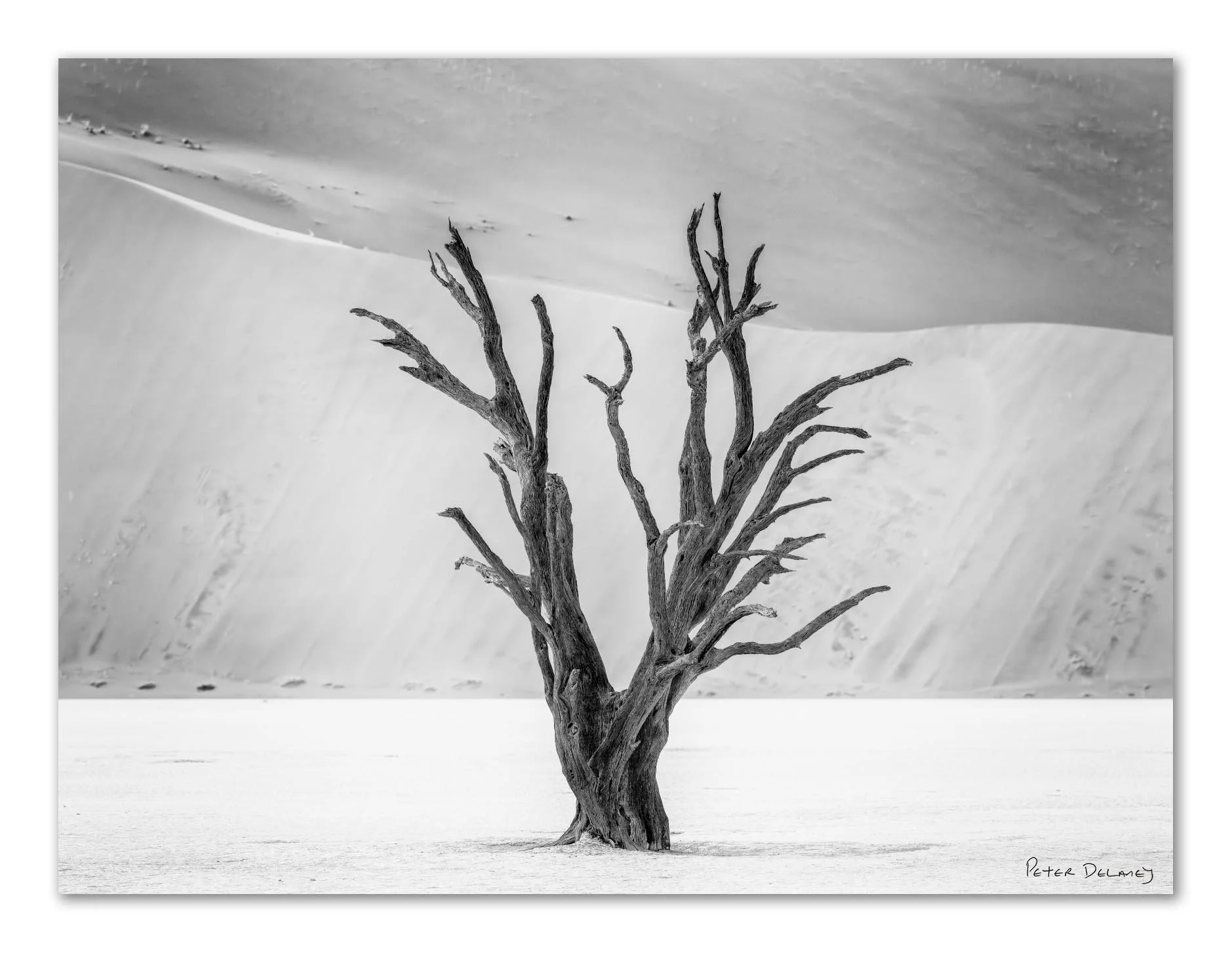
These five images represent a quieter side of my work, a long-standing, personal dialogue with the land.
Museum-Quality Prints, Made to Last
Every photograph in this collection is produced using museum-quality archival materials chosen for their longevity, beautiful tonal range and faithful reproduction of detail. Whether you choose an unframed fine art print or an acrylic glass presentation, the intention is the same: to create a piece that can be enjoyed every day and passed from one generation to the next.
Unframed Fine Art Prints – Printed on museum-quality archival cotton paper with a beautifully soft matte finish and exceptional tonal depth. Supplied unframed, allowing you to choose the framing style that best suits your home.
Acrylic Glass Prints – A contemporary presentation with remarkable depth and clarity. Each print is face-mounted beneath acrylic glass and finished with a slimline aluminium frame in gold, silver, black or white. Monumental Acrylic Prints are also available for selected images.
Collectors tend to choose based on where the piece will live and how it will be lit rather than on any one finish being objectively best. All ship worldwide, free of charge.
If one of these landscapes speaks to you, I invite you to live with it, slowly, honestly, and with space to breathe. Five places. Five moments in time. Made to be lived with for a lifetime.
Wildlife gave me a career. These landscapes gave me perspective.
Every time I return to Namibia or the Karoo, I'm reminded that the land asks for something different. Not speed. Not luck. Just patience. Some of Africa's most memorable moments arrive quietly, and only reward those willing to wait.