The Grey Ghosts of Etosha: Giants of Dust and Silence
The Grey Ghosts of Etosha: Giants of Dust and Silence
There is a place where giants seem to walk among ghosts — Etosha, a land of shimmering mirages, salt-laden winds, and elephants shaped by scarcity, survival and the unforgiving rhythm of the desert. I had the privilege of walking in their footsteps, witnessing encounters with bulls that seemed to carry the weight of the landscape upon their backs.
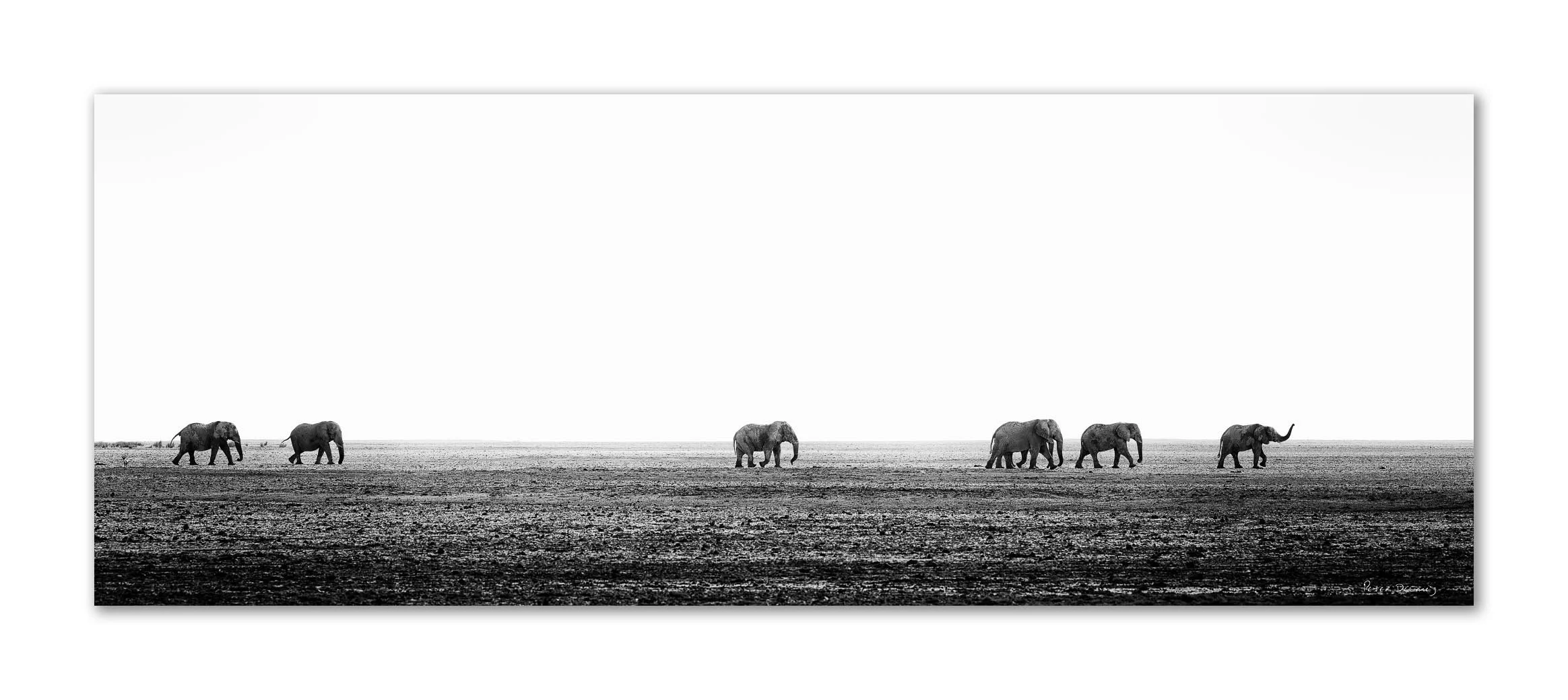
Trek of the Grey Ghosts
The Silent Walk of Giants
The Silent Walk of Giants
The day began in the golden hush of dawn, when the desert light paints the world in hues of fire and shadow. Seven bulls crossed my path, moving with a slow, deliberate grace that defied their immense size. I followed, keeping my distance, drawn by the quiet rhythm of their journey.
In Etosha, water is the pulse of life. These seasoned travellers knew where to find it.
Hour by hour, they led me deeper into the vast, open expanse until we reached the edge of the Etosha Pan — a blinding white void that stretched beyond the horizon. Here, where the earth cracks like old parchment and the sky swallows sound, ancient springs still bubble beneath the surface. The bulls knew this well. Without hesitation, they approached, extending their trunks to drink from the life-giving source hidden beneath the salt.
Then, they appeared from the haze of heat and dust — seven bull elephants in single file, ghostlike in their silence.
Towering, timeworn giants, each one carved by decades of desert life. Their hides were landscapes of cracked earth and old battles, their tusks mismatched and weathered by use. They moved with a quiet, deliberate grace, conserving every ounce of energy under the unrelenting sun. No trumpeting, no chaos — just the steady, rhythmic march of survivors across the great salt pan.
As they drew near, the air seemed to hold its breath. I sat motionless, heart pounding, witnessing a moment so rare and profound that it felt like the desert had offered me a gift.
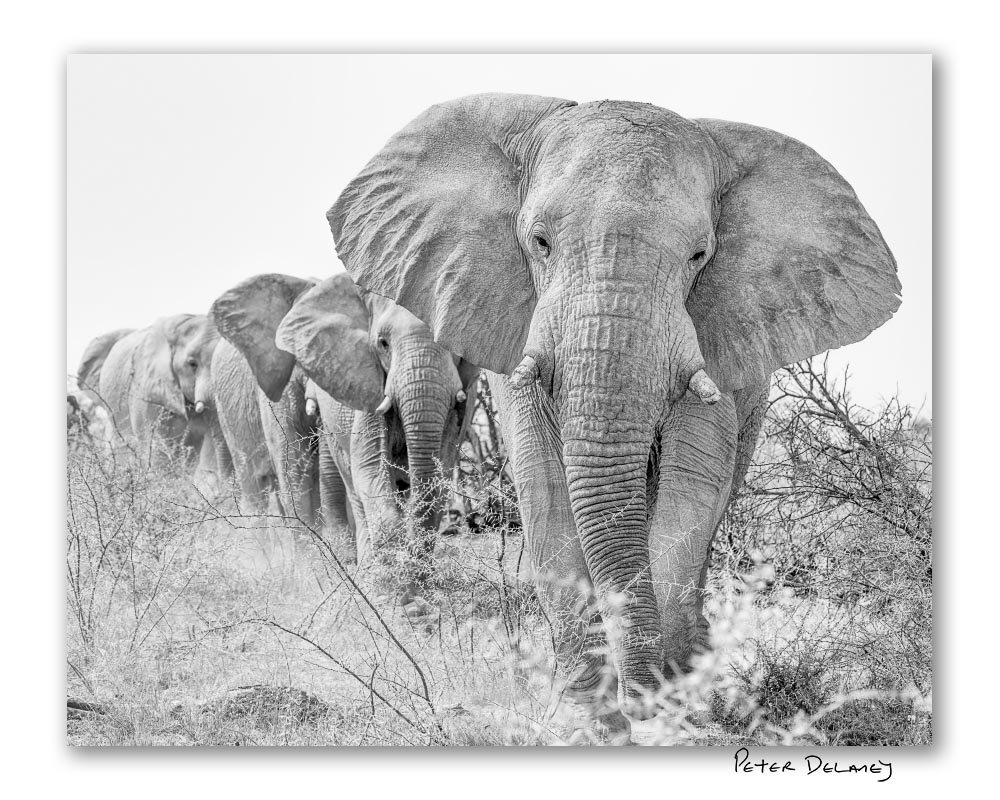
March of The Grey Ghosts | Bull Elephants
"When the wild speaks in black and white... are you listening?"
The Ritual of Dust and Time
After quenching their thirst, the bulls engaged in a ritual as old as their lineage. With practised precision, they gathered the thick, alkaline mud and coated themselves, transforming into living statues of dust and stone. The Etosha Pan's white clay serves as both armour and identity, shielding them from the relentless sun and parasites. As it dries, it gives them their ghostly hue — a spectral presence in an already dreamlike world.
One old bull stood apart, his gaze lingering on the horizon. Perhaps he had seen too many seasons, lost too many kin to time and hardship. Or perhaps he was merely content, knowing he had mastered this unforgiving land. As he moved past me, his vast frame eclipsed the dying sun, and for a fleeting moment, he was neither beast nor legend — but something more — an echo of Africa's untamed soul.
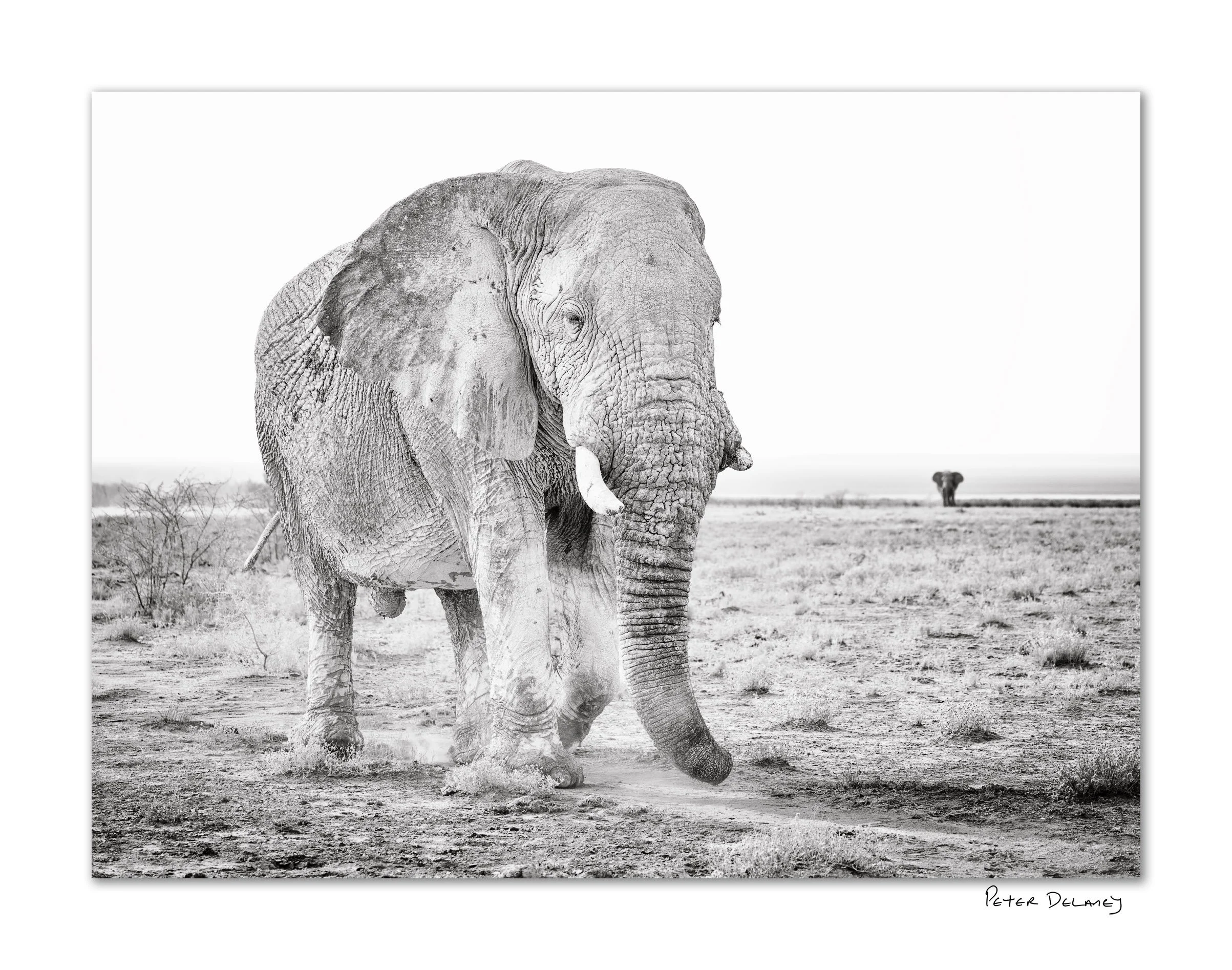
Grey Ghost | The Ancient One | Limited Edition
"Not just a photograph. A moment. A masterpiece. A memory of the wild—etched in black & white."
Why Etosha's Elephants Matter
Etosha's elephants are not just survivors; they are sculptors of the land. They shape waterholes with their tusks, disperse seeds that grow into sheltering trees, and carry the wisdom of generations. But they are also vulnerable. Their tusks, often brittle from mineral deficiencies, remind us that even giants have weaknesses. Their migration routes, once endless, are now hemmed in by human expansion.
As photographers and storytellers, we must do more than capture their beauty — we must honour their story. Etosha's elephants are not just subjects for a lens; they are testaments to endurance, resilience, and the fragile balance between survival and loss.
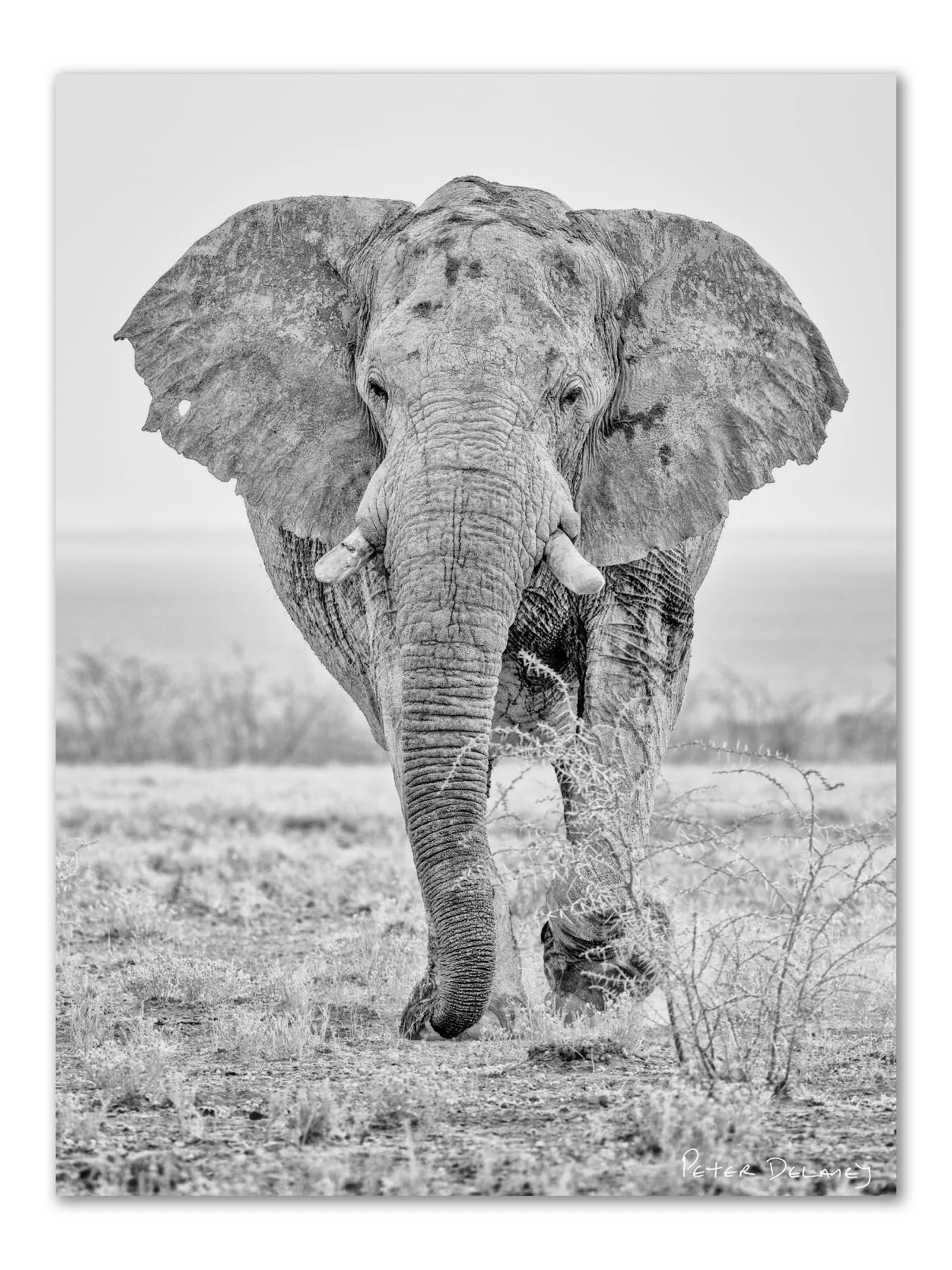
Grey Ghost | Hole In Ear | Bull Elephant
"An elephant never forgets. Neither will you."
A Ghost in the Frame
After the seven bulls crossed the pan, I found a younger bull walking alone. Time had already marked him — his tusks broken, his skin etched with the beginnings of age. He moved with quiet purpose, one foot raised, trunk nearly touching the ground, the vast white pan stretching endlessly behind him. He was not the largest, but he was the one who asked me to be still.
And then, three others lingered among the scattered branches and small bushes. The trees were bare, the ground a mix of chalk and sand, the expansive pan stretching behind them. They moved in silence, their grey forms ghostlike against the white earth.
These are the Grey Ghosts. Moving, vanishing, enduring. Just as they always have.
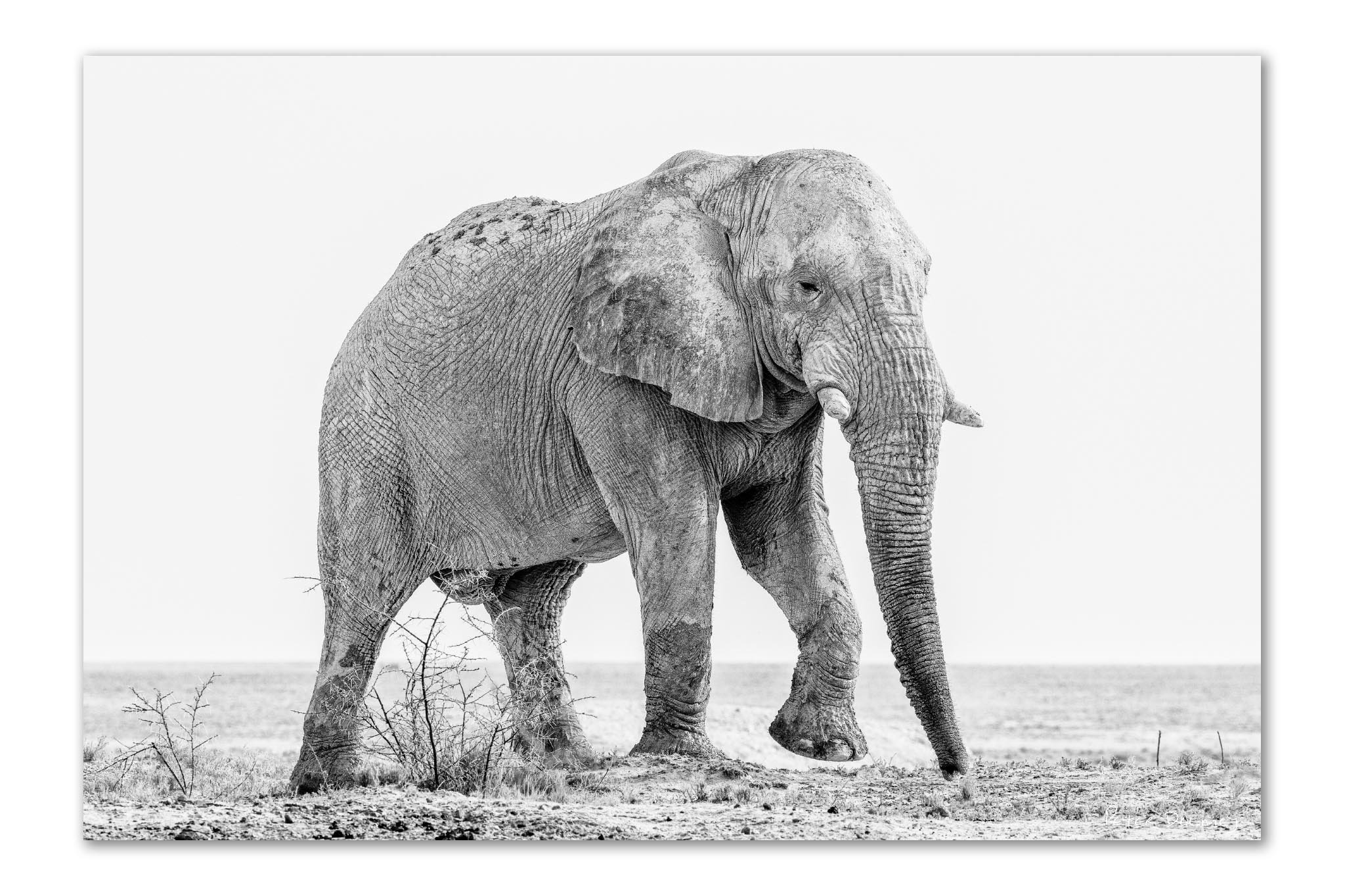
Grey Ghost | Young Bull Elephant
“For those who see beauty in simplicity, and strength in stillness.”
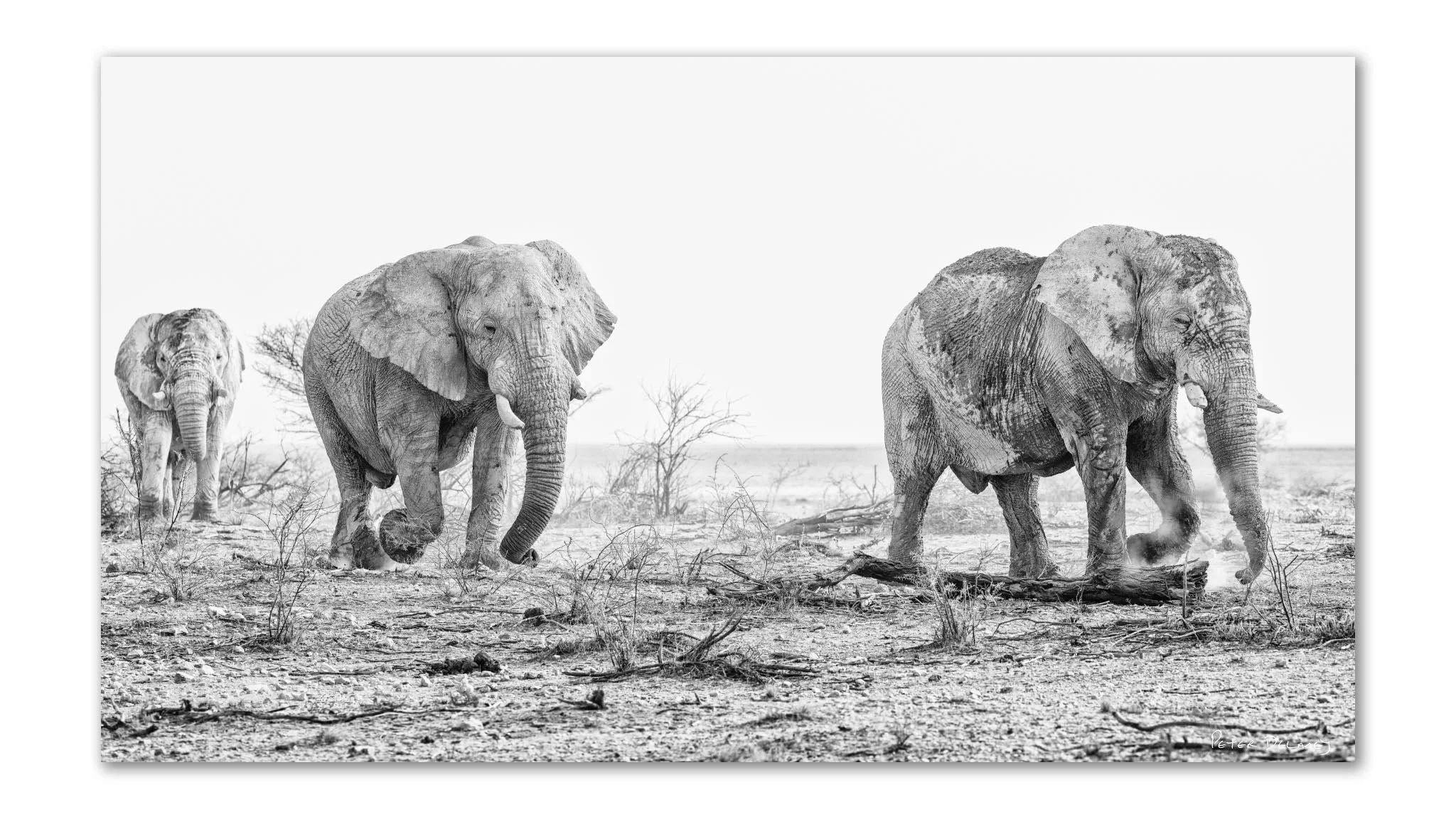
Grey Ghosts of Etosha | Three Bull Elephants | Edge Of Etosha Pan
Own a Piece of Etosha
To witness Etosha's giants through my lens is to hold a moment that stands outside of time.
Each black-and-white fine art print tells a story of survival, silence, and the quiet majesty of Africa's most haunting landscape.
Fine Art Print Formats
Unframed Fine Art Prints
Hahnemühle Photo Rag® 308gsm — 100% cotton archival paper
Velvety blacks, refined detail, exceptional tonal depth
Ideal for collectors who prefer to choose their own frame
5–7 days · Free worldwide shipping
Acrylic Glass Prints
Face-mounted crystal acrylic with luminous depth and gallery glass finish
Available frameless or with slimline aluminium frame in gold, silver, black, or white
Ready to hang and designed for contemporary spaces
12–14 days · Free worldwide shipping