A Life in Black and White: Ten African Animals That Shaped My Photography
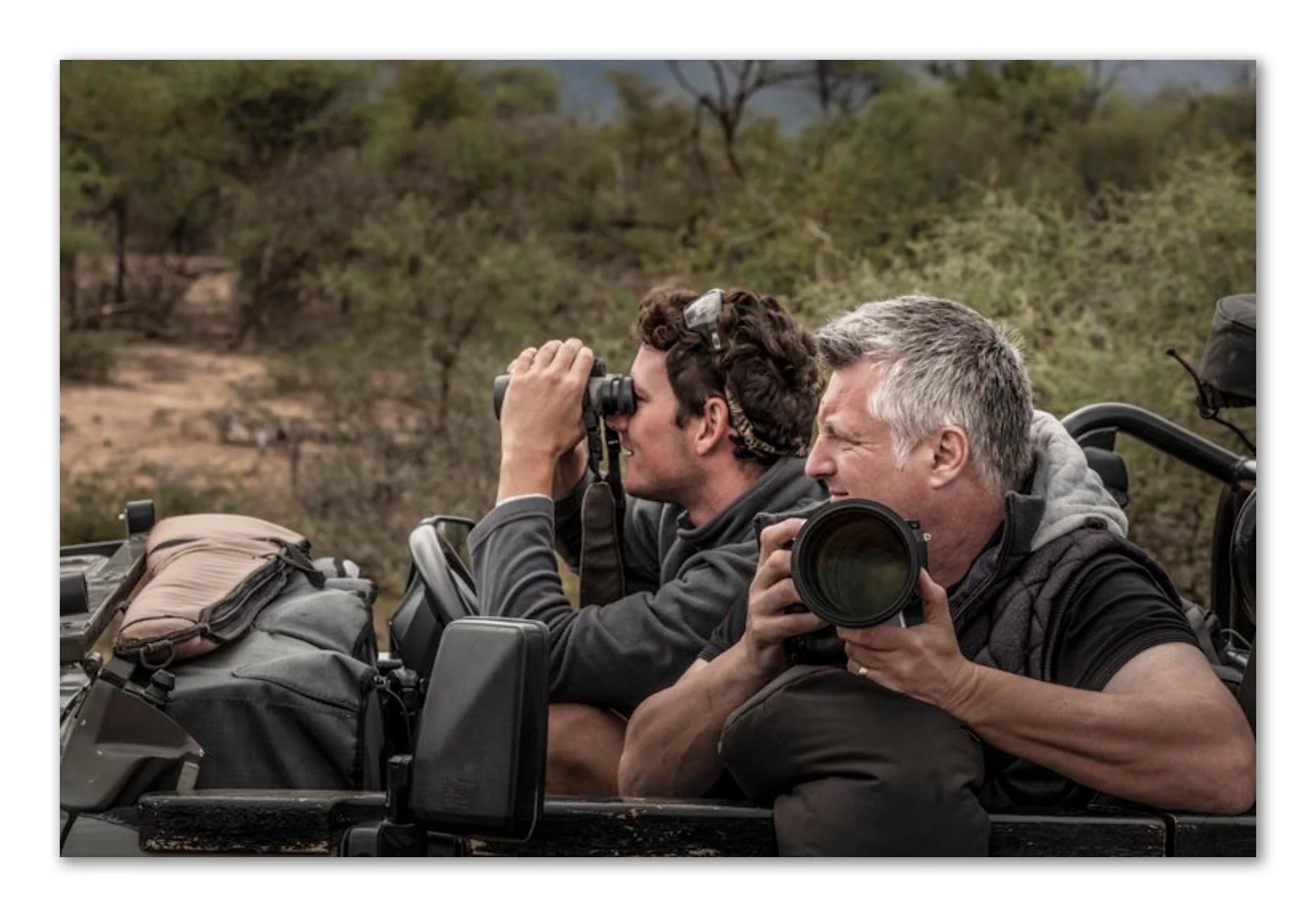
Twenty years of this. Still feels like the first time.
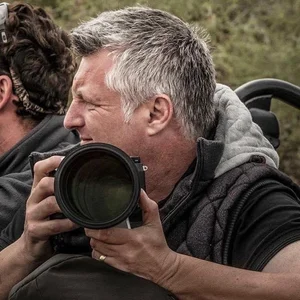
I didn't pick up a camera in the African bush. I picked it up in London, in a bookshop, flicking through the work of Don McCullin. As an Irish immigrant who had spent fourteen years on the trading floor, something in that haunting black and white photograph stopped me cold. Completely.
I didn't know it then, but that moment quietly set the course for everything that followed. Night classes. Long hours in the darkroom. And eventually, a life spent photographing Africa's wildlife in monochrome.
Black and white photography does something colour cannot. It removes distraction and forces you — and the viewer — to look harder. Texture. Light. The weight of a gaze.
Over nearly two decades in the field, ten animals have shaped my understanding of what monochrome photography can reveal. Each one taught me something different.
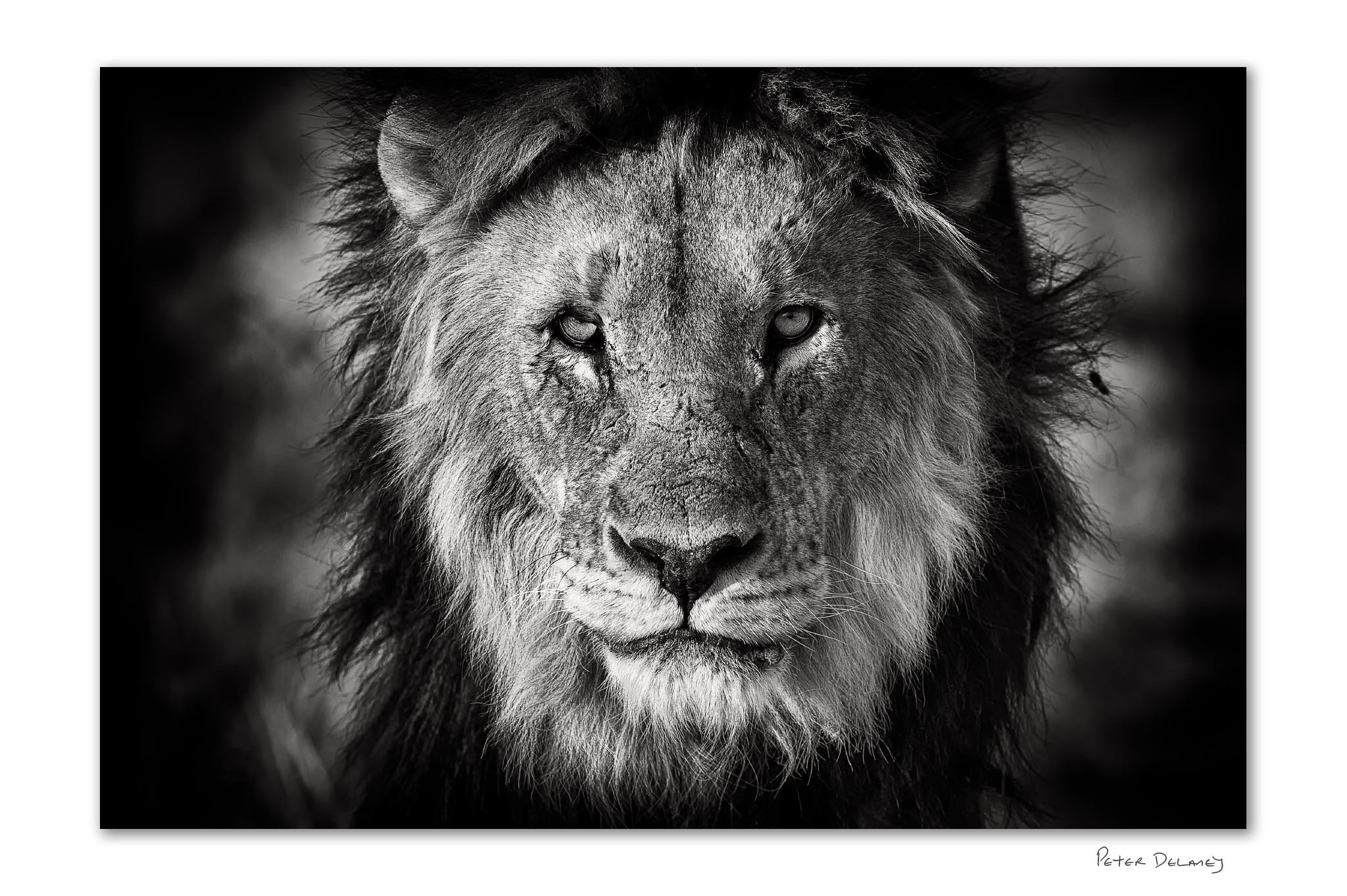
Heart of Darkness
“True power is silent, relentless, and always watching.”
1. The Lion
I once watched a Kalahari black-maned lion hunting in silence. Just minutes before he came into view, an anxious mother and her cubs ran past me — so close I could hear their breath — completely unaware of the danger behind them.
When the male finally appeared, I understood their panic instantly. I followed as far as I could, photographing him as he moved with a slow, terrible purpose.
That photograph became "Heart of Darkness."
In black and white, the intensity of his gaze fills the frame with something primal. It is not a comfortable photograph to sit with, which is exactly the point. The lion does not ask for your admiration.
“True power is silent, relentless, and always watching.”
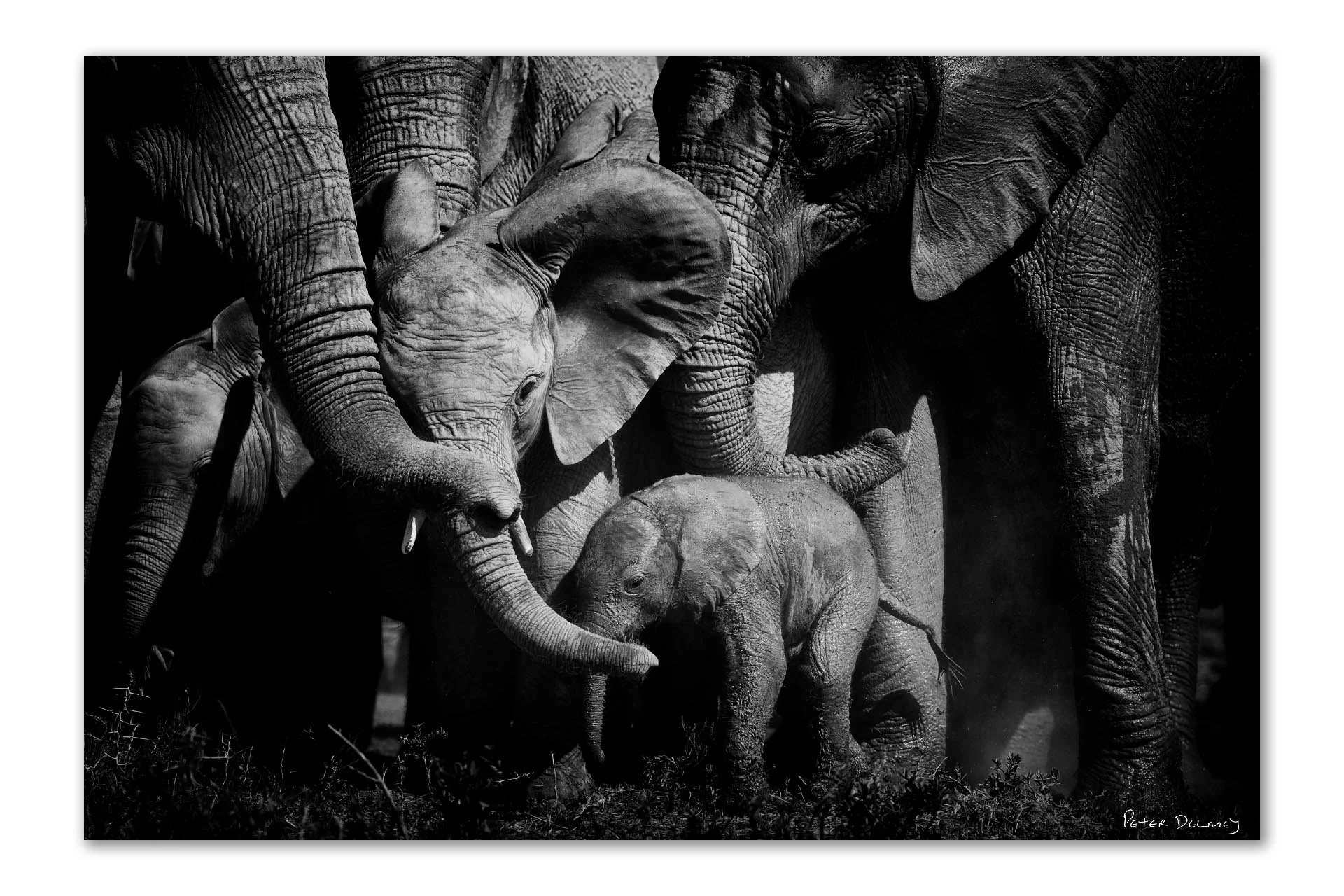
Bonds of Love
"For those who know family is the wild’s greatest strength."
2. The Elephant Family
There is a photograph I made in Addo National Park that I return to often. A herd surrounds the newest member of the family, a few days old— not in alarm, but in the quiet, deliberate way elephants have of saying: you are ours, and we are yours.
The newborn is barely visible beneath them. The adults form a wall of wrinkled skin and ancient intention.
"Bonds of Love" is what I called it.
In monochrome, the tenderness reads even more clearly. Stripped of colour, what remains is pure relationship — the kind that needs no explanation.
Observing elephants is one of the most moving experiences the bush offers. Their capacity for affection, grief, and fierce protectiveness mirrors something deeply human.
“For those who know family is the wild's greatest strength.”
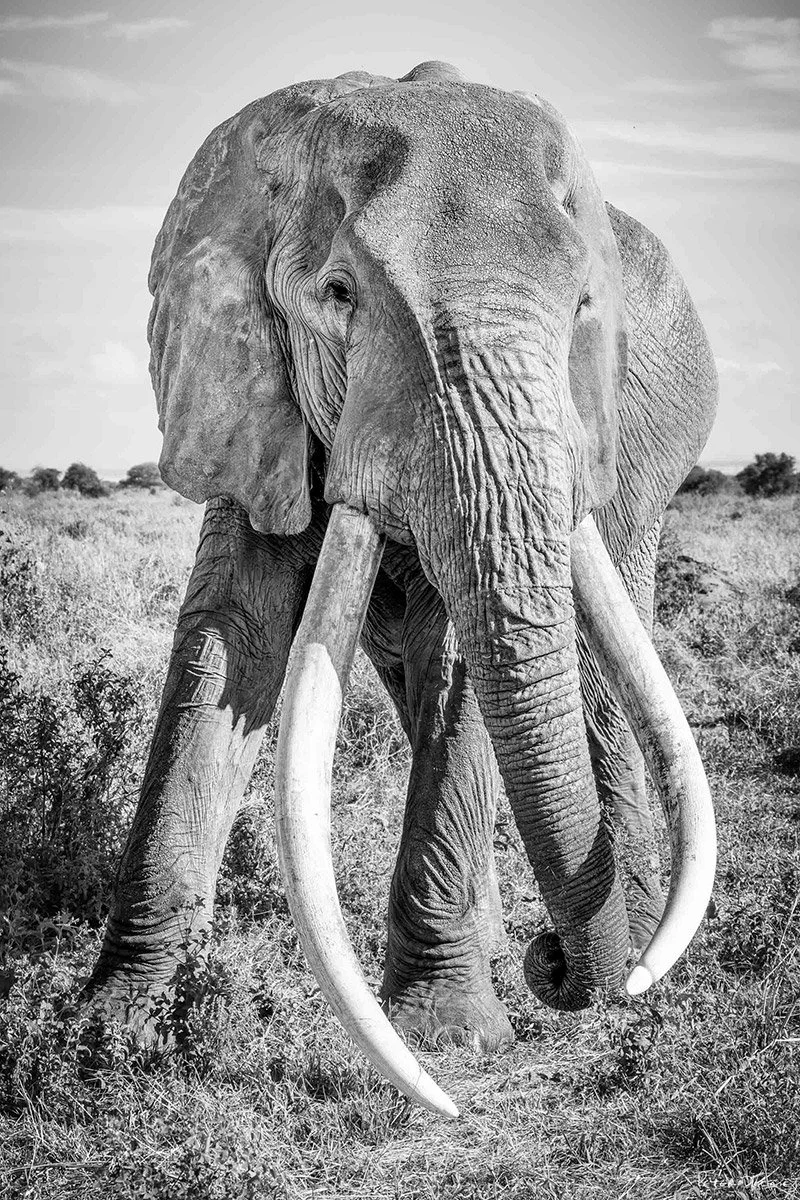
Craig | Super Tusker
“For those who understand that true legacy outlives the moment.”
3. The Tusker
In Amboseli, we spent an entire morning with Craig — one of the last remaining super tuskers in East Africa. His tusks were so long that they touched the ground as he walked.
Behind him, Kilimanjaro rose through the morning haze, snow-capped and vast. It was one of those bucket-list moments that, even while it was happening, already felt like a memory.
The great tuskers are disappearing. Craig has since passed.
To have spent time with him, to have made his portrait, carries a weight that colour could never fully express. In black and white, he becomes something timeless — not just an animal, but a reckoning.
“For those who understand that true legacy outlives the moment.”

Leopard on the Prowl
Salayexe—the shadow that stalked Sabi Sands
4. The Leopard
In the Sabi Sands, within the Greater Kruger, there was a female leopard named Salayexe. Born in 2005, daughter of Saseka, sired by the formidable Mufufunyane — she ruled her territory with quiet authority.
I photographed her walking along a massive marula branch, one paw raised mid-stride, her gaze clear and utterly focused.
Salayexe passed in 2017, but her lineage continues through her cubs.
When you photograph a leopard like her, you are not simply making a wildlife portrait. You are preserving a chapter of wilderness history. In black and white, everything unnecessary falls away — leaving only form, intelligence, and presence.
“She asked nothing of the world. She simply ruled it.”
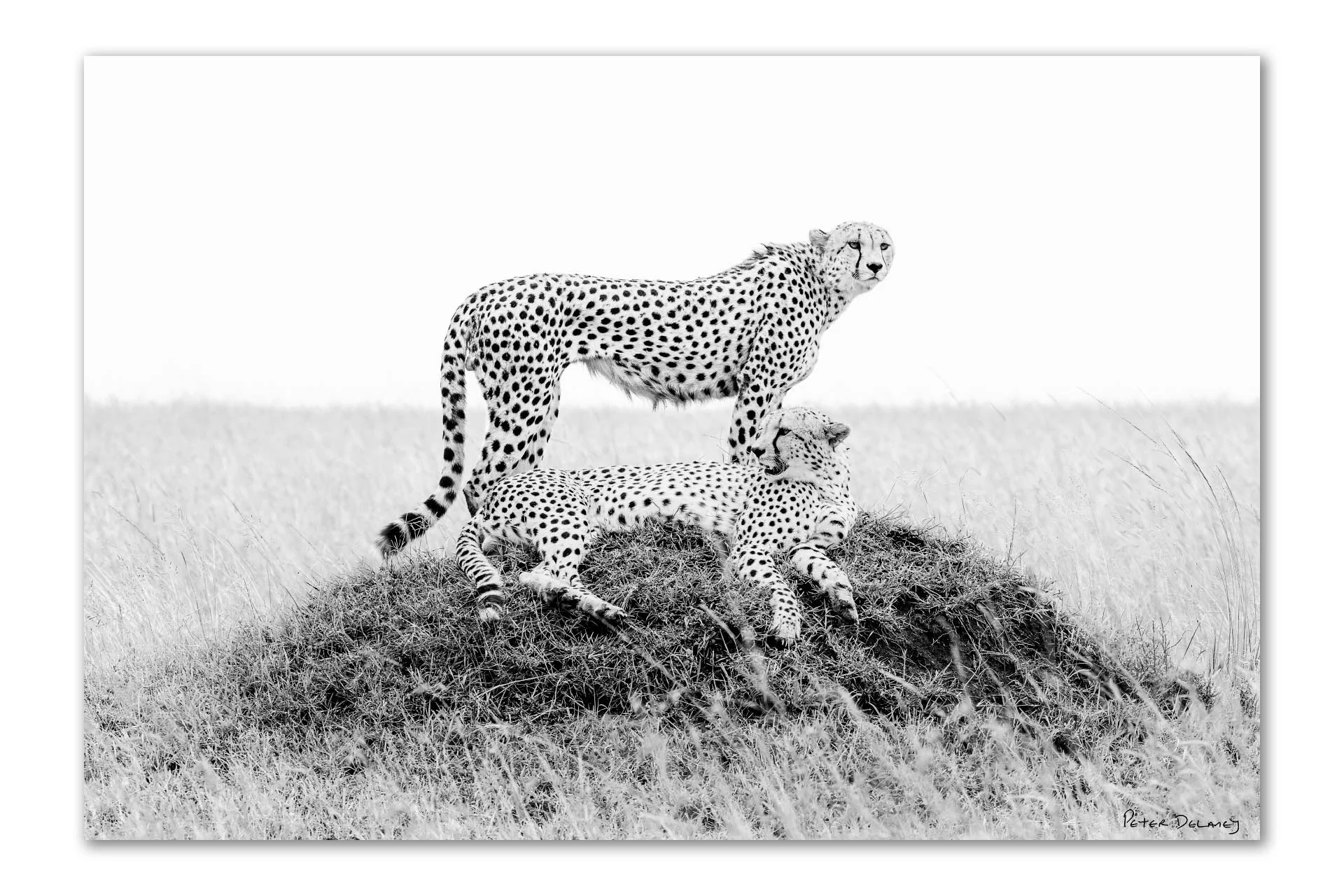
Sons of Rosetta | Ruka and Rafiki
“For those who understand true power lies in the relentless pursuit of life.”
5. The Cheetah
In the heart of the Mara, I found two brothers standing atop a termite mound. Ruka and Rafiki — sons of the celebrated female Rosetta — surveying the plains with the quiet confidence of animals who had earned their place.
One stood tall and watchful. The other rested below in calm repose.
Between them was a stillness that spoke of absolute trust.
The cheetah is often described by speed. But "Sons of Rosetta" is about something else entirely — the bond between siblings who have hunted together, survived together, and know each other completely.
In monochrome, their slender forms against the open horizon carry a quiet elegance that colour would only dilute.
“For those who understand true power lies in the relentless pursuit of life.”
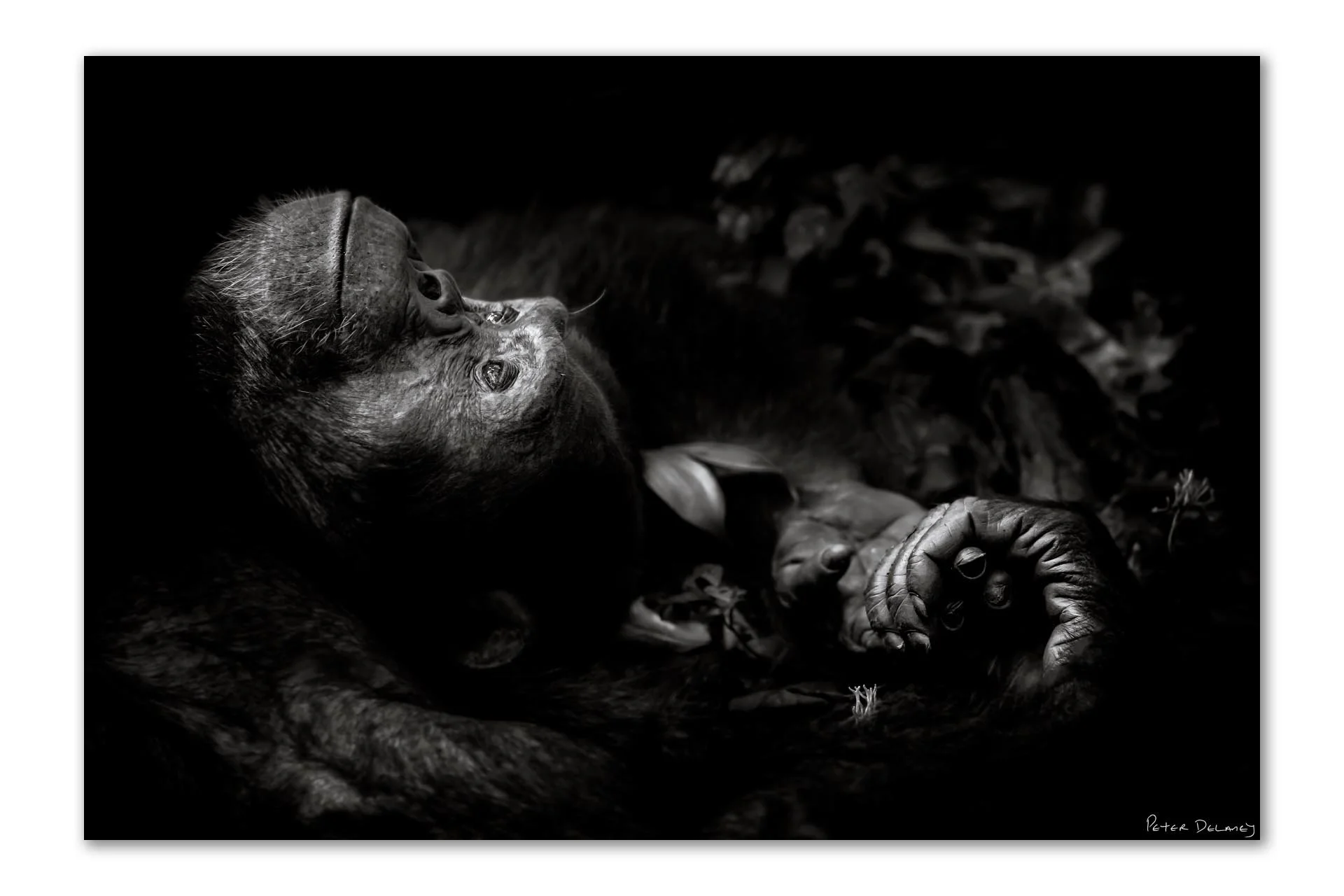
Contemplation
“For those who see beauty in the silent yearning of the wild.”
6. The Chimpanzee
Trekking through Kibale National Park in Uganda, hours had passed with only distant glimpses of chimpanzees high in the canopy.
Then suddenly, as if a signal had been given, one descended from the trees. Others followed behind him like paratroopers. What followed looked unmistakably like a hunt. It ended as quickly as it began.
Later, I found Totti — an alpha male — lying on a fallen log. His hazel eyes were fixed on a female high above him. He had displayed, called out, and postured. She ignored him.
Eventually, he lay back, arms stretched above his head, staring upward in silence.
His longing was unmistakable.
I pressed the shutter.
That photograph, "Contemplation," won the Animal Portraits category at Wildlife Photographer of the Year in 2017.
“He taught me that longing has no species.”
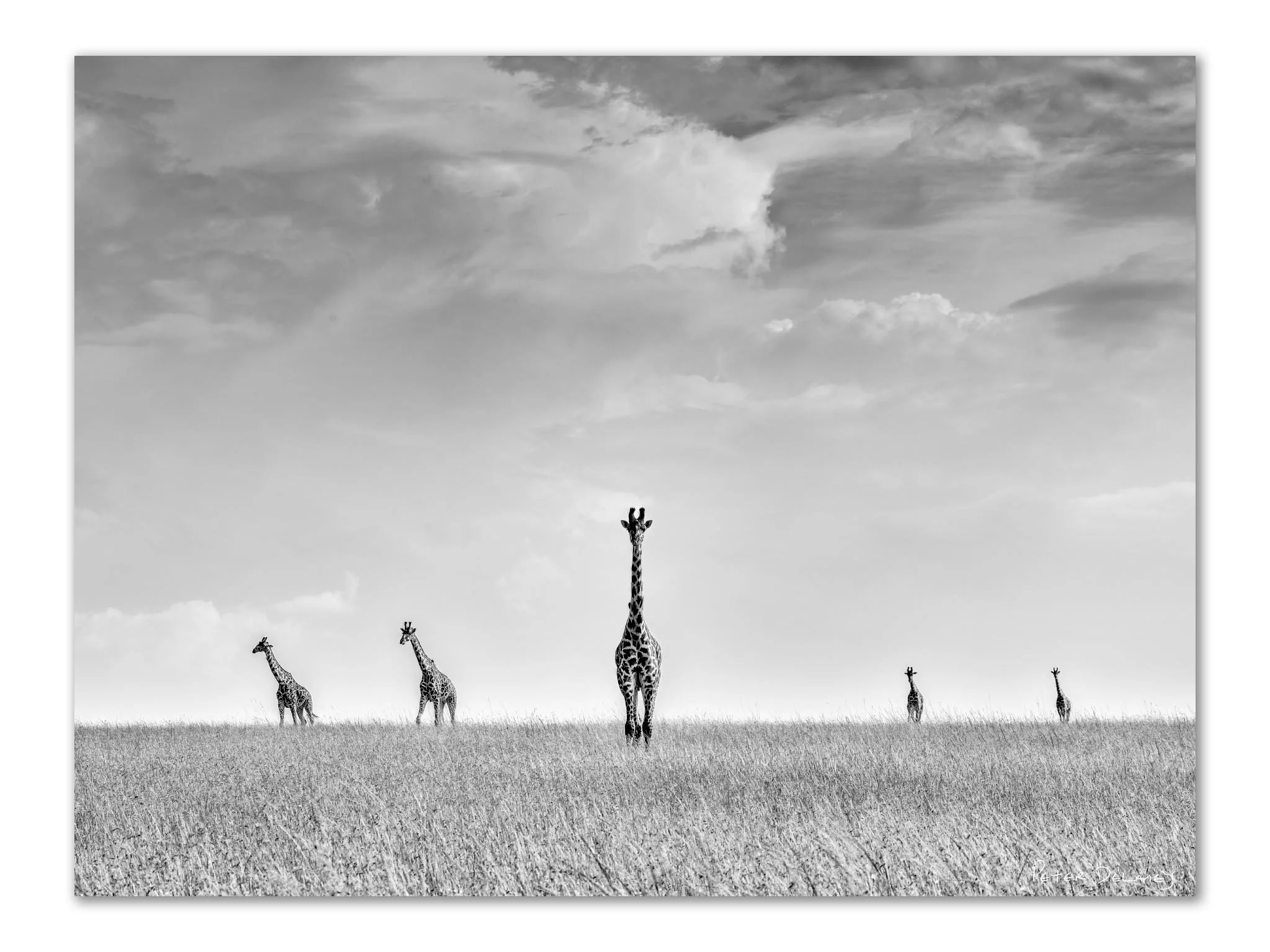
Serendipity
“For those who find harmony in nature’s quietest moments.”
7. The Giraffe
On a storm-washed plain in the Mara North Conservancy, a tower of giraffes moved slowly across the horizon.
Five of them formed a living diagonal line beneath an endless sky. The central giraffe paused and turned toward me — a silent conversation between the wild and the witness.
I called that photograph "Serendipity."
“For those who find harmony in nature's quietest moments.”
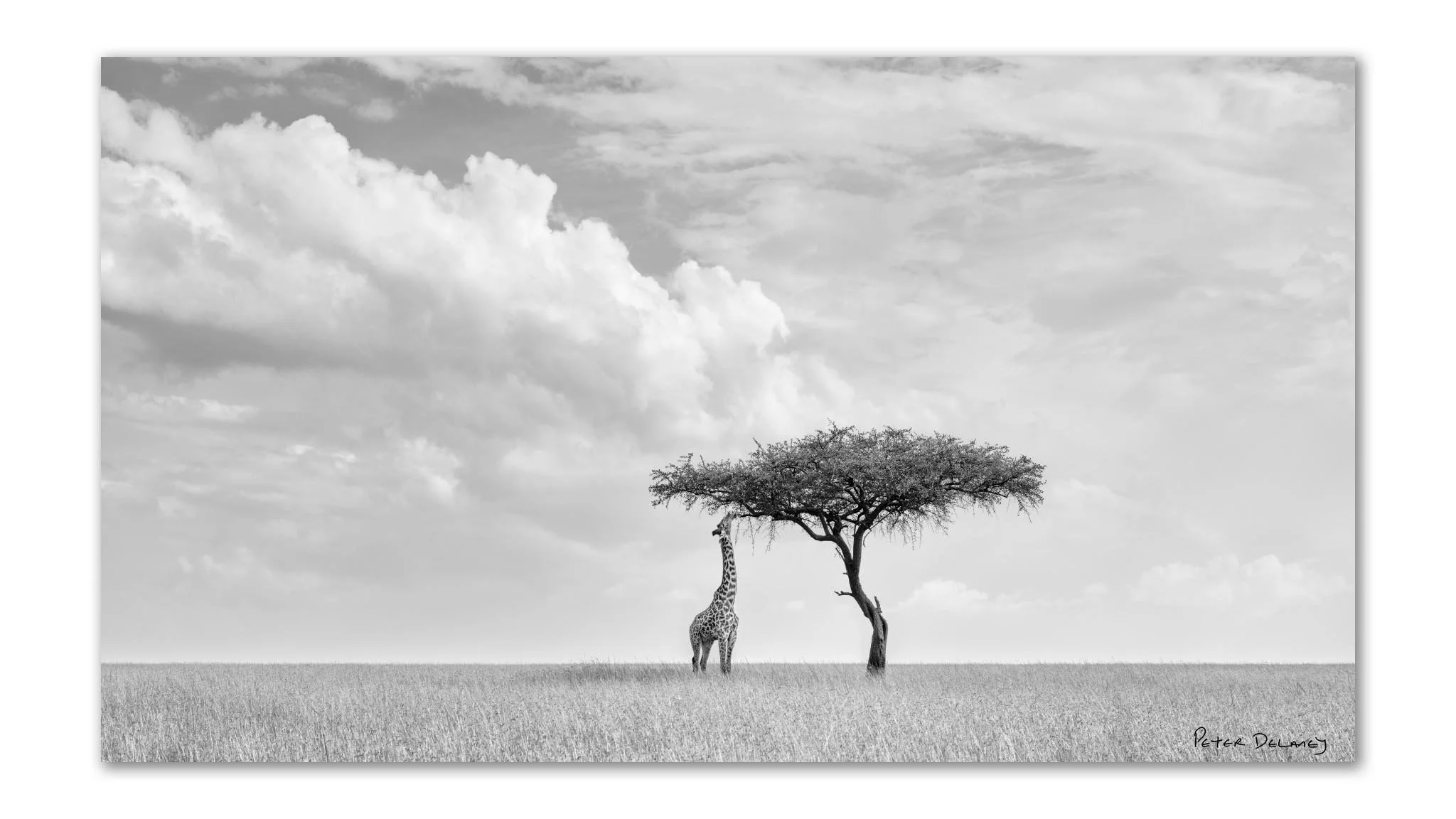
Camelopard
“For the soul that finds calm in nature’s chaos.”
As the group moved on, one giraffe remained behind. She stood alone beneath a solitary acacia, completely unhurried.
That portrait, "Camelopard," was shortlisted for the Exposure Photo Gallery Awards. In black and white, the giraffe's towering form becomes almost architectural.
“For the soul that finds calm in nature's chaos.”
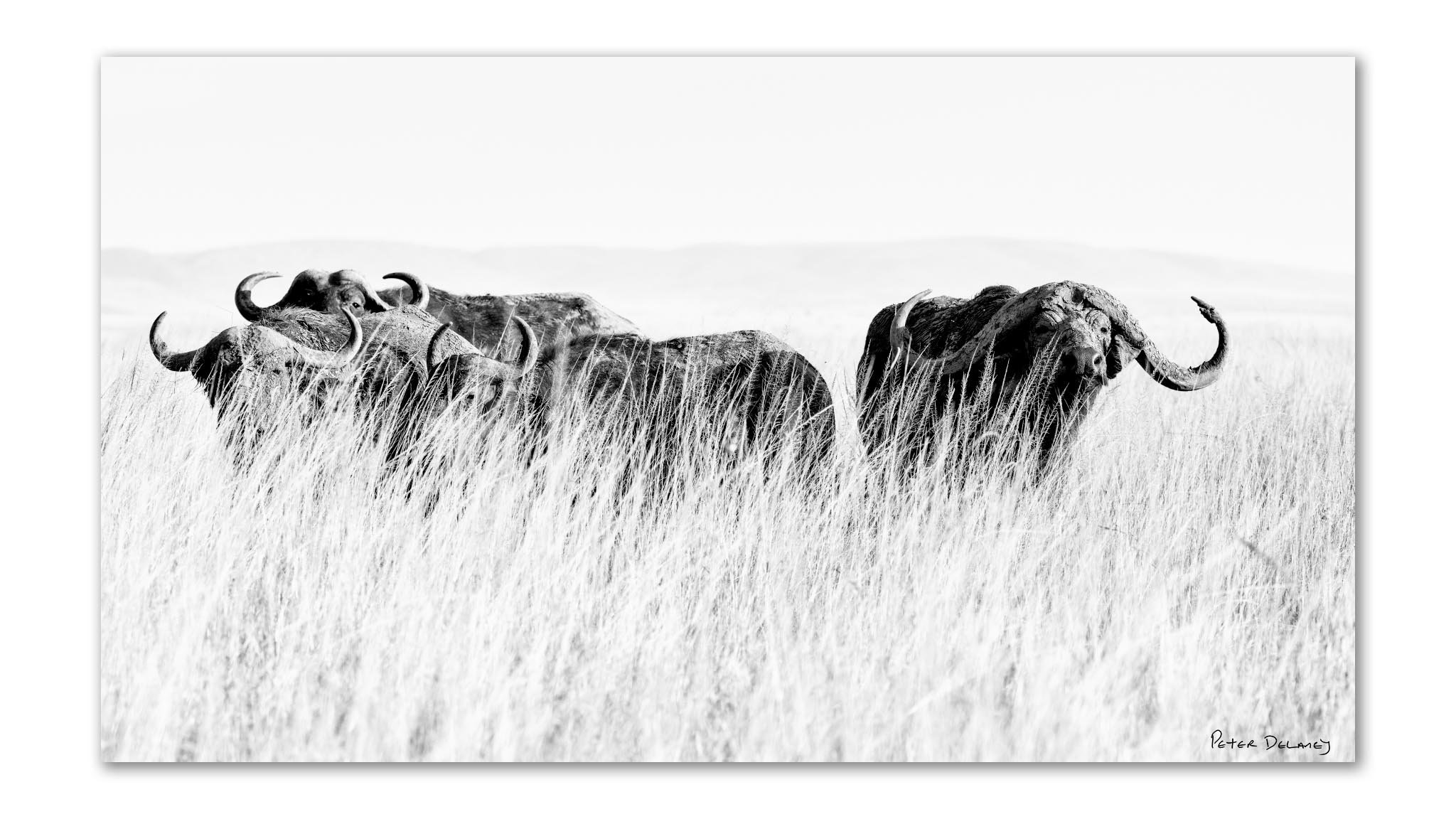
WIDOWMAKERS — The Herd
"For those who feel the charged silence before something unstoppable moves."
8. The Buffalo
They rise from the tall winter grass of the Mara like a wall of muscle and horn.
The grass is bleached pale by the dry season, almost luminous, and from it the herd emerges shoulder to shoulder. The lead bull fixes his gaze on you. Behind him, the others mirror the same unbroken stillness.
Nobody moves.
The cracked mud across their hides maps a thousand miles of survival.
The African buffalo has long been called the Widowmaker. No animal in Africa turns the tables more completely. In black and white the mud becomes ancient, the horns become architecture, and those steady eyes become something you feel rather than see.
“They do not attack. They simply refuse to yield.”
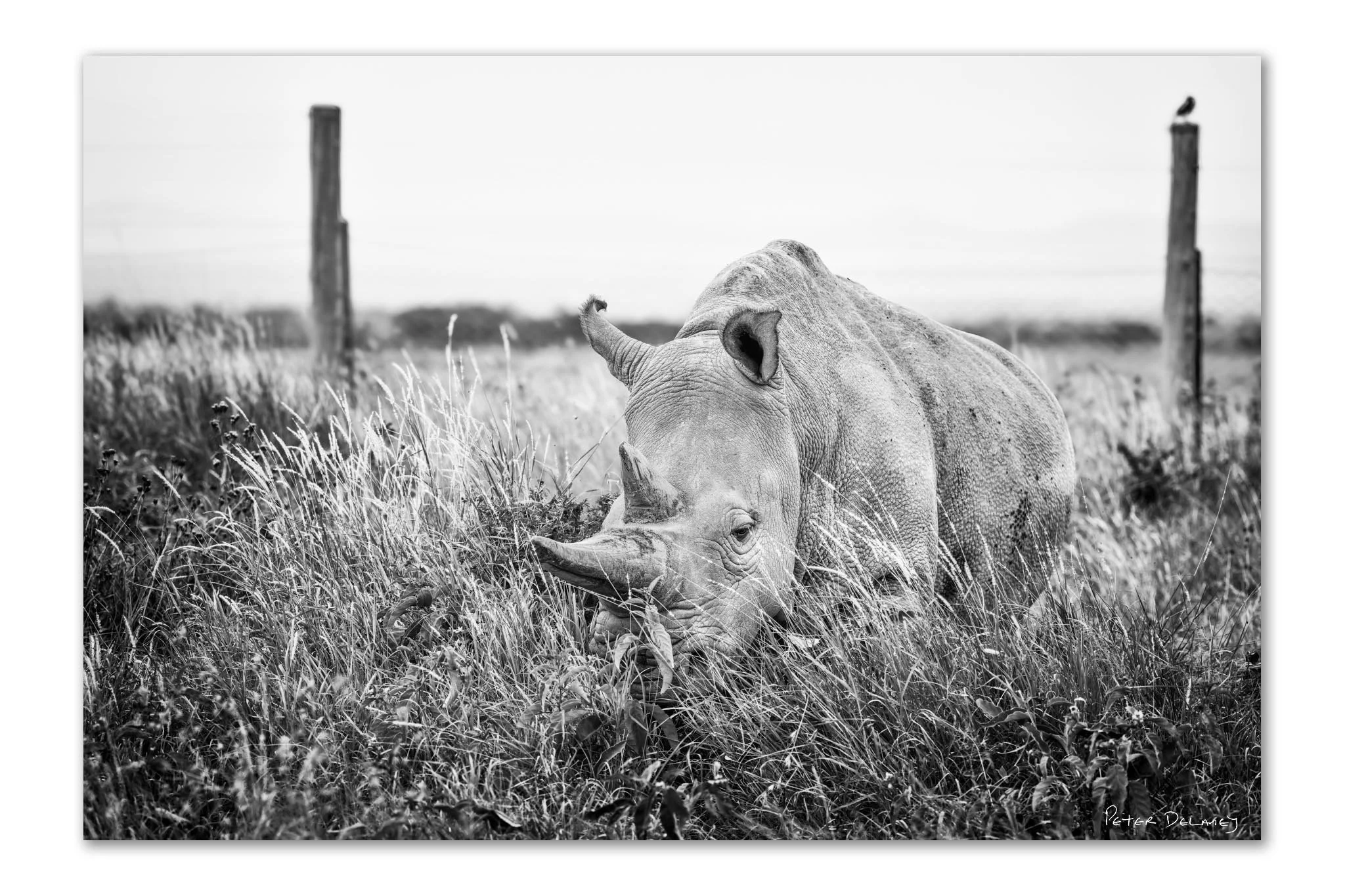
Najin: Last Hope
A living relic.
Under 24/7 guard.
She is the quiet Earth.
9. The Rhino
She walked toward me through the tall grass of Ol Pejeta — unhurried and ancient.
Her name is Najin. She is one of the last two northern white rhinos left on Earth.
The males are gone. The future of the species now rests on science — on preserved embryos and fragile hope.
Behind her, you can see fence posts — the boundaries of the world she now inhabits. Above the post, a small bird sits freely.
I have never made a photograph that asked more of the person standing before it.
In black and white, her dignity is complete. Her stillness is almost an accusation. And her presence — still here, still walking — is one of the most quietly devastating things I have ever witnessed through a lens.
“She carries more than her body should have to bear.”
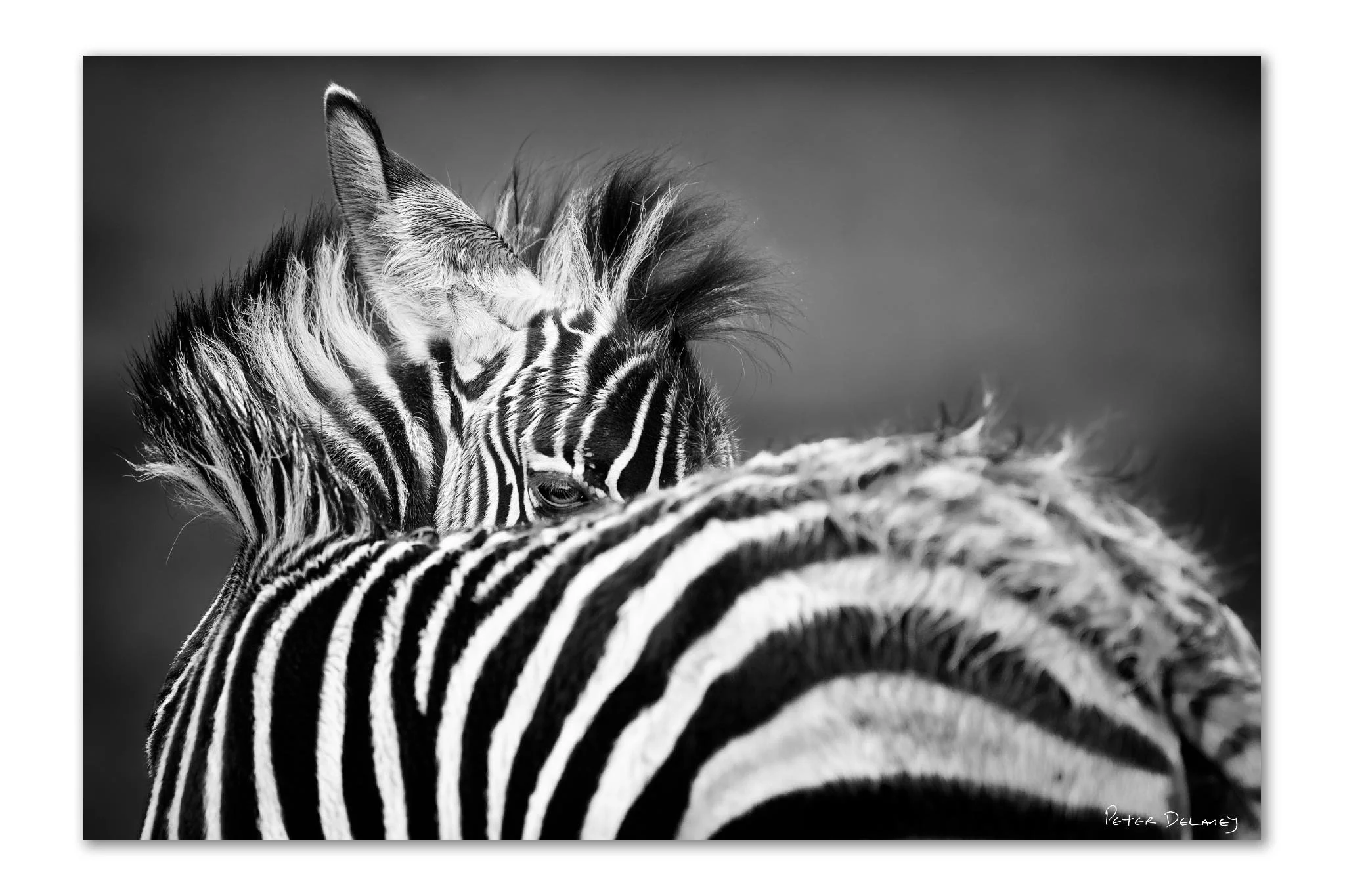
Soulful Gaze
“For those drawn to the mystery of nature’s quietest gazes.”
10. The Zebra
It was raining softly on the plains when I found her. A zebra foal stood with her back to me, letting the rain fall across her mane.
Then she turned and glanced back over her shoulder.
Her eye stopped me. The delicate eyelashes. The raindrops caught in the strands of her mane — glistening against the grey light.
People often say zebras are natural subjects for black and white photography because of their stripes. And yes, those patterns can create striking graphic compositions.
But "The Gaze" is something else entirely. It is tenderness, not geometry.
A foal in the rain, looking back. In Black and white every raindrop carries the weight of the moment.
“For those drawn to the mystery of nature's quietest gazes.”
Why Black and White?
People often ask why I work in black and white.
The honest answer is that it is the only way I know how to show what I actually felt in those moments. Colour tells you what something looks like. Black and white tells you what it means.
Each of these ten animals gave me something unexpected — a moment of recognition that crossed the distance between species.
Africa's wildlife is extraordinary in colour.
But in black and white, it becomes timeless.
And for me, that has always been the point.