What Is the Tree of Life — And Why These Quiver Trees Matter
What Is the Tree of Life — And Why These Quiver Trees Matter Fine art black-and-white botanical prints by Peter Delaney
Across the stony deserts of southern Africa, few forms are as instantly arresting as the quiver tree. These towering, sculptural aloes stand in silence, their rosette crowns and twisted limbs carved by millennia of sun, wind and ritual. They are not merely plants; they are sacred, survivors, symbols.
To the San people, this tree was much more than sustenance. They called it the Tree of Life — choje in their tongue.
Its hollow branches held arrows for the hunt, its bark offered refuge and moisture. Deep in its fibres, they felt the pulse of spirit and memory. In song and folklore, the choje stood as protector, priest, and guardian of truth.
The six fine art prints below celebrate the quiver tree in its elemental glory — its strength, its silence, its testament to endurance and spirit. Each print is a portrait of a quiver tree photographed across the deserts of South Africa and Namibia, and each carries its own name, its own form, and its own story.
Together, they form a single meditation on what it means to endure.
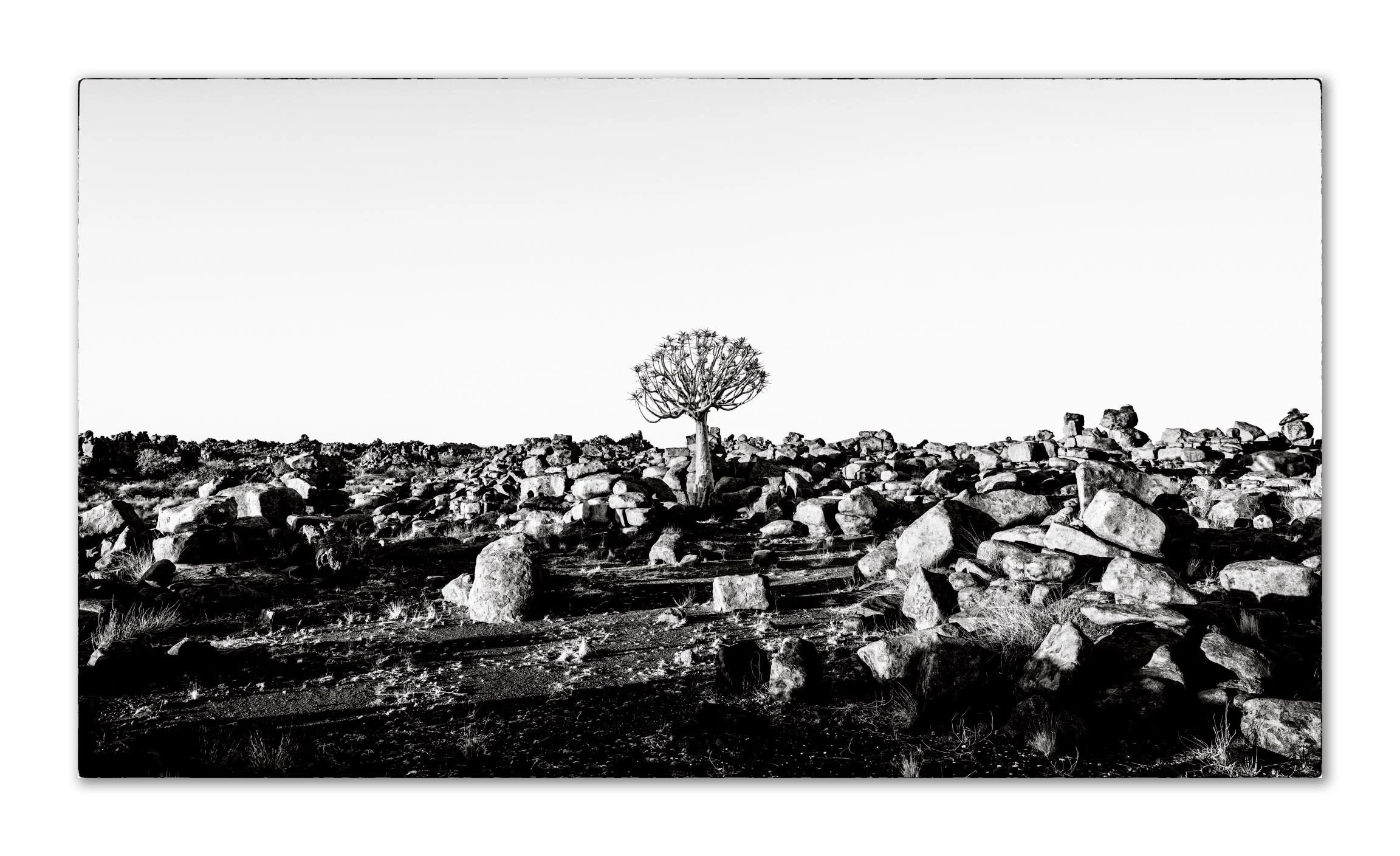
Wide vista of Giants Playground, Namibia ¢
Why These Prints Matter
In a world that races forward, the quiver tree calls us to pause. To consider survival and spirit. To honour what thrives in stillness.
The San understood that the desert does not erase — it remembers.
This series is more than photography. It is a visual prayer.
A way to bring silence into space, myth into form, and endurance into view.
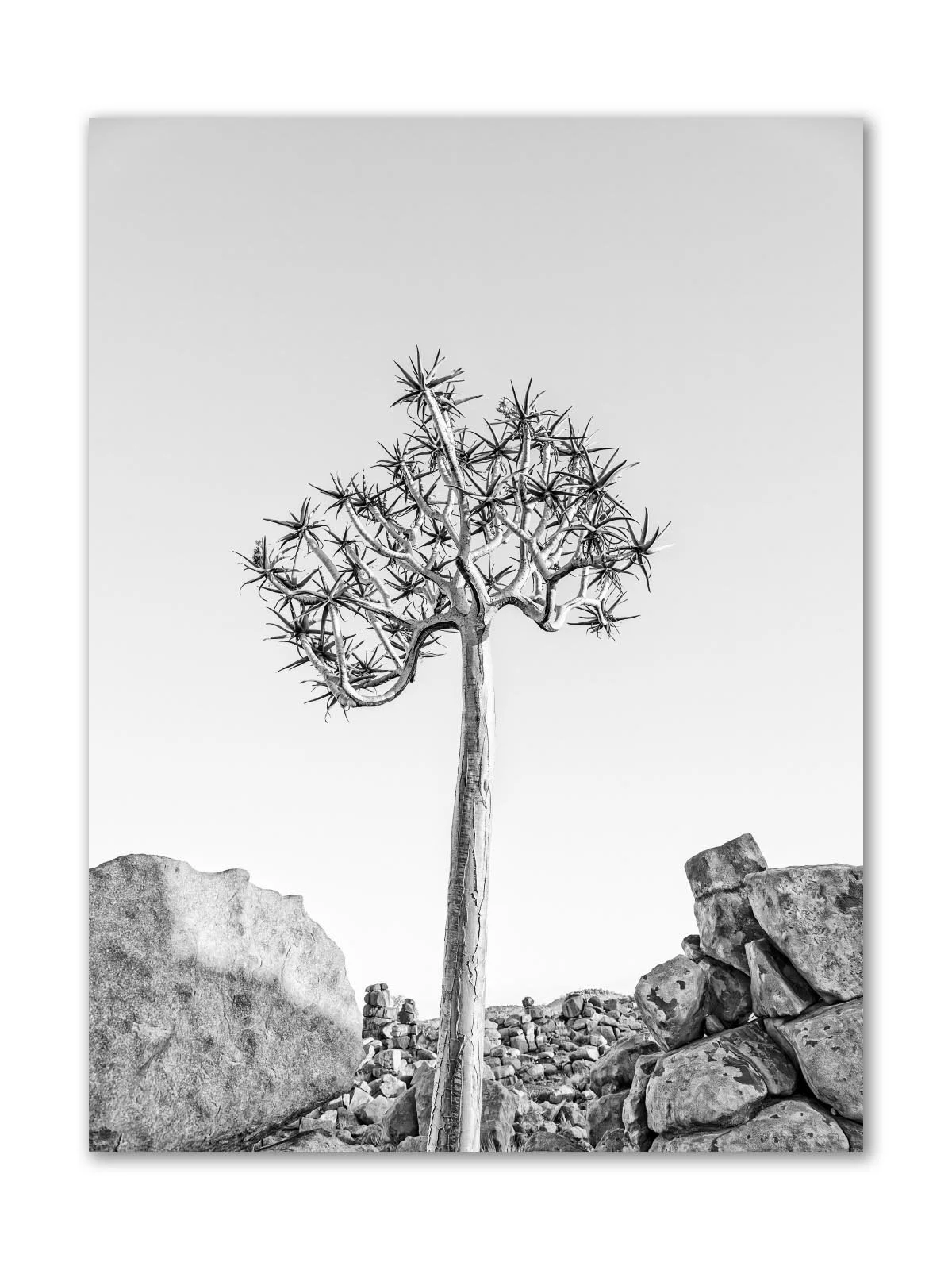
Choje Among the Giants
Giant's Playground, Keetmanshoop, Namibia
Choje Among the Giants Giant's Playground, Keetmanshoop, Namibia
"Beneath the gaze of ancient stone, Choje endures — weathered, bowed, but unbroken."
A monochrome meditation on survival in shadow and stone.
Rising like a prayer caught between earth and sky, this lone quiver tree, Choje in the San tongue, claims its place among the stoic giants of Namibia's desert. On one side, a hulking dolerite boulder anchors the past; on the other, a crumbling totem of stacked stone, a former monolith fractured by centuries of wind and silence.
The tree's lower third is absent, intentionally cropped, inviting the eye to follow the sway of its twisted crown as it leans leftward, framed by a stark, cloudless sky.
This decision speaks to the photographer's vision: to strip away distraction and reveal essence.
Nothing extraneous. Only form, tension, and light.
In this minimalist moment, survival is sculptural. The boulders do not move. The desert does not speak. Yet in monochrome, everything whispers — of time, of pressure, of balance.
Choje is neither the oldest nor the strongest, but here it stands, defiant and dignified. A symbol of persistence in a place where even giants erode.
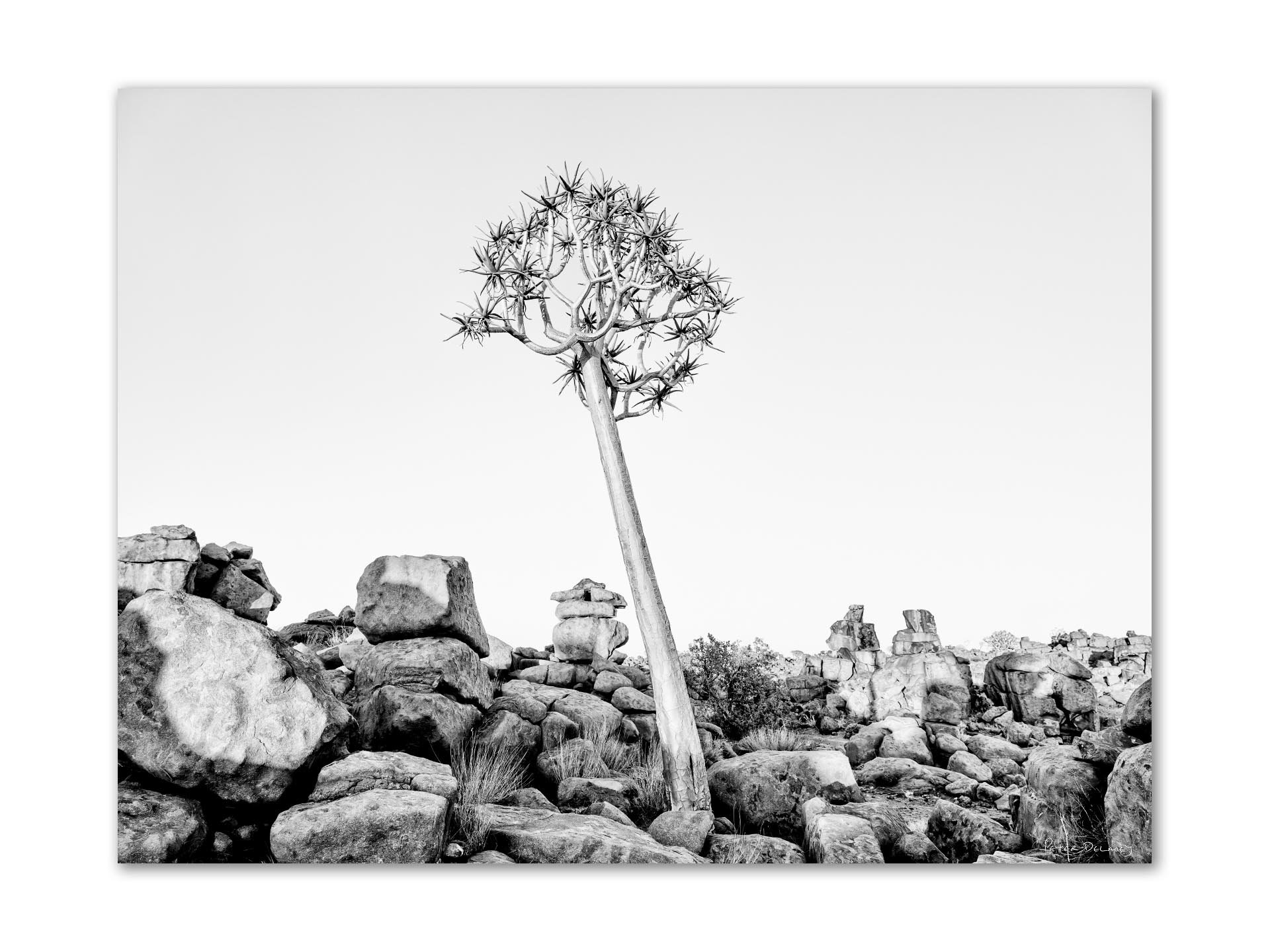
The Guardian of Giants
Giant's Playground, Keetmanshoop, Namibia
The Guardian of Giants Giant's Playground, Keetmanshoop, Namibia
"Some trees rise not just from earth, but from legend."
Amid the surreal landscape of the Giant's Playground, a solitary quiver tree stands rooted in time.
Its sculptural form emerges from a tangle of basalt blocks, fragments of a mythic clash, where giants once played and vanished, leaving only stone and silence behind.
The Guardian of Giants evokes the San belief that quiver trees are protectors, vessels of ancestral presence.
Their branches once held arrows, but their roots held memory.
This tree watches over the ancient rocks like a sentinel cast in light and shadow.
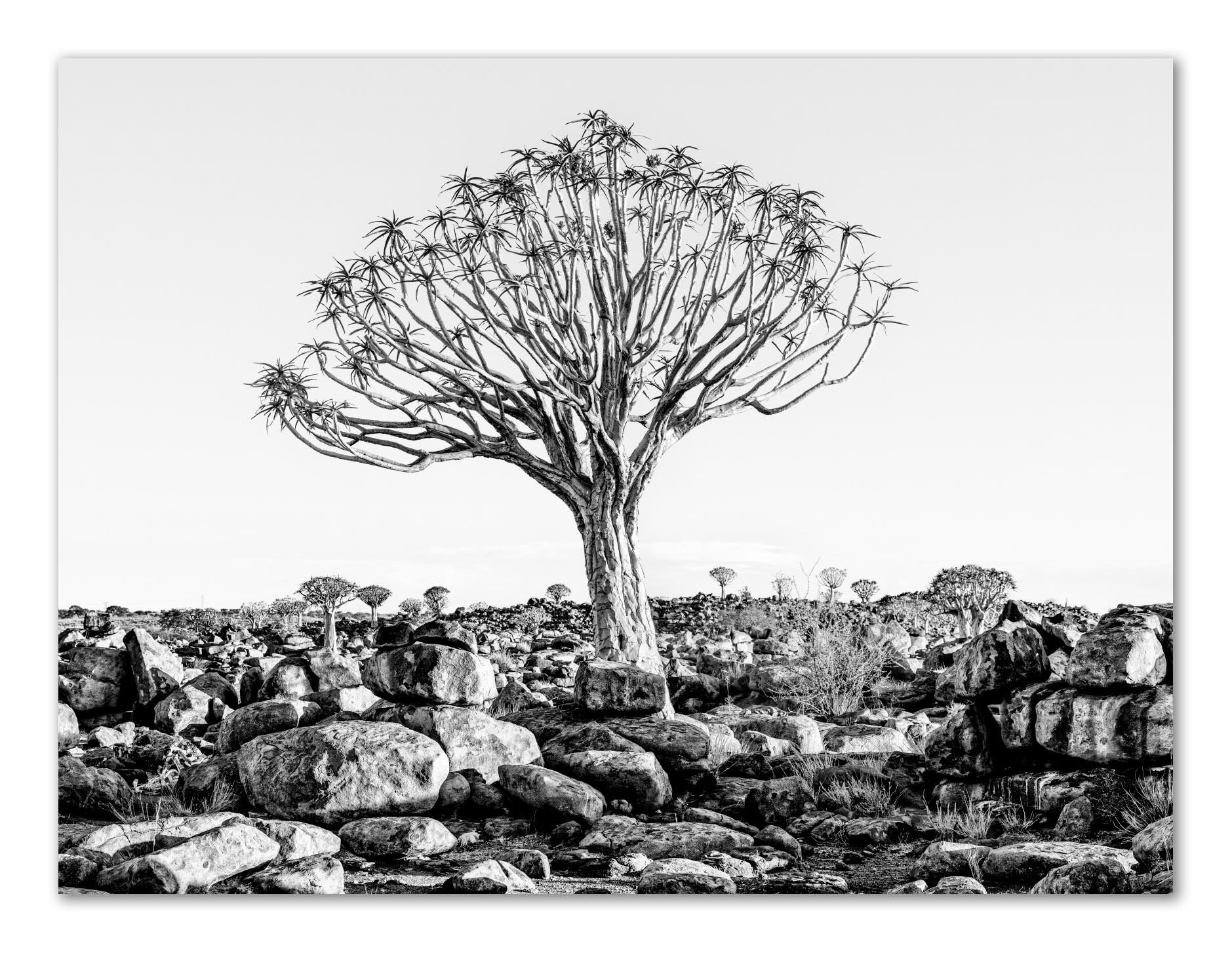
Whispers Beneath the Tree of Life
Giant's Playground, Keetmanshoop, Namibia
Whispers Beneath the Tree of Life Giant's Playground, Keetmanshoop, Namibia
"Where the San once spoke to the spirits, silence now listens."
In a grove scattered across ancient volcanic rock, one quiver tree rises in quiet authority.
This is the Tree of Life, as it is known to the San. Beneath its shade, tools were crafted, stories shared, and prayers offered to the spirit realm.
The surrounding trees stand like witnesses in stone, shaped by centuries of wind and ritual.
Whispers Beneath the Tree of Life honours the sacred bond between the San and their landscape — a still communion between bark, basalt, and breath.
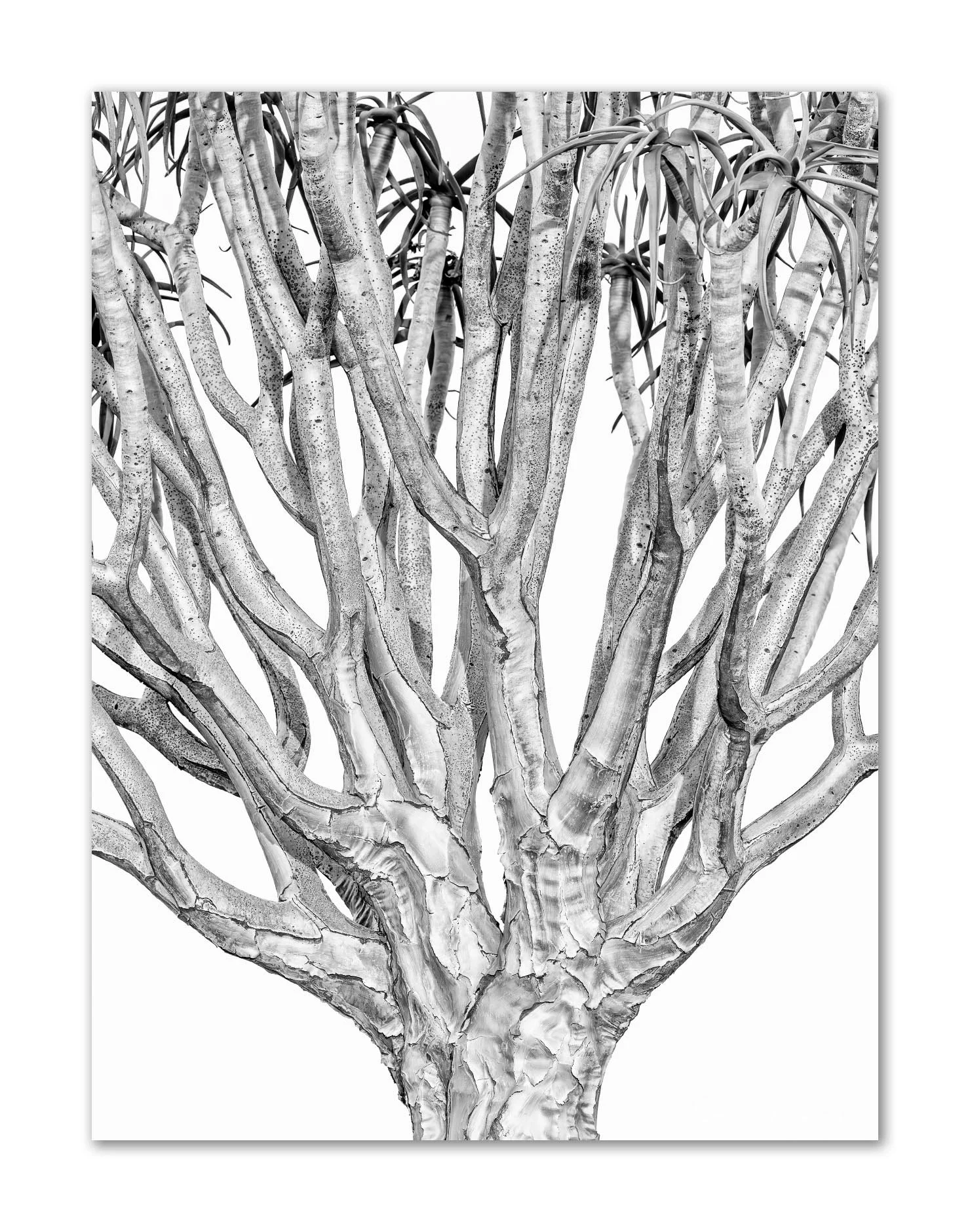
Tree Of Life
Quiver Tree Forest, Keetmanshoop, Namibia
Tree Of Life | The Bark Remembers
"Each crack tells a story. Each shadow, a silence kept."
Stripped of rosettes, this quiver tree reveals its inner architecture — raw, textured, timeless.
Its bark curls like ancient scrolls.
The V-formed limbs stretch skyward like a ceremonial offering.
To the San, trees like this were sacred record-keepers. Their bark held memory, their presence reminded the living of what came before.
The Bark Remembers offers a sculptural study in texture, light, and shadow — every groove a testimony to time.
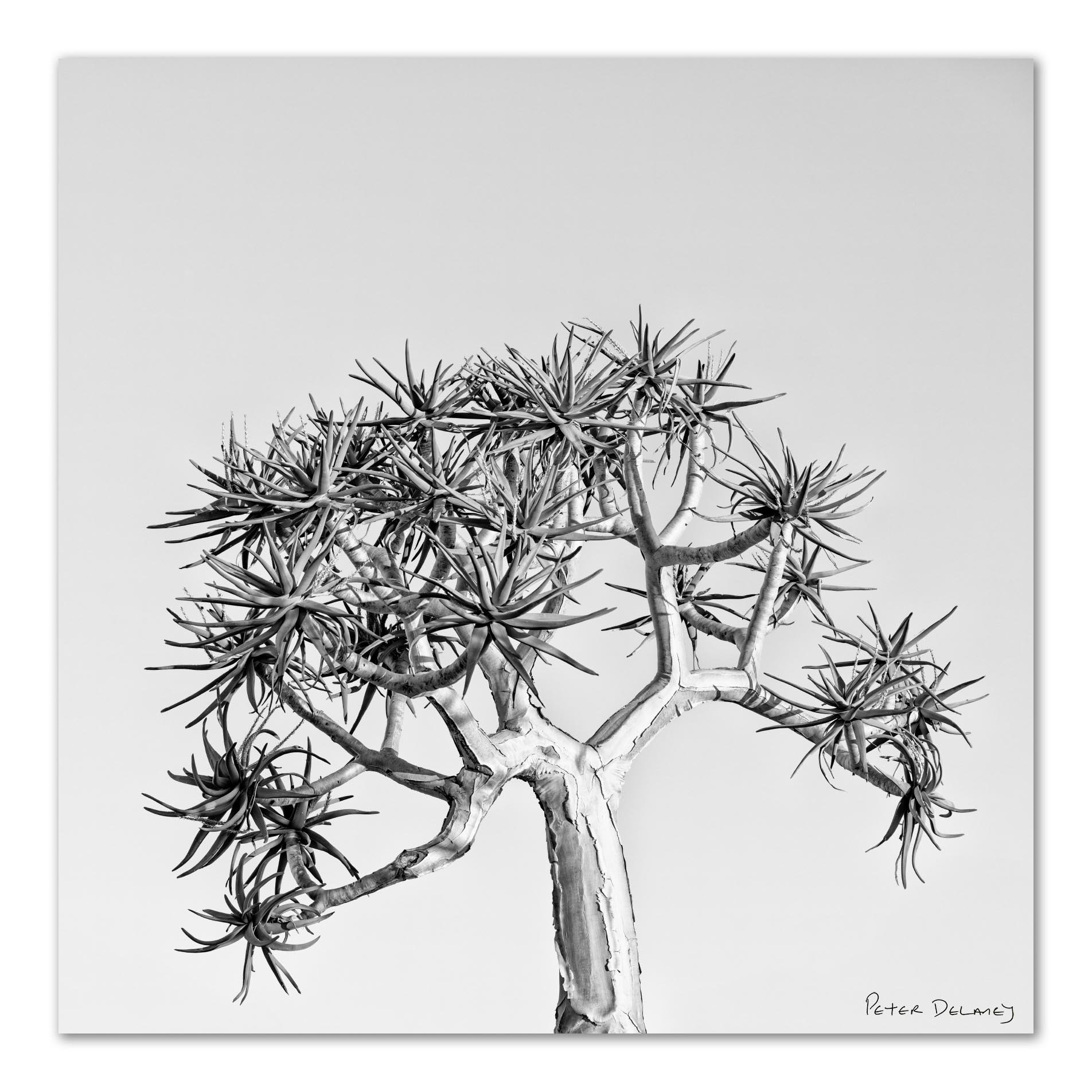
Resilience
Quiver Tree Forest, Keetmanshoop, Namibia
Resilience, Bowed but Unbroken Northern Cape, South Africa
"Even in surrender, there is strength."
Bending gently to one side, this quiver tree carries itself with quiet dignity.
Its crown of rosettes reaches skyward in soft defiance, shaped by sun, drought, and wind. The San saw such trees not as fragile, but as fierce — symbols of resilience that could bow without ever breaking.
Resilience, Bowed but Unbroken is a portrait of grace forged in hardship. A study in subtle strength, rooted deeply in survival.

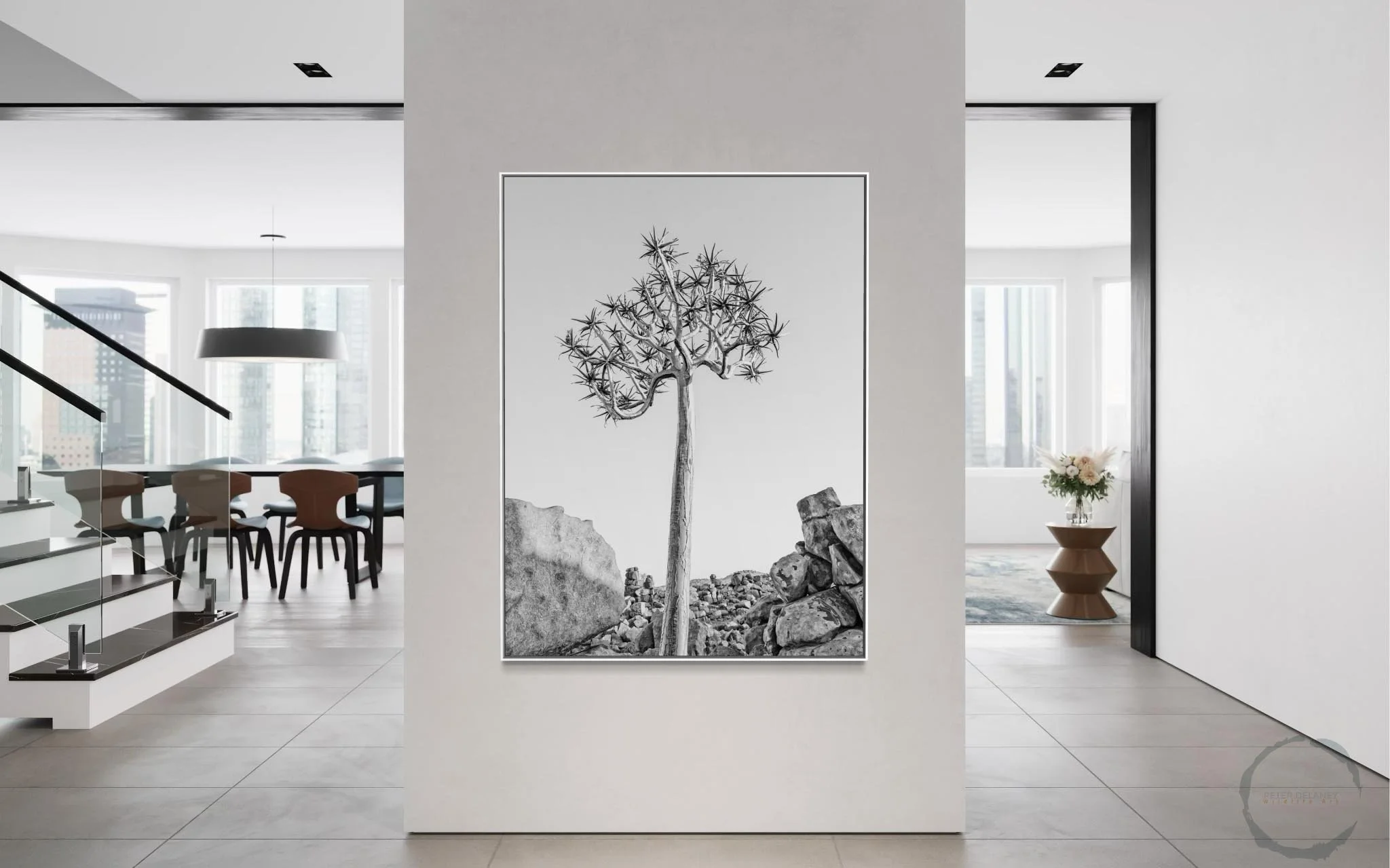
Sentinel of the Silent Hills
Northern Cape, South Africa
Sentinel of the Silent Hills Northern Cape, South Africa
"Alone, but never forgotten."
Alone atop a ridge, this quiver tree stands tall, rooted in stone and sky.
Seen by the San as desert guardians, such trees watched over both land and people.
A powerful statement piece, defined by minimalism, presence, and quiet grandeur.


Elevate your collection with one or all of these sacred icons.
Invite stillness. Invite spirit.
Own not just a print, but a portal.