Why The Print Still Matters
Why the Print Still Matters A note from behind the lens
For me, the photograph has never really been about the photograph on a screen. It has always been about the final print.
When I am out photographing wildlife or landscapes, I am already thinking about how that moment will translate into a piece of fine art. The light, the composition, the mood, the tones, the detail — all of it matters because I know where I want the image to end up.
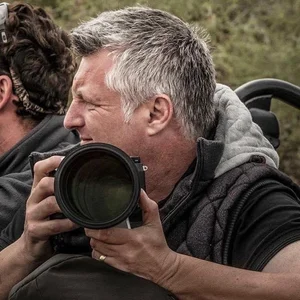
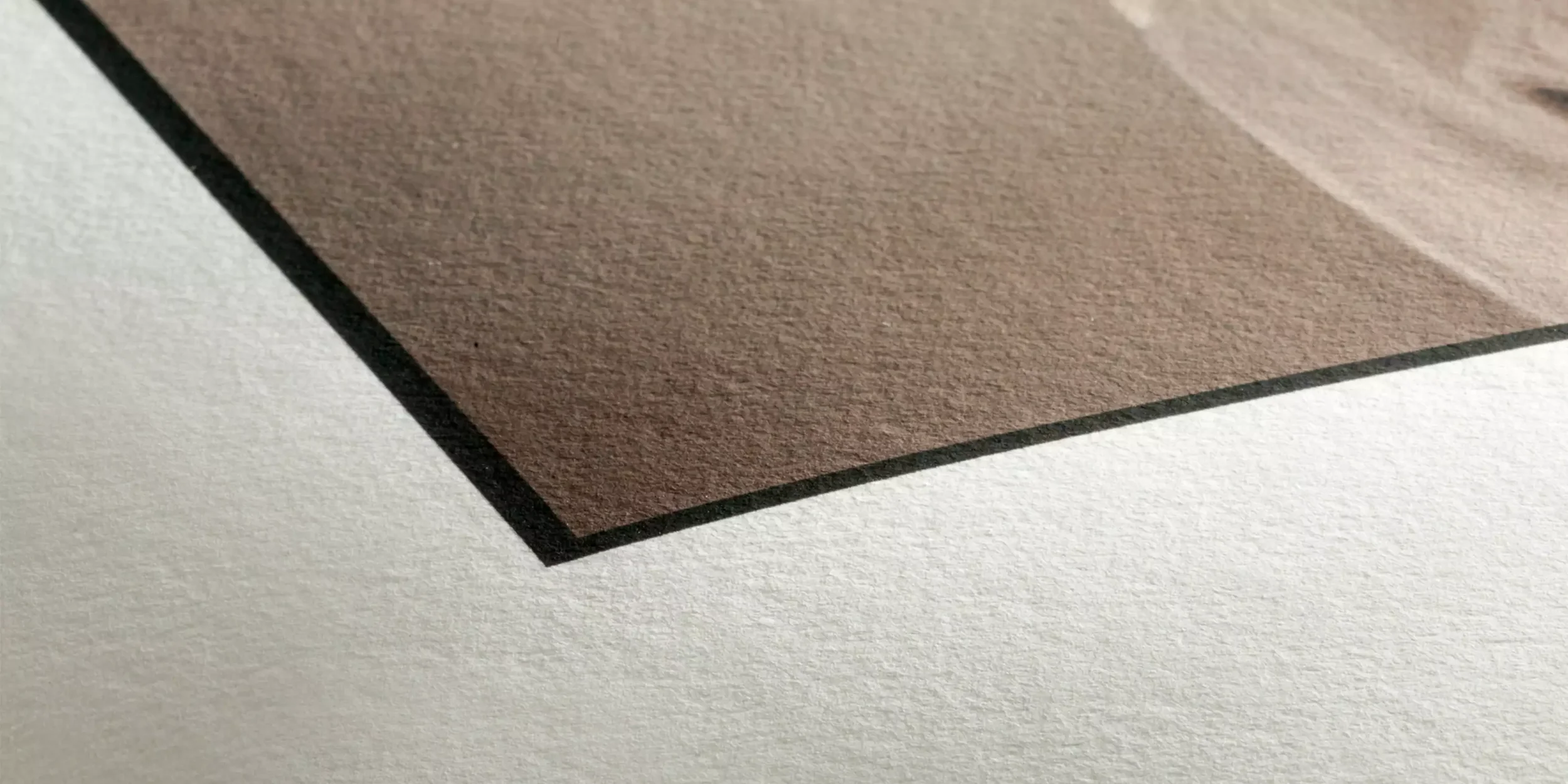
On archival 100% cotton rag paper, a photograph becomes something you can actually experience. You can see and feel the texture of the paper, the depth of the blacks and the subtle warmth in the tones. Behind acrylic glass, the clarity takes on another dimension. The image has presence. It becomes something physical.
The Person Behind the Camera
A camera can record a moment. It cannot experience it. That part is human.
I have spent around twenty years learning how I see. Learning to read light, anticipate behaviour, understand a landscape and recognise when a fleeting moment has the potential to become something more than a photograph.
Sometimes that means waiting for hours. Sometimes it means returning again and again. Sometimes the photograph comes together in an instant because years of experience have taught me to recognise that instant when it arrives.
The camera is simply the tool.
The photograph comes from the person behind it.
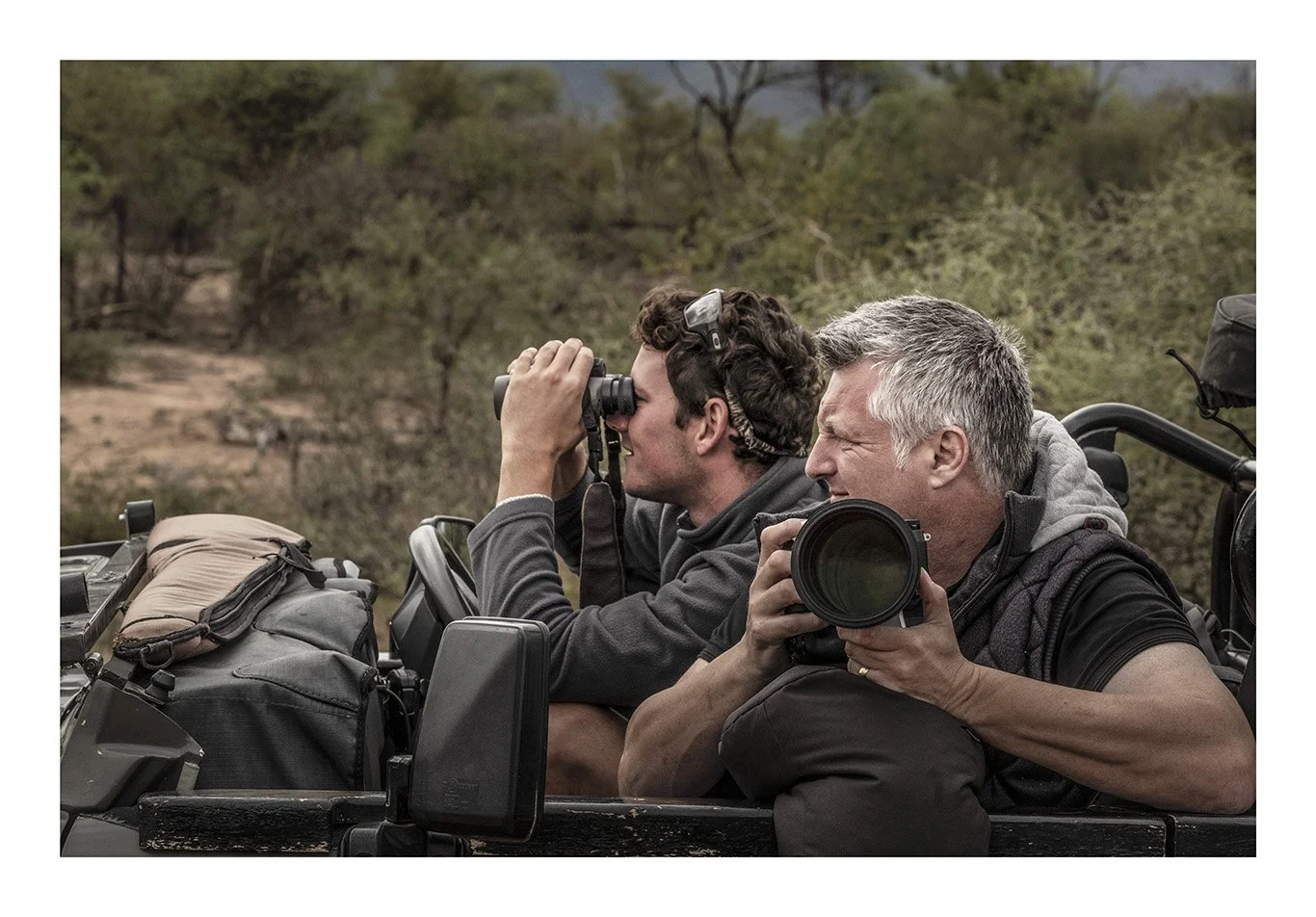
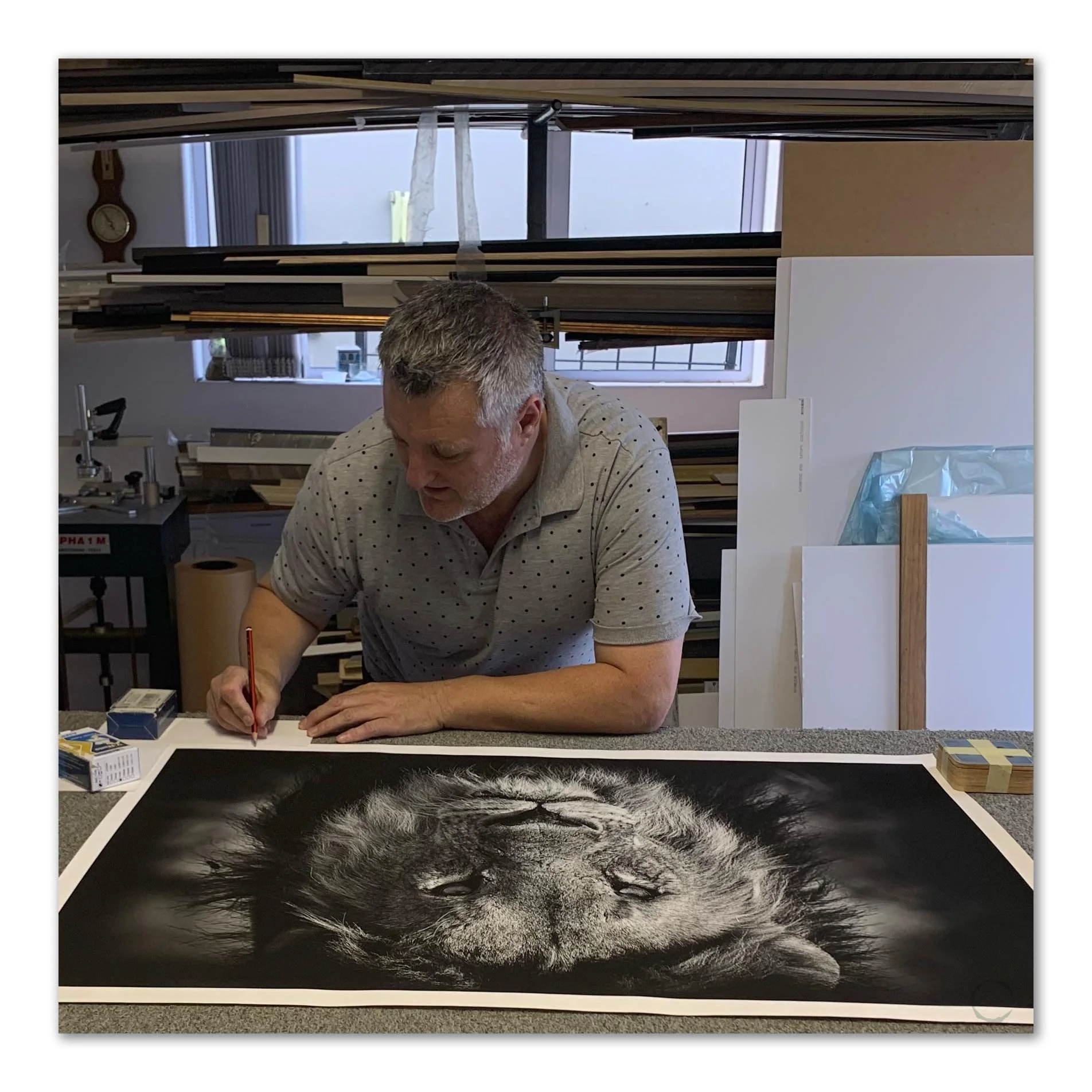
Peter Delaney photographing wildlife on safari
Why Black and White
I photograph predominantly in black and white because it is how I most naturally see my work as fine art.
Removing colour allows me to concentrate on what remains. Light. Form. Texture. Contrast. Expression. Emotion.
It also changes the way we look at an animal or a landscape. Without the distraction of colour, the eye begins to notice things differently.
Occasionally colour is exactly right for a print, but for me, black and white remains the language that best expresses what I am trying to say.
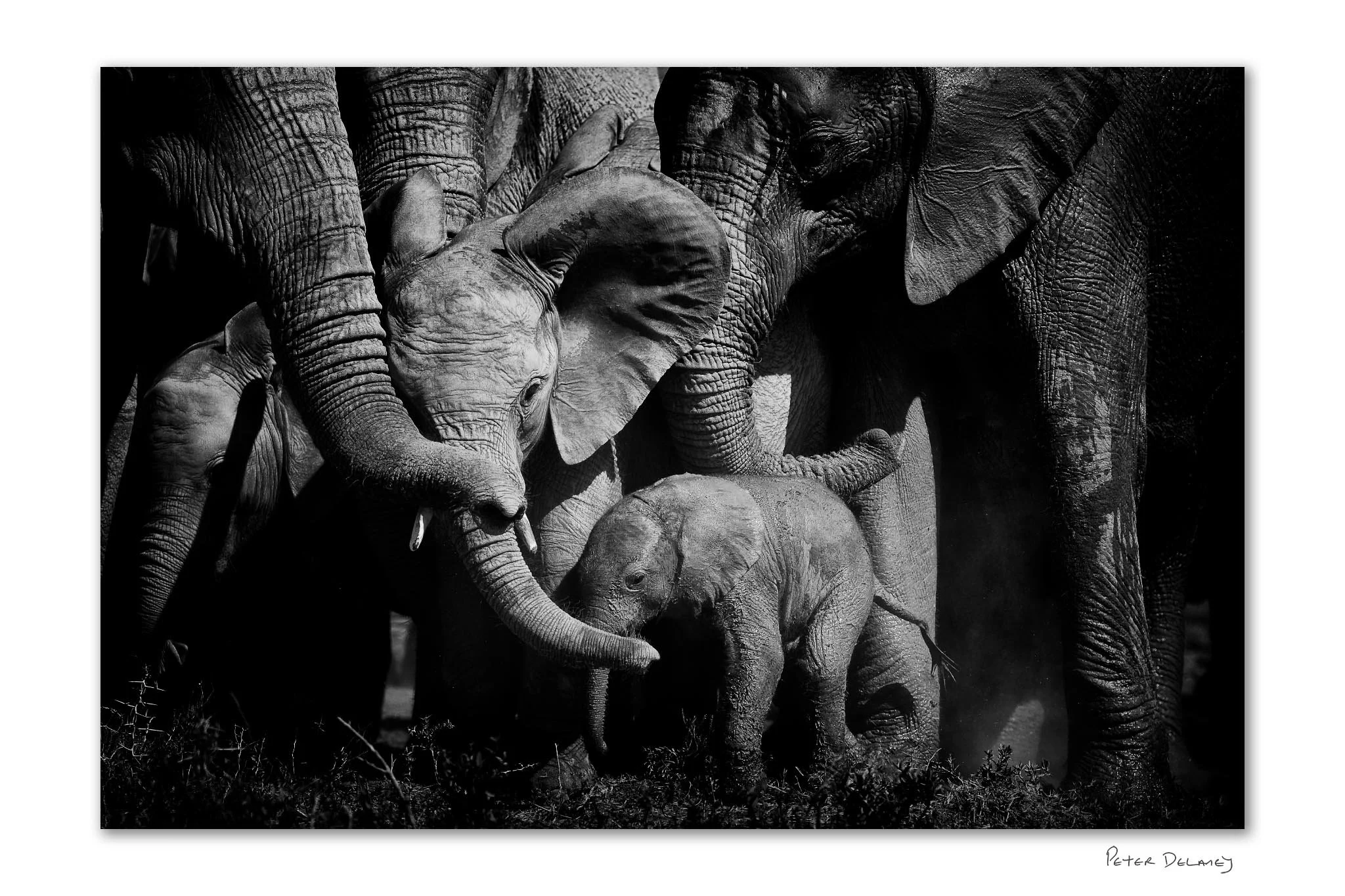
Bonds Of Love
Family. A newborn held within the safety of the herd.
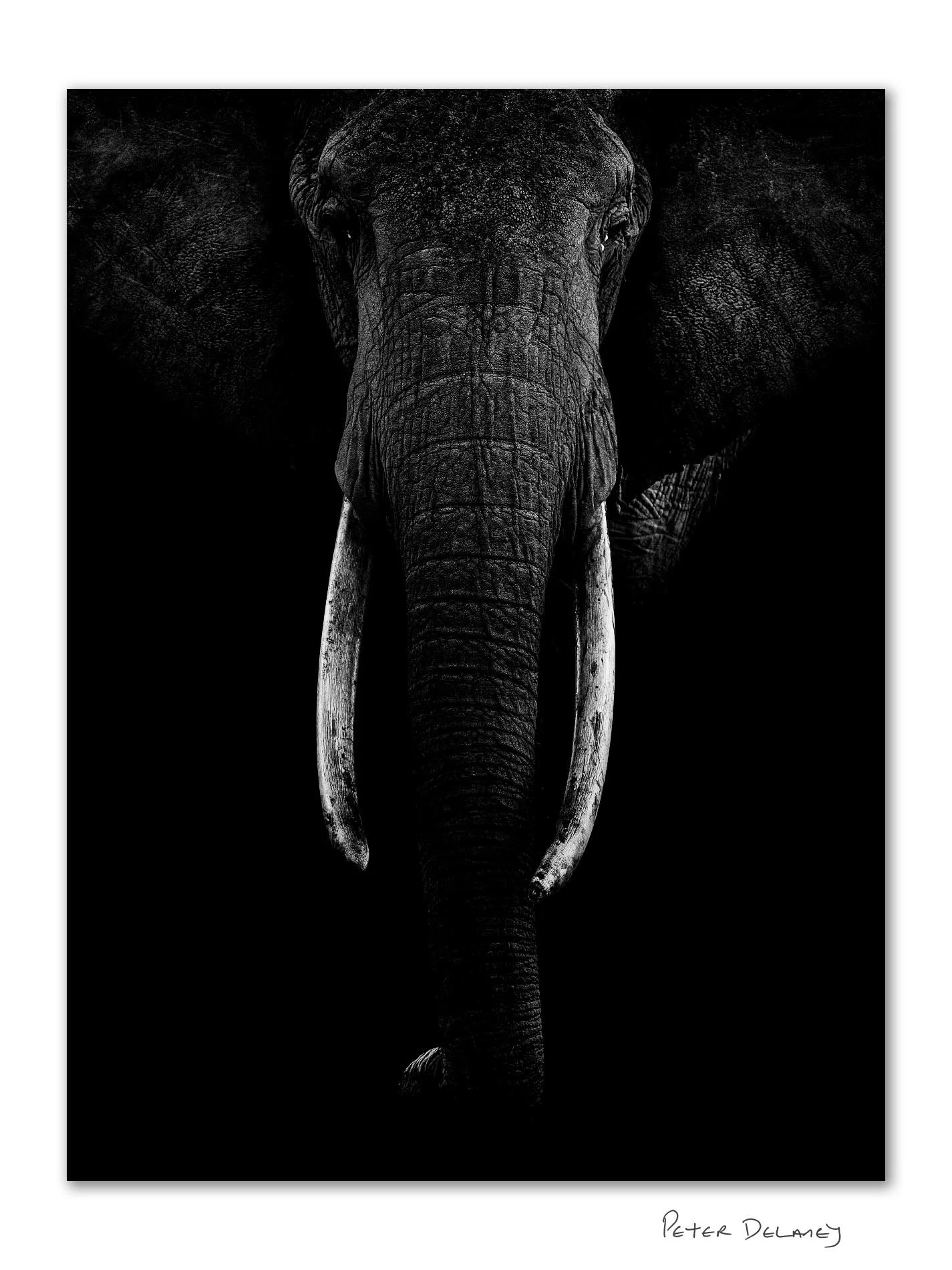
The Matriarch
Guardianship. Strength shaped by time, memory, and the ancient instinct to protect.
From a Moment to a Piece of Art
When I create a print like Bonds of Love or The Matriarch, I am not simply trying to make a beautiful photograph. I am trying to preserve something of what I felt when I was standing there.
The atmosphere. The stillness. The tension. The connection.
That is why the final print matters so much to me. Seeing a photograph on a screen is one experience. Standing in front of a beautifully produced fine art print is another entirely.
The cotton rag has a physical texture. The paper has warmth. The blacks have depth. Acrylic brings a different kind of clarity and presence.
The photograph stops being something you scroll past.
It becomes something you live with.
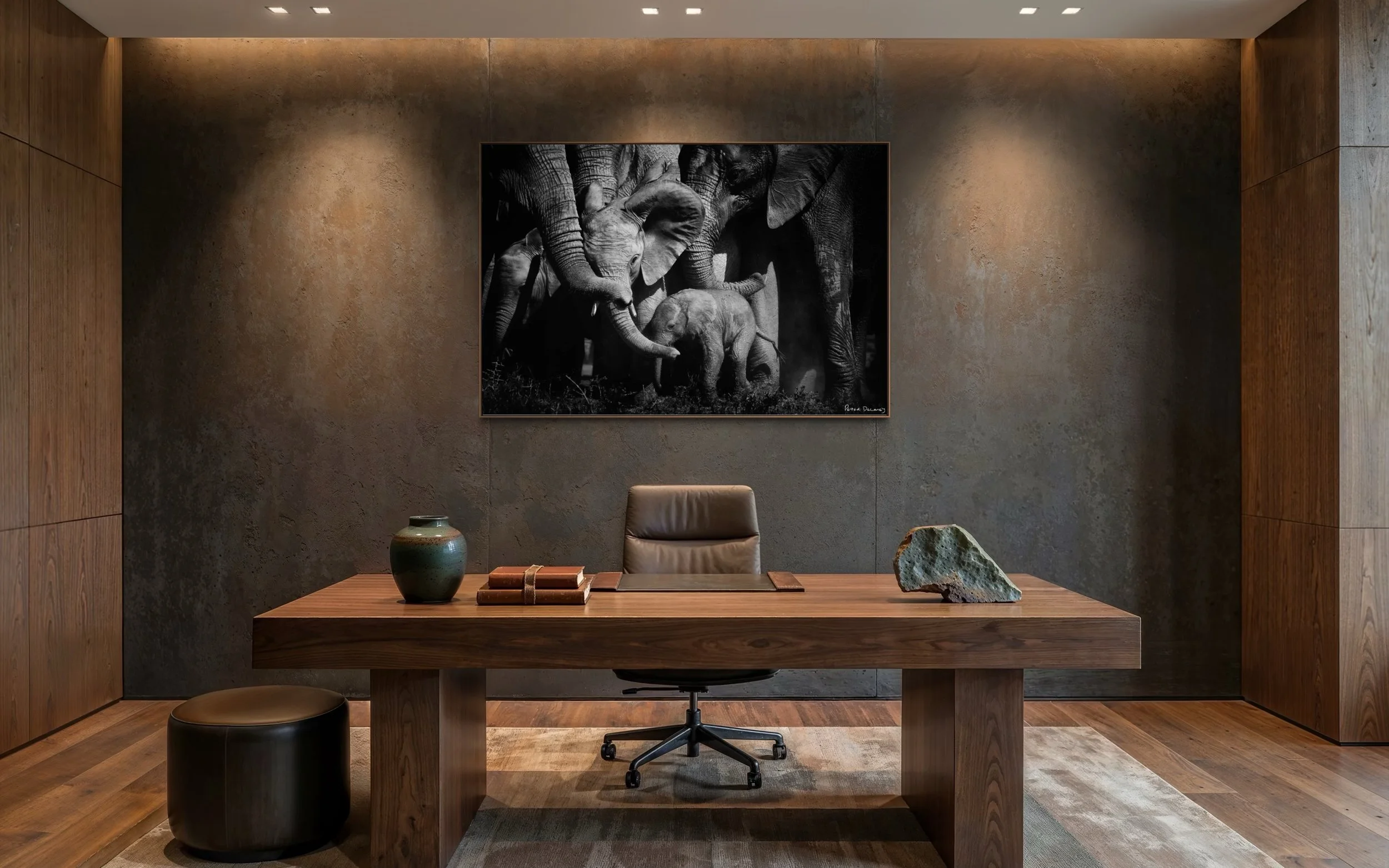
Bonds Of Love
Archival Acrylic Glass Print | Ready To Hang | 150 x 100cm (59 x39 inch) | Free Shipping
Behind the Print
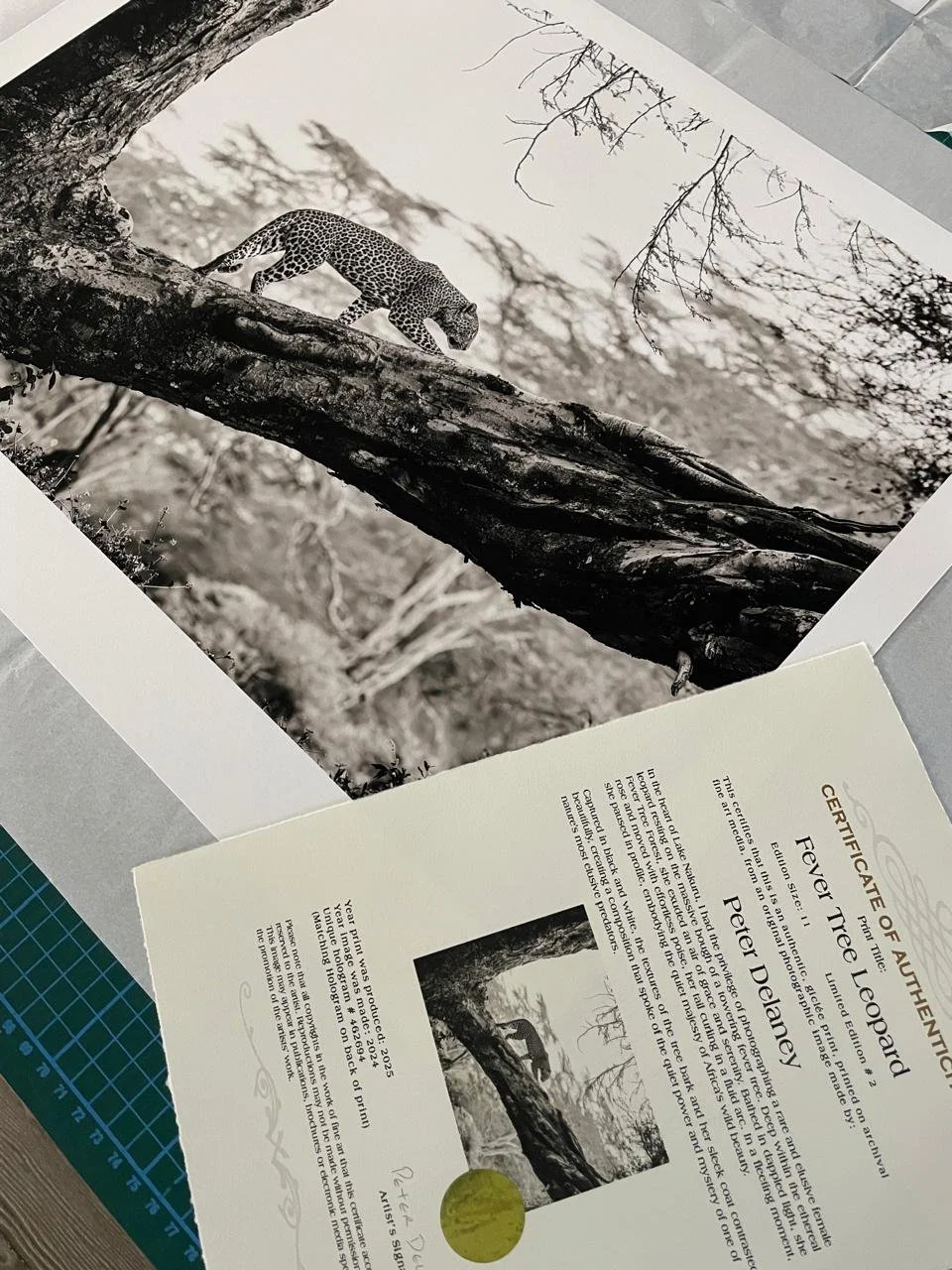
Each Collector's and Limited Edition is personally signed by Peter Delaney and accompanied by a hand-signed Certificate of Authenticity, ensuring every print carries its own story and provenance.
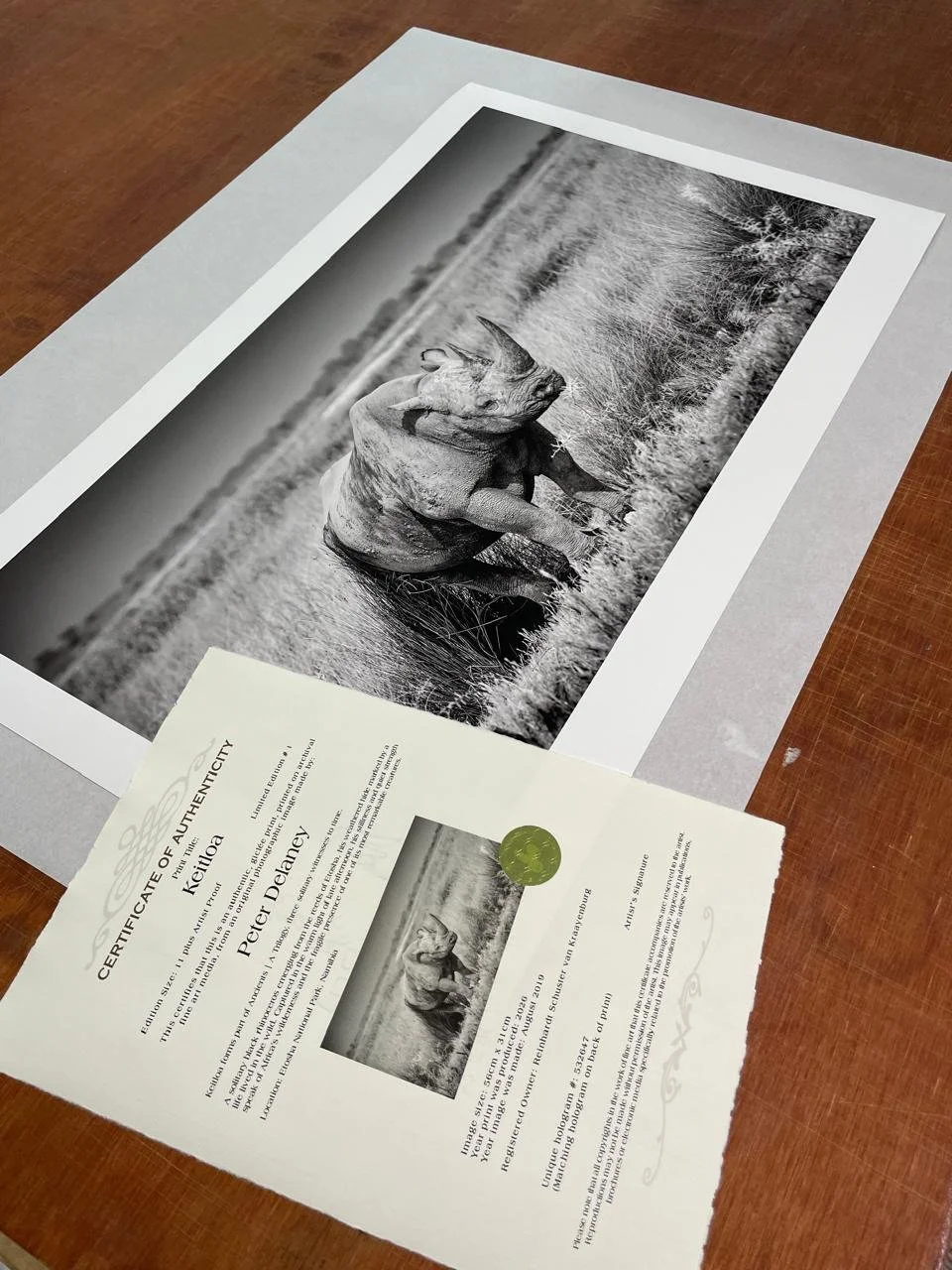
Why I Think This Will Matter
We are entering a world where images can be created almost instantly.
I have no problem with technology. Photography itself has always evolved with technology, and it will continue to do so.
But I believe the more images we create, the more valuable the human story behind a photograph may become.
A photograph made by someone who was actually there. Someone who waited for the light. Someone who understood the subject. Someone who spent years learning their craft and made thousands of decisions before pressing the shutter.
There is a difference between creating an image and experiencing the moment from which that photograph was born.
I believe people will continue to crave that difference. Perhaps even more so in the future.
That is what I am trying to create.
Not simply photographs.
Fine art made from real moments.
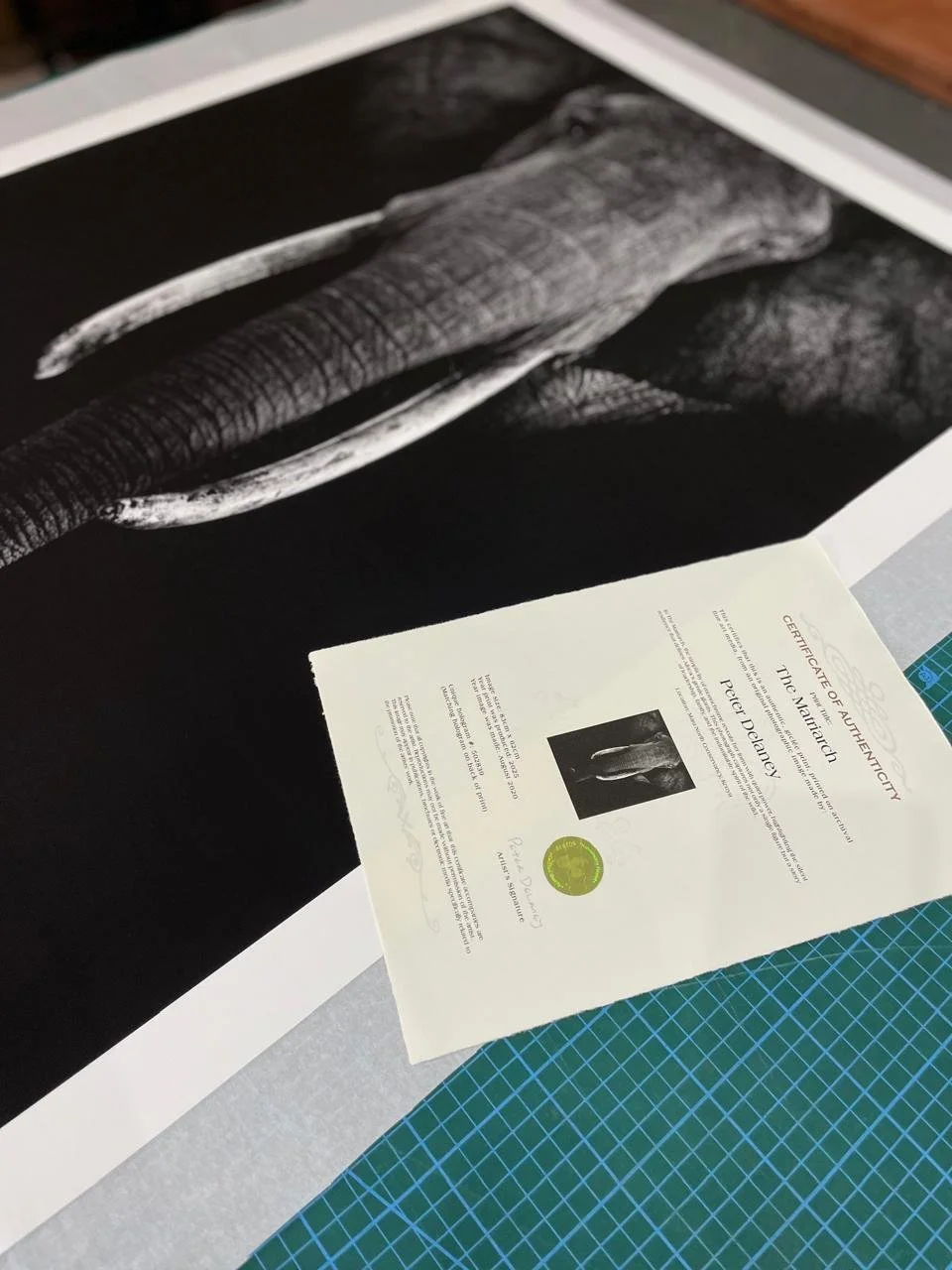
The Matriarch | Unframed Fine Art Print | Collector’s Edition
Printed, signed and shipped by Peter in South Africa on museum-grade archival fine art paper — smooth cotton rag.